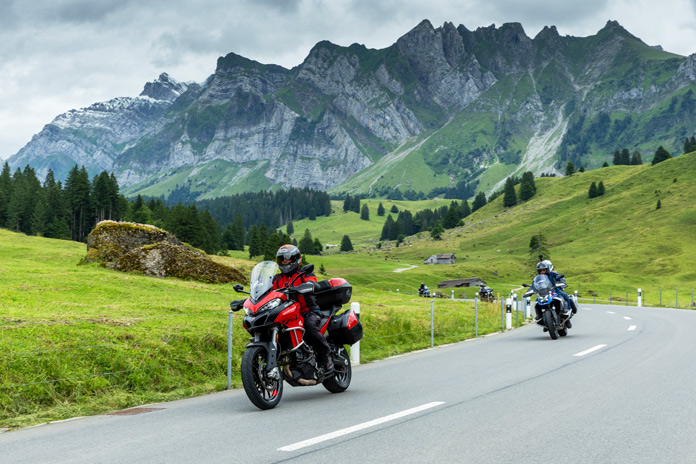
Scenic riding near Nesslau, Switzerland. Bill from California on the Ducati was enjoying his 25th Edeweiss tour. (Photos by the author)
While fireworks were going off at home on the Fourth of July, thunder and driving rain were putting on quite a show in Erding, Germany, at the start of the Edelweiss Bike Travel seven-day Best of Europe tour. As a freelance motorsports photographer, I’ve worked in some amazing locations, both domestically and internationally, and I can’t tell you how many times I’ve promised myself I’d revisit certain epic spots yet failed to follow through. But the Alps region has its claws in me, and a year after completing Edelweiss’ Grand Alps tour, I doubled down with the Best of Europe tour followed by Edelweiss’ 45th Anniversary Reunion.
The Best of Europe is one of Edelweiss’ Classic tours. It includes seven riding days through five countries, beginning in Germany and heading through France, Switzerland, Liechtenstein, and Austria.
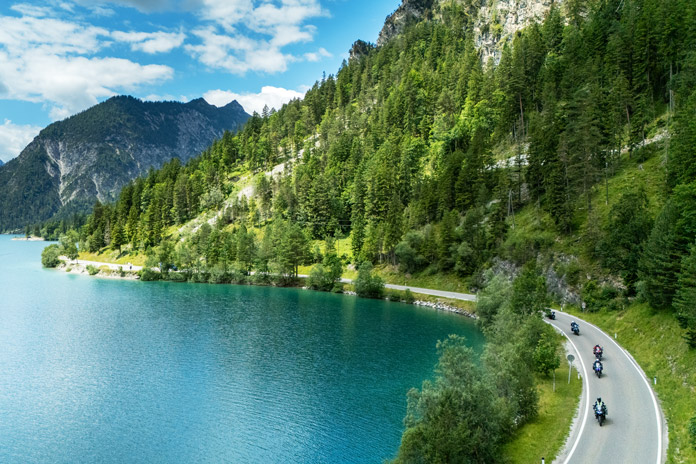
Lake Plansee in Tyrol, Austria.
Last year’s tour kicked off with some travel difficulties, as I had arrived eight hours after the orientation dinner due to a canceled flight. I’d highly recommend allowing an acclimation day on the way in and a loose schedule on the way out. This time around, travel was seamless with a single nonstop flight into Munich and a short taxi ride to the hotel, where the Edelweiss Bike Travel staff had booked me an extra night. While eating dinner at a wonderful Vietnamese restaurant down the street, I planned a visit to Munich’s medieval core the following day via train. I found this spot to be in stark contrast to the stunning architecture and modernity of the BMW Welt/Museum and the neighboring Olympic Park, built in 1972 for the summer games.
After my day of Munich exploration, we had a welcome briefing and learned that Heiko and Felix would be our tour guides. They’d alternate between riding a bike and shuttling luggage to the next hotel, managing daily logistics, and driving the tour van with the spare bike. Our arrival day included some paperwork and getting a walk around our bikes, which were equipped with saddlebags, a top box, and a tankbag. On riding days, our schedule included breakfast at 7 a.m., a route briefing at 8:30 a.m., wheels rolling shortly after, arrival at the hotel at 5 p.m., and dinner at 7:30 p.m. We also had the option to self-guide, and an optional rest day was built into the schedule.
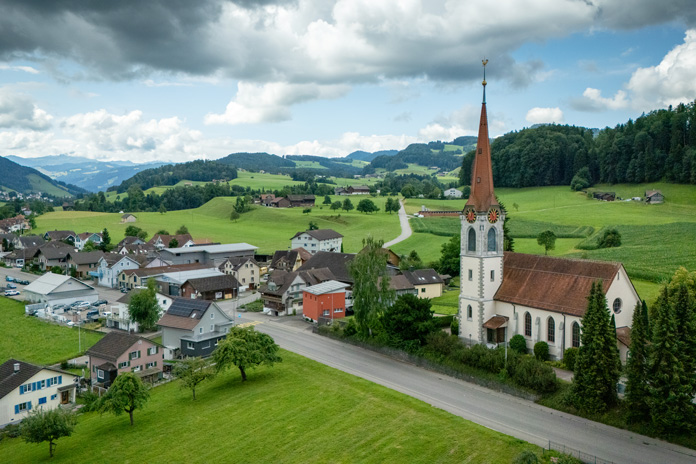
Bütschwil, Switzerland, one of the many postcard-perfect villages we passed through.
Our group included six riders and two passengers, including people from Australia, Canada, and the U.S. Most of us rode BMW GSs, with one Yamaha and one Harley-Davidson in the mix, and the tour guides shared a CFMOTO. We created a WhatsApp group for sharing communication and photos. Throughout the tour, the bikes were generally stored underground at the hotels, which was helpful for getting packed and unpacked or refining my kit after hours. The tour guides were with us throughout, answering questions about the bikes or tour and handing us our room keys at the end of each riding day with our luggage already waiting in our rooms.
Day 1: Erding to Rothenburg
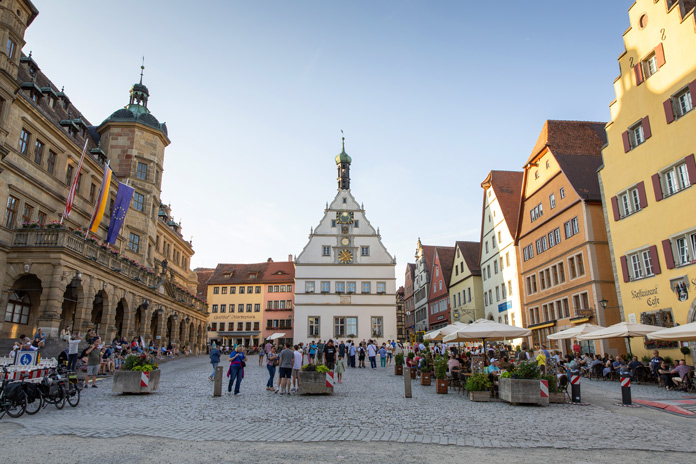
Market Square, Rothenburg, Germany.
While heavy rain fell during breakfast, it subsided as our group headed out onto the wet streets of Erding and through meandering country roads before our first stop in the Hallertau, a region in Bavaria north of Munich. It’d have been hard to miss the hop gardens towering 16 feet above the ground. Germany provides one third of the world’s hop supply.
In short order, we shed a layer and began working our way to a fabulous lunch spot. Perched on a hillside looking across a small valley, a large castle framed up nicely, and we were served a hearty meal. Heiko, the day’s tour guide, shared interesting local history and was eager to answer any questions.
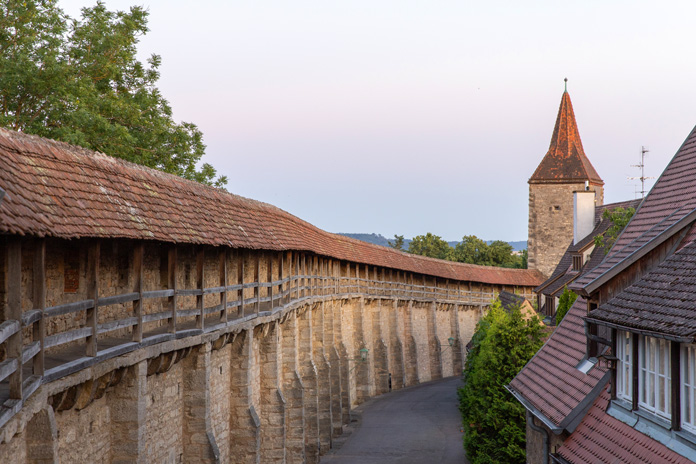
The wall surrounding Rothenburg was built in the 12th century.
After fueling up after lunch, we headed toward Rothenburg, the day’s final destination. It was interesting to note that between small towns, the farmland looked incredibly similar to many areas in the American Midwest, and there was no sign of large mountains in any direction.
We spent the night inside the fortified walls of the well-preserved medieval town of Rothenburg, with a history spanning back to the 10th century. We finished off the day with a walking tour at dusk led by the night watchman, during which we were taken back in time and entertained with interesting historical facts as the walk revealed a completely different perspective of the town. It was a little bit eerie and surprisingly close to dead silent.
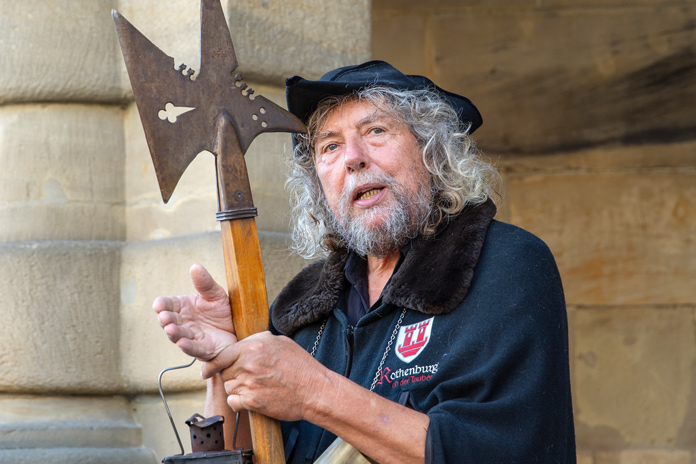
The night watchman was straight out of central casting.
Day 2: Rothenburg to Heidelberg
Rothenburg was even more charming in the morning light as we rolled through the many arch-walled and narrow cobblestone streets on our way to another historic German town, Heidelberg. Out on some beautiful backroads and following Felix, our group found a nice touring flow. We saw postcard-perfect towns, lush green landscape, a wood-covered bridge, and riverside roads. There was no shortage of historic architecture, castles, or churches.
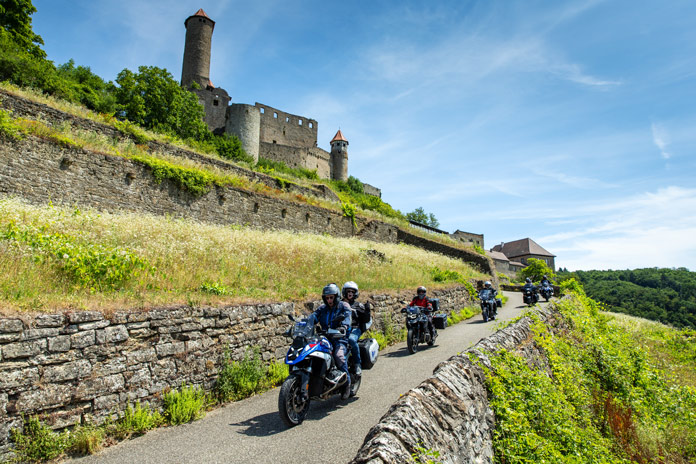
Castles and old, narrow roads are daily fare on the Best of Europe tour.
We stopped at the Schöntal Monastery for a break and were floored by the stunning baroque architecture and ornate interior. We went on to Hirschhorn Castle, a medieval fortress that evolved into a Renaissance-style palace. The castle is strategically placed high above the Neckar River, providing a bird’s eye view of the town.
We ended the day in a modern hotel above Heidelberg. From our hotel, we descended in a railcar to the city’s Old Town, which was quite happening on a Saturday night, with crowds of all ages, live music, great vibes, and plenty of restaurants. A tall beer and whole grilled pork knuckle put the finishing touch on another great day.
Day 3: Heidelberg to Ribeauvillé
On our way to Ribeauvillé, France, where we’d be staying for two nights, we jumped on the A5 Autobahn with unrestricted speed limits in sections. It was far from a free-for-all, but it was still interesting to watch the high-speed traffic and witness the respect for those in the fast lane. There’s something to be learned here. While we’re checking off boxes, let’s add the Black Forest High Road to the list. It’s a spectacular rider’s road with sweeping curves, excellent flow, and open views overlooking the Rhine Valley.
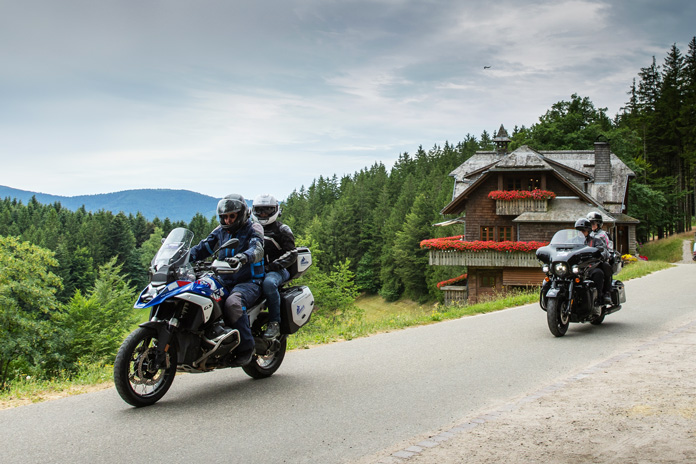
This tour is rated 2 of 5 stars for riding difficulty and is a great introduction to riding in Europe two-up or solo.
We’d worked up an appetite and were led down an impossibly narrow forest road and up on a ridge where we found a picturesque three-story restaurant. It had a chunky rock foundation built into the steep slope and an exterior almost entirely covered in weathered wood shingles. Wrapped around the building were flower boxes exploding with red flowers set off against the lush green grass and deep green forest, and there were small goats milling about and, you guessed it, the perfect amount of smoke coming out of the chimney. If the food was half as good as the establishment looked, it’d be epic, and it was indeed. We timed our arrival perfectly; a light rain began as the warm food hit our table.
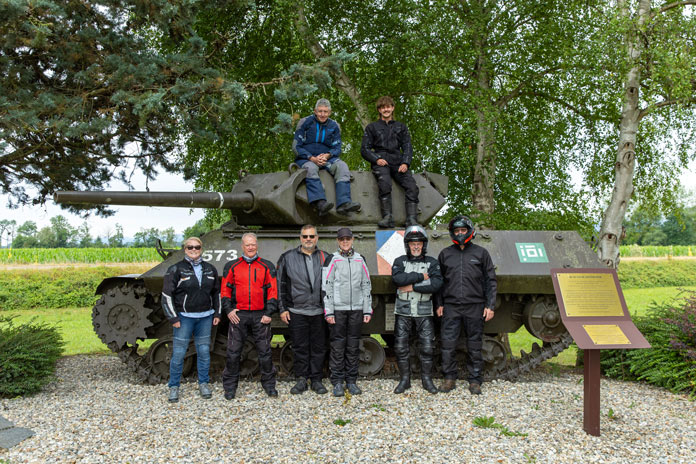
Our group with an American M-10 Wolverine Tank Destroyer at a WWII memorial in France.
After lunch, we enjoyed more touring roads as we descended from the forest through numerous villages until reaching the Rhine Valley. We crossed the Rhine River, one of the great rivers of Europe, spanning nearly 800 miles, into France. Ribeauvillé is another medieval gem on a smaller scale than what we’d experienced so far. It’s surrounded by patchwork vineyards climbing up the Vosges Mountains with multiple castles above the town. The mild climate in the Rhine Valley produces exceptional white wines.
Day 4: Ribeauvillé
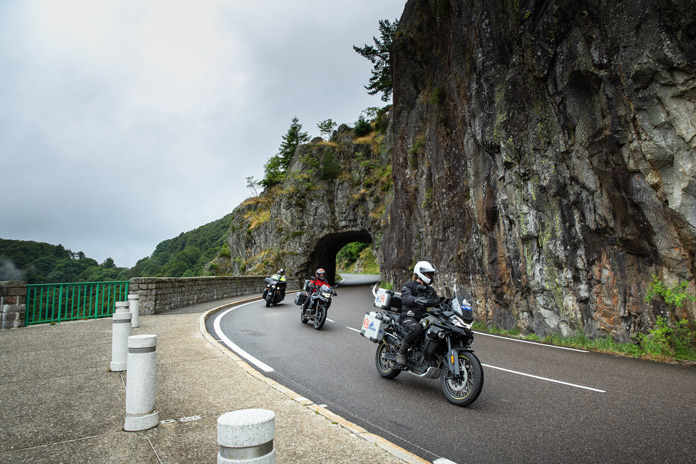
This is my kind of rest day! Amazing roads in France’s Vosges Mountains.
During our rest day in Ribeauvillé, only three riders joined Felix for the optional half-day ride. We didn’t need to travel far to find some great motorcycle roads and passes. One section of road was carved into a vertical rock canyon and included a tunnel bored through solid rock, where we stopped to grab some action photos on the damp road with rain on the way. We also stopped at Wettstein National Necropolis, a French military cemetery, to reflect on the lives lost and wars fought not only in this area but throughout the routes we’d been through on this trip. It was a sobering reminder of how good we have it. Last, we stopped in the town of Münster, famous not only for its pungent cow-milk’s cheese but also for the storks that are commonly found on the roofs in the town center. With a shorter day and considering the way I’d been eating, I couldn’t help but wonder if a few bicycles in the support van would be a good idea.
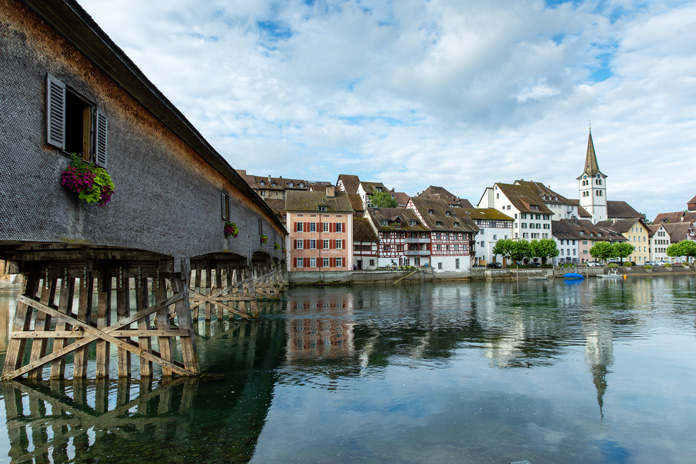
This wooden bridge over the Rhine connects Diessenhofen, Switzerland, and Gailingen, Germany.
Day 5: Ribeauvillé to Schaffhausen
With the whole group back together, we spent the morning in France, crossed back over the Rhine River, continued to the Black Forest of Germany, and finally arrived in Switzerland. Each morning, I checked in with our tour guides for their advice on unique photo spots on the day’s route, and Texaspass in Germany delivered. Looking down from one of the elevated turnouts is a stunning layering of hills and terraced, geometrically shaped vineyards that just happened to have a curvy canyon road completing the composition. Thankfully, the group obliged my request for some action passes before we headed into the Black Forest.
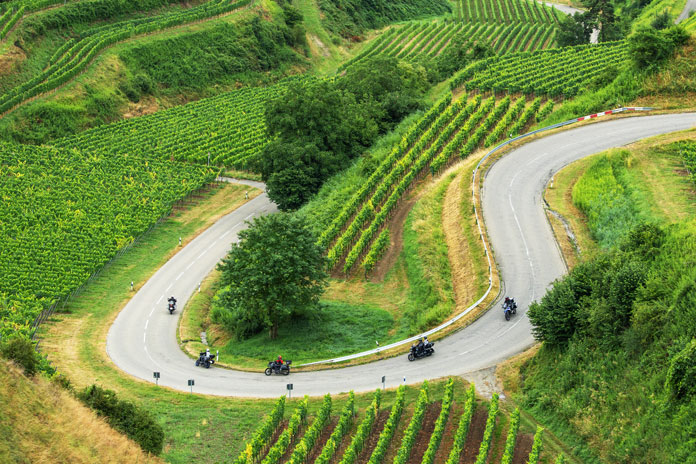
Germany’s Texaspass in the Kaiserstuhl wine region is named for its lasso-like curves.
After a solid dose of Black Forest winding roads, we arrived at Hexenlochmühle (Witch’s Hole Mill), where two mill wheels are powered by the river in a narrow canyon. After a hearty lunch and mandatory slice of Black Forest cake, we headed out again. The weather was closing in on us, and we rode in the rain for several hours. We spent the night in Switzerland near the Rhine Falls.
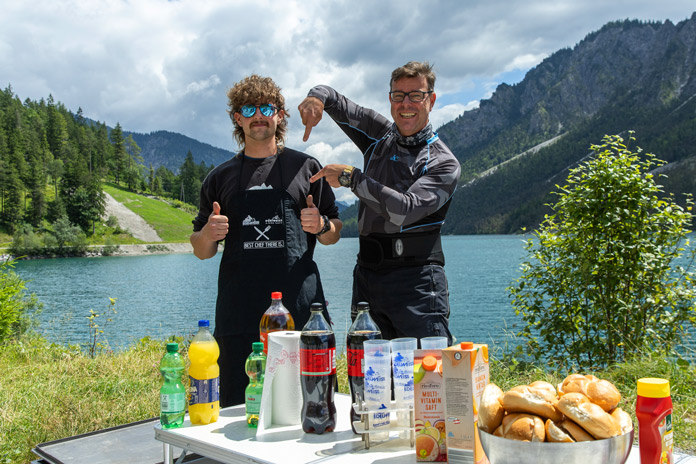
Felix and Heiko were our multitasking, multitalented, upbeat guides.
Day 6: Schaffhausen to Warth
The adventure really ramped up on this day, starting with crossing a storybook-like and historic Rhine border bridge. Lake Constance, central Europe’s third largest lake that borders Switzerland, Germany, and Austria, is situated in the Rhine glacier basin. Next up was spectacular high mountain riding to Säntis, Switzerland, where we took a cable car ride to the summit, with panoramic views of six countries at over 8,200 feet above sea level. Our views were mostly obscured by clouds, but we had fun throwing snowballs at each other.
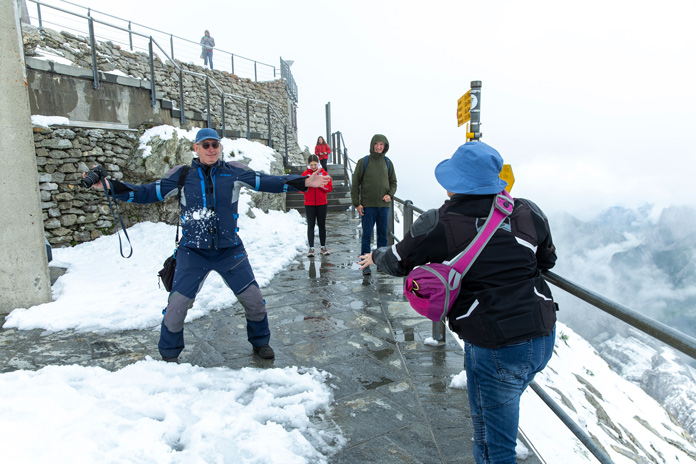
A snowball fight atop the Säntis peak in Switzerland.
With Switzerland in our mirrors and after a brief crossing into Liechtenstein, our biggest riding challenges awaited. In Austria, the Furkajoch (5,778 feet) and Hochtannberg (5,509 feet) passes were phenomenal. This was, without a doubt, my favorite day of the tour, and we just scratched the surface of what’s available in the Alps. The entire tour had been a bowl of cherries, but this day’s cherries were the biggest and sweetest of all.
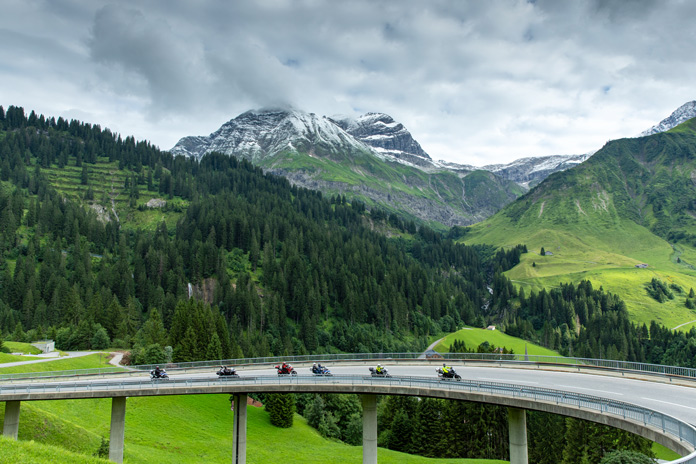
We enjoyed phenomenal curves and views on the Hochtannberg Pass road in the Austrian Alps.
Day 7: Warth to Erding
As with all tours, ours came to an end as we circled back toward Munich. It was mind-boggling to reflect on all the unique on- and off-bike experiences packed within a single week. But we weren’t done quite yet. We saw the famous Neuschwanstein Castle in all its glory, followed by a roadside picnic on the shores of Lake Plansee in Austria. It was there where I bid farewell to the fun group and our excellent tour guides Heiko and Felix, appreciating the camaraderie, shared riding, and cultural experiences. Fortunately, my journey continued as I headed directly to Edelweiss’ headquarters in Mieming, Austria, for the company’s 45th Anniversary Reunion (see sidebar below).
Edelweiss Bike Travel’s Best of Europe tour will run six times in 2026 from May to September. Visit EdelweissBike.com for more information and to book a tour.
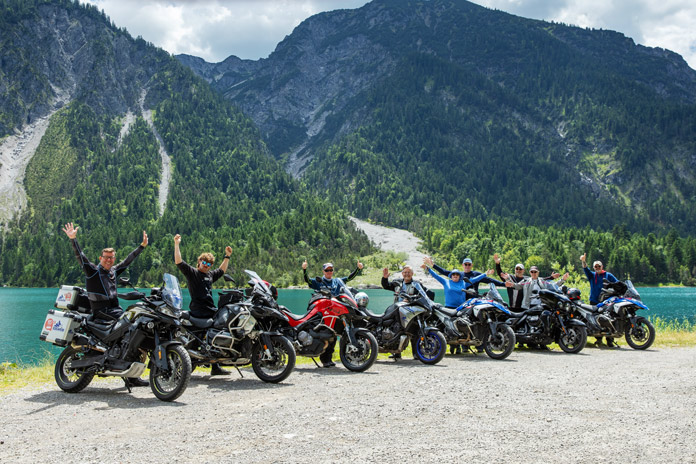
By the final day of the tour, our group had fully bonded over a week of great experiences.
Read our other Edelweiss Bike Travel tour reviews
SIDEBAR: Edelweiss 45th Anniversary Reunion
It’s always a good time when the to-do list dictates a couple weeks of touring in Europe. After the Best of Europe tour, I went straight into Edelweiss’ 45th Anniversary Reunion, a four-day ride and celebration.
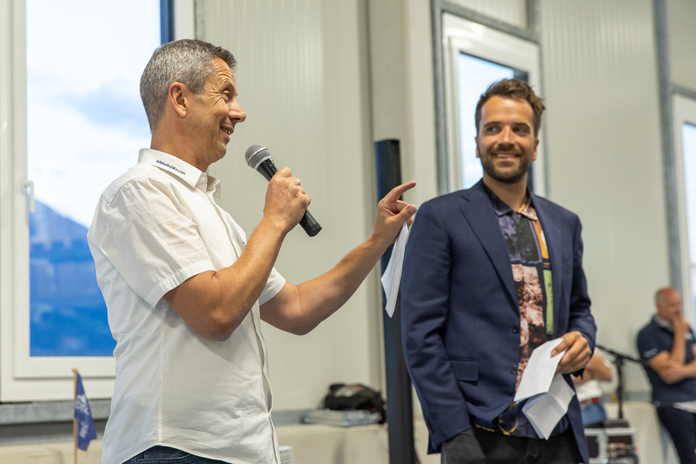
Managing Directors Rainer Buck and Tobias Wachter address the 45th reunion attendees.
Founded by Werner Wachter and his wife, Coral, in 1980, over the past four and a half decades Edelweiss Bike Travel has grown to be the largest motorcycle tour company in the world. Edelweiss leads tours on every continent except Antarctica, and more than 41,000 riders and passengers have enjoyed the company’s signature brand of service, quality, and expertise – and many of them are repeat clients.
With only three tours on my resume, I wasn’t sure what to expect at the anniversary event and figured I might be outgunned. That thought disappeared fast. I ran into a close friend from Southern California, fellow photographer Jeff Allen, and just like that, it indeed felt like a reunion. Compared to my three previous tours, this anniversary weekend landed on a whole other level.
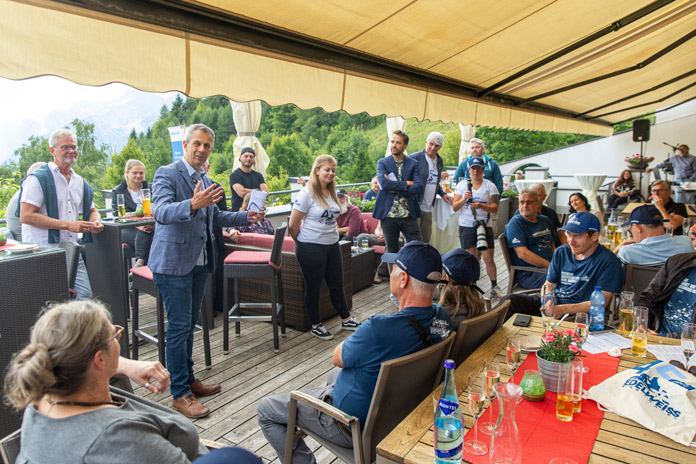
Yes, the new headquarters unveiling was impressive, but that wasn’t the main attraction. What stood out to me most was the international mix and the shared mindset of those attending. Riders came from China, Australia, and everywhere in between. High-profile guests like Charlie Boorman blended right in, telling stories with zero pretense – a common thread throughout the Edelweiss crowd.
Off the bike, highlights stacked up quickly. A high-energy Austrian folk-dancing team brought the local flavor. I enjoyed espresso breaks on rustic patios with insane views, outdoor picnics perched above impossible ribbons of alpine road, one morning atop Timmelsjoch Pass, and an easy conversation with Tobias Wachter, Werner and Coral’s son, who is now owner and managing director of Edelweiss. Tobias is a passionate motocross and supercross fan, so we shared a universal language.
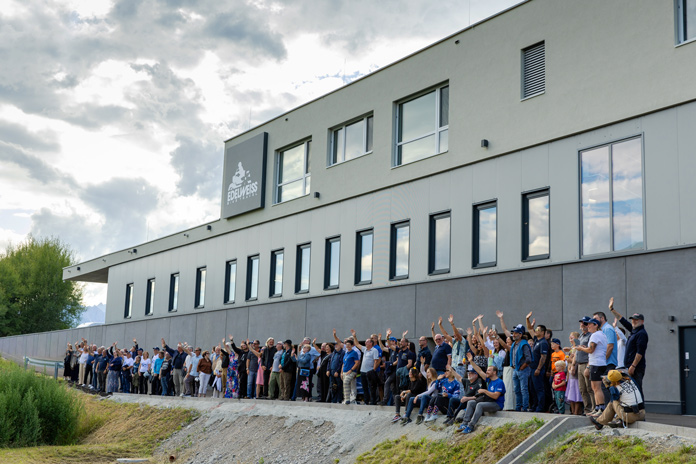
Edelweiss’ new headquarters in Austria.
We spent two days riding in the mountains. We’re not talking about a yawnfest here. Chasing a guide over Hahntennjoch Pass felt less like being guided and more like an Alps riding lesson: smooth, fast, and confidence-building.
After four days, it felt like I was just riding with friends who happen to know the best roads in the world.
The post Edelweiss Bike Travel Best of Europe Tour Review: Best of the Best appeared first on Rider Magazine.
Continue reading...