


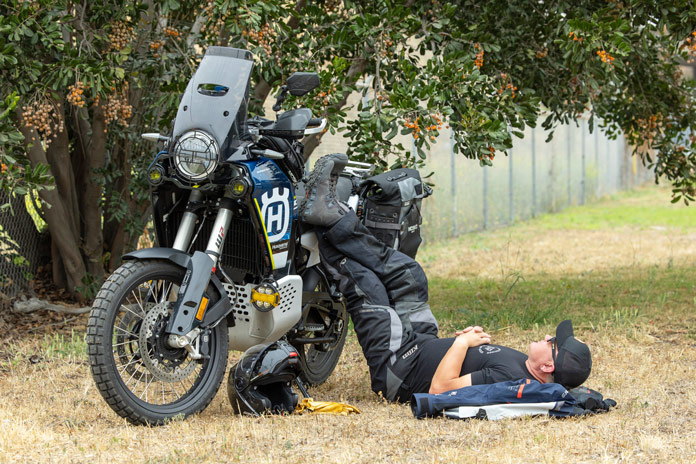
The special forces 10-minute power nap works aces when fatigue is at your doorstep. (Photos by Kevin Wing)
It was late summer of 1988, and I was busily hauling my personal belongings from my mom’s house in Ventura, California, back down to Los Angeles to live with my dad. While everything was peaches with my respective parents, the move would afford me the opportunity to once again have access to a garage to work on my Honda CR250 and, even better, put me closer to motorcross tracks, where I could more regularly risk cracking my ribs and torquing my remaining good knee. I was excited. With an each‑way drive time of approximately 1 hour, I wasn’t looking forward to the three rounds of loading and unloading it would require to complete the task, but with gas around a buck a gallon, I strapped my lead foot on, dropped the hammer on my Dodge Tradesman 100, and got to it.
Now based on the title of this article, you can most likely guess what happened at approximately 0200 hours while heading westbound on State Route 118, just shy of the Ventura city limit. Yep, I finally ran out of gas. No, not the trusty Tradesman 100, but me; I completely fell asleep at the wheel. I was rattled awake after the van brushed a guardrail, only to find my un‑seatbelted self in the far back portion of the van as it abandoned the pavement altogether and began stalking the dirt shoulder at 65 mph. To be clear, I was alone at the time, so observing the driverless van auto‑piloting me head‑on into a mature cluster of oak trees was peculiar to say the least.
I was a dumb teenager at the time, so I had little preparation or experience to draw on in hopes of generating better outcomes. And because it seems I decided to let the van do the thinking for us, it did what well‑equipped Dodges do when left to their own devices – they run into stuff. Of course, I tried to improve my situation by diving behind the driver’s seat just moments before impact, but that spunky orange Dodge just giggled as it threw me into the dash and then launched me all the way back to the rear doors again. When I woke up, it was dead quiet, and I was essentially locked inside a bent and broken metal box that was smoking and smelled like motor oil. Somehow, I managed to climb out a window, flag down a driver, and get to the hospital with some internal bleeding and other cool party‑convo injuries.
So why am I telling you this story? Because ever since my dramatic van reconstruction project, I’ve made a point to build up my ability to stay awake, focus, and remain vigilant when piloting machinery that can play pattycake with me at speed. And like me, you too have found yourself struggling to stay alert over some endless droning miles of pavement. You know the ones I’m talking about; you reach your destination only to realize that you can’t recall the last three hours of travel. So I’m going to give you a few lesser‑known tips and tricks that help me get to the finish line.
But first, a quick liability waiver here: The best thing we can do for ourselves is rest up before the ride and immediately get off the bike to rest when we get tired. So here’s the deal: I’m going to throw out some things I’ve used, with the understanding that the safest and most prudent response to fatigue on the bike is immediately resting off the bike, okay? Cool.
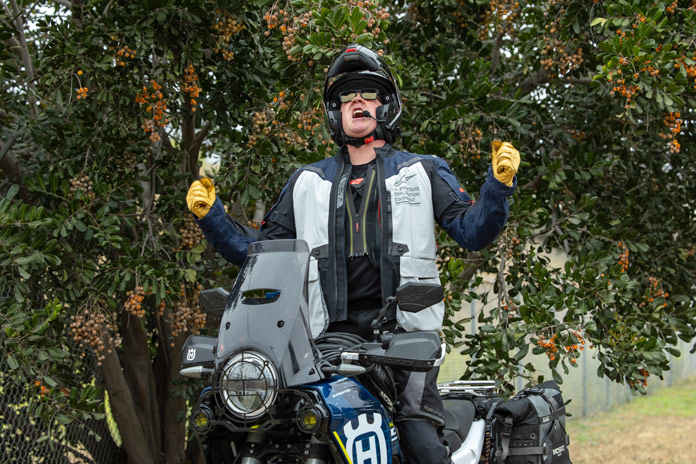
Get angry, damn it! A little yelling and screaming does wonders when you’d rather be napping.
1) Special forces 10‑minute power nap: Pull off the road into a safe and secluded spot, get off the bike, and lay flat on the ground. Scooting your butt up against the motorcycle, elevate your legs and rest them on the seat, tank, saddlebag, or similar. The point here is that we want to elevate our legs and rest in this position for 10 minutes. This technique reduces leg swelling and returns blood to our core. The few times I used this, I didn’t use anything for my head, and in fact kept my helmet on once, and it worked great. The key here is to limit this nap to 10 minutes so that our bodies stay in the light phase (non‑REM) of sleep. In this way we will get much needed rest but not feel groggy and disoriented when we hop back on the bike. My dad used this one for years when he co‑starred on The Young and The Restless, so that’s probably where the Navy Seals got it from.
2) Pinch and poke yourself enough to cause pain: Silly? It’s a lot better than wandering off the road for some light gardening. And it works. Pain stimulates adrenaline, which can wake you up, so generating some pain and discomfort will stoke the furnace and allow you to tick off a few more miles.
3) Get angry and yell at yourself: Let’s face it, you have a lot to be mad about, for the simple fact that I just detailed step‑by‑step how I destroyed a classic Dodge van. And not just any Dodge van, but one with custom wood paneling, hidden mood lights, and wall‑to‑wall shag carpet. Get mad, damn it! It releases adrenaline and cortisol, which can activate your “fight or flight” response, resulting in increased heart rate, blood pressure, and breathing rate, and ultimately it can fire you up.
4) Chew gum: This isn’t too original, but I’ve found that it really does help. In fact, studies show that chewing gum stimulates the brain and blood flow, which results in improved attention, alertness, and concentration. Most importantly, it combats fatigue while you ride. Burt Reynolds knew it; now so do you.
5) Brain games: When I get tired, I often play mental games to stimulate brain activity to help keep me alert, engaged, and awake. My favorite one is the A, B, C game. Starting with “A,” I identify motorcycle‑specific companies whose names start with that letter and work my way through the entire alphabet as I ride. For example: “A” is for Aprilia, ATK, Ace Motorcycles, Akropovič, Alpinestars, Answer Products, Acerbis Plastics, Avon tires, on and on. Oh, and say it out loud to further engage the senses.
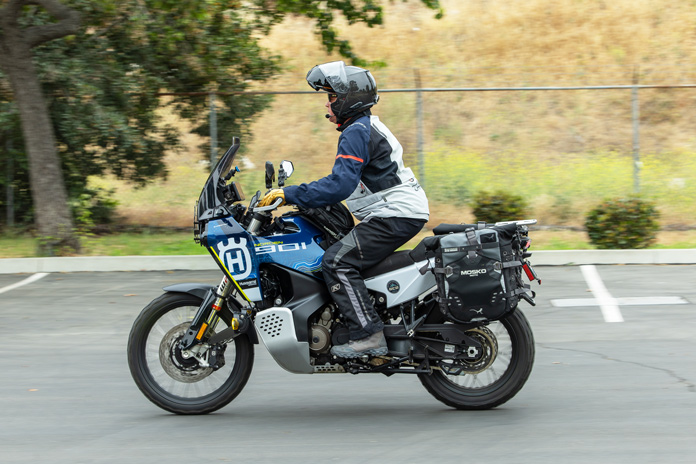
Sleepy? Try some isometric squats to rocket your energy levels to the moon.
6) Exercise: It’s no mystery that exercise boosts blood flow and energy levels, making the short list of pretty much every “how to stay awake” guide. But how would someone engage in safe yet effective exercise while also riding a motorcycle? Simple. Isometric squats. Just stay with me here; I’ve been doing these for years, and they work great. All you need to do is generate enough force in your legs to lift your butt approximately 1 inch off the seat. Once you accomplish that, you hold that position for 15‑30 seconds. After a short rest, you do it again. I usually do 5‑10 sets, 30‑60 seconds at a time. Just make sure you don’t cause any undo force or awkward balance points at the handlebar (pulling or pushing) that could impede your ability to safely control the motorcycle while in a squat position. But, oh boy, will your legs burn and your energy levels soar!
Listen, I get it, you want to get where you’re going. But the last thing I need is for anything bad to happen to you. See, my van got pretty busted up back there, and the word on the street is your old man is a television repairman who has the ultimate set of tools. Maybe together we can fix it!
Quinn wears Schuberth helmets and Lee Parks Design gloves. Find out more at Quinn’s website, PoliceMotorTraining.com. Send feedback to rider@ridermagazine.com.
See all Motor School with Quinn Redeker articles here.
The post Motor School with Quinn Redeker: Fighting Fatigue appeared first on Rider Magazine.
Continue reading...