


- Joined
- Dec 1, 2004
- Messages
- 1,495
- Age
- 61
- Bike
- '21 RT / '24 GSA
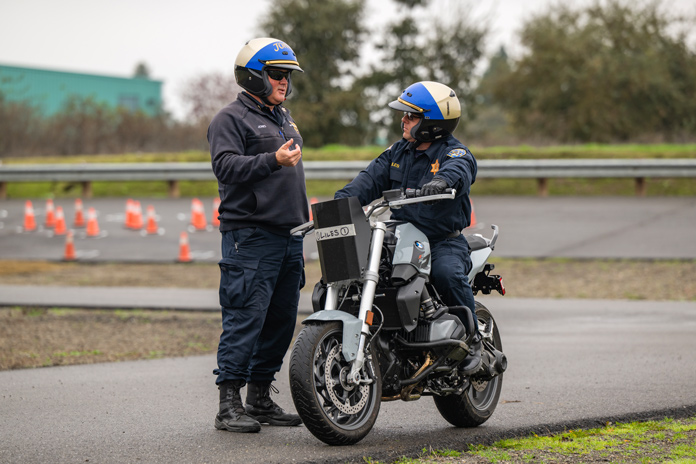
Sgt. Jones has translated his years of coaching athletes into a high pass rate at the CHP Motor Academy. (Photos by Kevin Wing)
A few months back, I was in Sacramento at the California Highway Patrol Motor Academy for the official launch of BMW’s new R 1300 RT-P police model. As the national brand ambassador, my role involved a “first impressions” discussion, followed by a technical riding demonstration for a sea of motor officers, high-level brass, BMW engineers flown out from Germany, and all the current CHP Motor Academy instructors. I’ll leave it to you to guess how many antacids I popped that morning.
When it was all over, I ate lunch in the academy cafeteria and had an opportunity to talk with Sgt. Dave Jones, who runs the CHP Motor Academy. In just a few minutes it was obvious we had a ton in common as we discussed our philosophies on riding techniques, coaching, competition, training, and more. Then Sgt. Jones told me something that absolutely blew my mind: In just over two years since he took over the program, the pass rate among motor school students went from 40% to a staggering 90%! More remarkable, Jones confirmed that he hadn’t touched the existing program requirements one bit; it’s just as hard to pass as it ever was.
Over the course of the next few hours, I learned quite a bit about Jones. Turns out he’s been moonlighting as a baseball coach for the last 15 years, with an emphasis on mental performance for batters. Naturally, once he started running the motor academy, parallels between the mental struggles his high school players had and the struggles his motor school students faced began to reveal themselves. That’s when Jones put to good use all the coaching knowledge he had amassed, knowing that if he could get the motor school students’ minds right, their mechanics (and success) on the bike would follow. Clearly, it worked like a charm.
What exactly was Dave’s (Sgt. Jones to you, pal) special sauce that transformed the CHP Motor Academy into such a thriving program? That’s what I wanted to know. Lucky for us, Dave agreed to walk us through some key points for this month’s article. Please don’t ask questions until he’s done, and most importantly, let this stuff sink in because it has the potential to significantly transform your abilities on the motorcycle. Ready? Here we go.
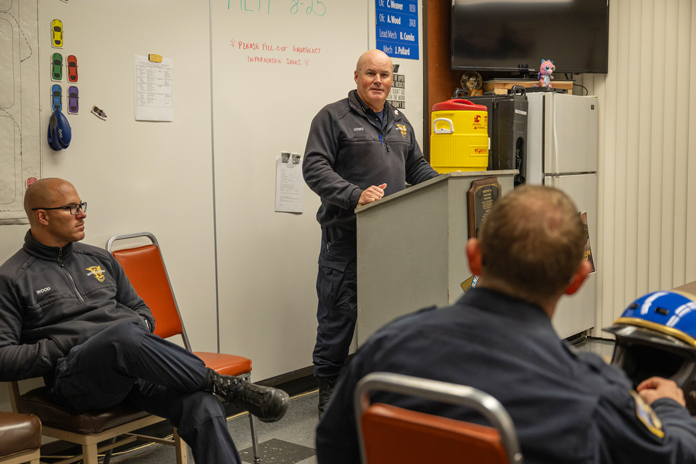
To reduce the high failure rate at motor school, the CHP is helping students improve their mental game.
How Do You Think of Training?
When you train, is your goal to succeed, or is it to not fail? See the difference? Which side of the coin you’re on will dictate the outcome. The inconvenient truth is that most of us train to not fail. And by having this mindset, we subconsciously invite failure to manifest. Then when the inevitable mistake reveals itself, it becomes a confirmation rather than a bump in the road. And just like a strong feedback loop, doubt creeps in, more mistakes occur, and before you realize what has happened, you’re cooked. The solution? Change your relationship with failure by not concentrating on preventing it but redirecting your focus on the idea of succeeding. This philosophy subconsciously invites resiliency, tenacity, and better outcomes.
Overcome Self-Doubt
Self-doubt is a performance killer, but it can only be overcome through personal belief in yourself; it can’t happen any other way. No matter how many times I tell you that you’re the best or that you have it all figured out, doubt will persist in your mind until you conquer it through preparation, consistent effort, and a purposeful investment in your training. Those are the things that build belief. Sure, you will have to put in the work, but by adopting this growth mindset, self-doubt diminishes and the short-term challenges you face along the way become easier to navigate. So put your head down and do the work.
You Are Not Me
Don’t compare yourself to other riders. If your attention lies in the ongoing comparison of yourself to others, let this be an alarm bell that you have already created doubt within your own program. As we discussed earlier, self-doubt effectively kills your success. Instead, try to redirect your efforts to mentally focus on your strengths. Trust me, all it takes is a few deep breaths and a quick mental reset. The positive result of increased skill, confidence, and drive will be immediate. Then you will be back to building on your strengths.
Take a Risk
It may sound harsh, but you are shielding yourself against your own growth right now. That’s because growth requires moving away from a place of comfort to a place that requires you to face some level of fear. For example, maybe you tense up every time the motorcycle leans over at slow speeds, so you choose to keep it upright when turning around everywhere you go. Surely you would love to have the comfort and control to drop the motorcycle over to whatever degree suits the situation, but fear gets in the way, so you don’t. In this example, the only way you will harness that ability is to find a safe environment and put in the work. But that work will require you to abandon comfort and embrace risk.
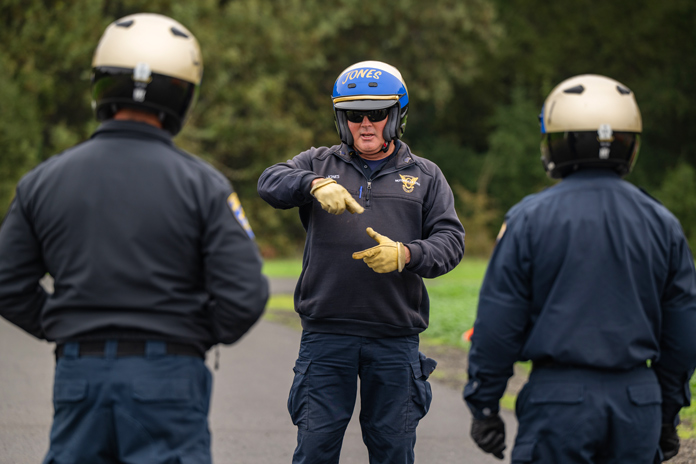
Sgt. Jones has a few tricks up his sleeve to help motor academy students avoid self-doubt and develop a growth mindset.
Fixed vs. Growth Mindset
Typically, students who struggle the most in motor programs carry a fixed mindset. They believe that their base skills or capabilities are fixed traits, so they are more likely to try to confirm them rather than work to develop them. This thinking can discourage them when they are confronted with mistakes because it solidifies their belief system. Shortly thereafter, doubt sets in, and they tend to disengage from the learning process and give up altogether.
Conversely, one who maintains a growth mindset doesn’t focus on proving an underlying ability or skill set but instead uses the challenges and opportunities around them to continue to develop into the best version of themselves possible. In other words, adversity becomes a bend in the road, not the end of the road.
Have a Goal and a Plan to Get There
When you practice on your motorcycle, understand what you are trying to accomplish. In my experience most riders simply hop on the bike and throw whatever techniques they know at the motorcycle without having any specific training goal in mind. Before your next training session, answer these questions: Why am I here? What is my training goal for today? What is my long-term training goal? How will I determine if I’m moving in the right direction? What tools am I using to evaluate my progress? Your answers should be specific and measurable if you want to see long-term growth in your skills.
Create a Routine
It’s important to create a repeatable process to fall back on when you find yourself struggling. This means a mental and physical reset process to help us get back to a “level set” position. Our routines help make moments feel normal, so if you find yourself struggling, slow everything down, calm your mind, simplify your process, and go back to the routine that was working in the past.
My hope is that some of this material resonates for you and that over time you put some of these concepts into practice. You have my word that they will make a significant positive impact on your riding and training program for many years to come.
Quinn wears Schuberth helmets, Richa apparel, Lee Parks Design gloves, and Indie Ridge boots. Find out more at Quinn’s website, PoliceMotorTraining.com. Send feedback to rider@ridermagazine.com.
See all Motor School with Quinn Redeker articles here.
The post Motor School with Quinn Redeker: It’s All in Your Mind appeared first on Rider Magazine.
Continue reading...
