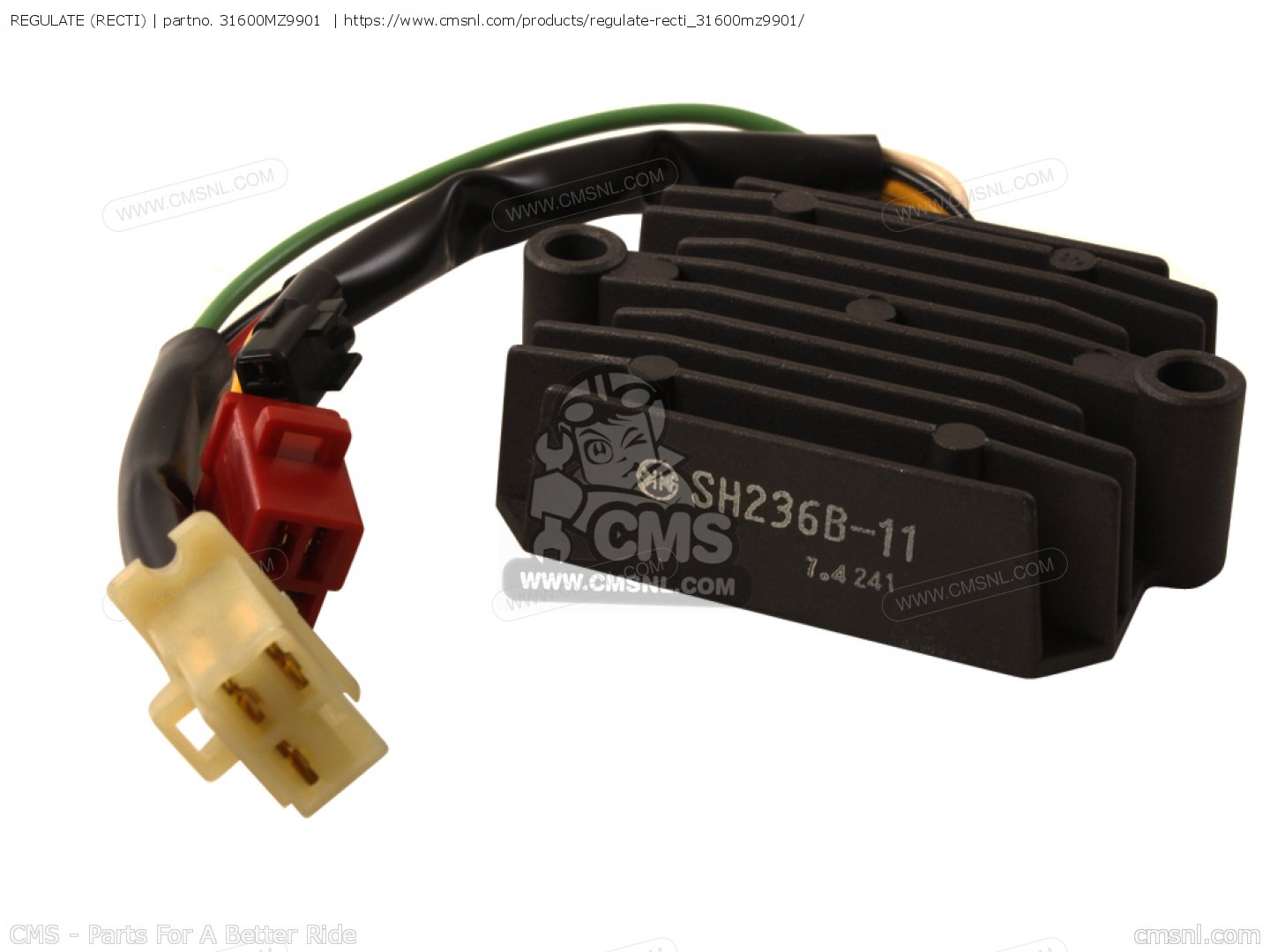
Rectifier

Joined
Jul 28, 2023
Messages
5
Age
53
Location
Washington
Had my rectifier grenade itself leaving me stranded. Was easy enough to see the problem with it billowing smoke out the side of the bike. Haven't checked all the continuities of the charging system yet--but is this likely a symptom of another problem, or just something that goes out after 30+ years? Have about 40k miles on the bike, it's been largely garaged all its life, and the wires seem good overall. Load wise, I put in a lithium battery, all LED lights, and heated grips (warm today, so theoretically not a factor), and haven't had any charging/electrical problems to date.

Thanks,
Christopher
 
Welcome to the forum.

We need more info, such as year and model, and what you're referring to as the rectifier.

Can you expose the part in question and post a pic or two?
 
'91 ST1100


This part definitely failed (was the smoking gun, has a leaking hole burned from the inside out), and I've ordered another genuine OEM. However, in searching for it, I came across this:


Which is an aftermarket replacement that is engineered with additional cooling surfaces (and is significantly cheaper, as are all the aftermarket variants I found). Any have experience either with that brand or with adding a heat sink to the side of the unit? There's plenty of room under the plastic.

I've seen some info about the red socket bypass (all the pictures had some weird fuse in the place where the rectifier bolts in, same bolts), and in any case, the connectors look great--no corrosion or anything. I was considering removing the PAIR nonsense too, since the hoses for same are unavailable and pretty cooked from when my cooling system was leaking. Anyone have a lead on block off plates for the chrome tubes, or can it simply be disabled by plugging the line coming from the T connector coming from the carbs?
 
The police spec versions used a beefed up VRR featuring heat-sinks:


the ST1100 specified VRR from your source is even listed at a lower price as the CB750 thing:


on the long run hard to tell how much of your wiring is already victim to corrosion and the resulting overheating...
Stiff cables with blackish strains are a definite sign...
It ain't the actual load causing a BBQ, its the increased resistance on a small contact patch (like a crimp point) due oxides/corrosion...
I'd also carefully measure the resistance of the stator windings (if possible also the AC output while engine is running) for being absolutely equal/balanced...
 
The OEM piece has a metal backing that sits against the step holder, which seems like a design feature to use it as a heat sink, since it appears to be a big piece of aluminum. Anyone tried a little thermal paste between them to encourage heat transfer?
 
Your model has the 28 amp alternator, its days are numbered. However it looks like you’re doing your best to ease the load.
That white connector to your rectifier is probably toast…you can replace the connector with individual female spade connectors just take note of the orientation of the wires in the connector to match it with the new rectifier.
Before going any further, check that the alternator isn’t leaking oil. Put a piece of paper under it overnight and monitor it. If there’s oil on the paper then start looking to get the parts for the 40 amp upgrade. If it’s dry, then spend the money on a rectifier.
There are three yellow wires coming from the alternator, follow them to the rectifier there. May be a red connector prior to going to the white connector to the rectifier. If there is, bypass the connector by soldering and heat shrink each yellow wire individually.
Also check the main relay connector. There are four wires going into that red connector. Check to see if it’s compromised, meaning melted or burned out. If it is replace with individual female insulated spade connectors. Again note the orientation of the wires from the connector. ( if you don’t match one of those green wires you will blow the clutch diode and your neutral light will stay on.
The clutch diode is located in the harness on the left side under the air filter
 
'91 ST1100

[/URL][/URL][/URL][/URL]

This part definitely failed (was the smoking gun, has a leaking hole burned from the inside out), and I've ordered another genuine OEM. However, in searching for it, I came across this:

[/URL][/URL][/URL][/URL]

Which is an aftermarket replacement that is engineered with additional cooling surfaces (and is significantly cheaper, as are all the aftermarket variants I found). Any have experience either with that brand or with adding a heat sink to the side of the unit? There's plenty of room under the plastic.

I've seen some info about the red socket bypass (all the pictures had some weird fuse in the place where the rectifier bolts in, same bolts), and in any case, the connectors look great--no corrosion or anything. I was considering removing the PAIR nonsense too, since the hoses for same are unavailable and pretty cooked from when my cooling system was leaking. Anyone have a lead on block off plates for the chrome tubes, or can it simply be disabled by plugging the line coming from the T connector coming from the carbs?
Jeez, dont buy the OEM R/R......look at getting an updated Shindengen model FH027AA, far less cost too.
https://roadstercycle.com/
 
Last edited:
Your model has the 28 amp alternator, its days are numbered. However it looks like you’re doing your best to ease the load.
That white connector to your rectifier is probably toast…you can replace the connector with individual female spade connectors just take note of the orientation of the wires in the connector to match it with the new rectifier.
Before going any further, check that the alternator isn’t leaking oil. Put a piece of paper under it overnight and monitor it. If there’s oil on the paper then start looking to get the parts for the 40 amp upgrade. If it’s dry, then spend the money on a rectifier.
There are three yellow wires coming from the alternator, follow them to the rectifier there. May be a red connector prior to going to the white connector to the rectifier. If there is, bypass the connector by soldering and heat shrink each yellow wire individually.
Also check the main relay connector. There are four wires going into that red connector. Check to see if it’s compromised, meaning melted or burned out. If it is replace with individual female insulated spade connectors. Again note the orientation of the wires from the connector. ( if you don’t match one of those green wires you will blow the clutch diode and your neutral light will stay on.
The clutch diode is located in the harness on the left side under the air filter
Does it use engine oil for the cooling, or is it a separate self contained system in the older alternator? The bike doesn't leak at all (on the floor), if it's a slow leak with no path to ground, I'll check with the paper. When I unplugged the rectifier, the connector looked solid, but I haven't done all the continuity tests yet, nor had the opportunity to unplug the other connectors to check for obvious failure. The 30amp fuse next to the red connector is intact.
 
Jeez, dont buy the OEM R/R......look at getting an updated Shindengen model FH027AA, far less cost too.
https://roadstercycle.com/
I saw a couple different Mosfet choices--but none of them had the 6 wires. Is the solution the same for all--take all 3 of the yellow, and reroute them to this unit, then ignore the white/black/red & white wires, and plug directly to the battery instead?
 
Back
Top Bottom