• A to Z Rules
      Start with a City beginning with A
    1. This is BY STATE
    2. Similar to the Tag contest, there will be one thread per state
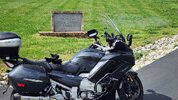
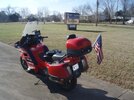
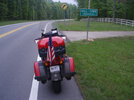
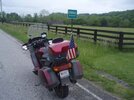
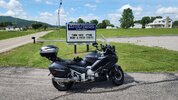
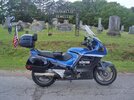
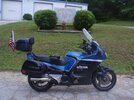
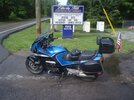
    3. Post a picture of your bike AND some sign, building etc which clearly shows the city/state you're in
    4. The next person posts from a city with the name beginning with B, then C, D, etc
    5. You can't posts back-to-back pics, you have to wait for a person to post the next city
    6. Once Z is reached, the game starts over with A
    7. If your state doesn't have a city beginning with the next letter in sequence, it's okay to skip that letter
    8. If the location sits for more than one month, the person that posted that is open to move it to the next letter.
    9. For some States there are tough letters to find such as Q, W, X, Y, Z - in those cases it is acceptable to find anything with those letters in the name to keep the game moving.

    The World Wide game is a bit different as it is by whatever is considered a geographic type of regional category, state/province/village etc. and all those will be in the single World Wide A-Z topic.
  • ST-Owners and the event organizer(s) are not responsible for the actions taken during any ride. Each member is responsible for determining if conditions are acceptable for riding and for their actions.

TN: A to Z (Round 9)

Bell Town For A B -

Bell Town.jpg

A bit of history -

Bell Town has traditionally been an African American community. Folk history has it that the traditional residents are descendants of the slaves of Middle Tennessee ironmaster Montgomery Bell as he was widely reputed to have had several slave mistresses, many inhabitants claim descent from Bell via these women. A primary school was located here until it was closed by racial integration in the 1960s; the renovated building later served as an office for a religious ministry and as a restaurant before being demolished in the late 2010s. The Bell Town Cemetery is a historic cemetery that has been used by African Americans for generations.
 
Dickson For D -
Dickson.jpg

A Little Bit Of History -

Dickson, Tennessee, has a rich history rooted in its role as a railroad stop, an iron industry hub, and a Civil War-era location. The town was established in 1873 and named after Congressman William Dickson. Prior to its official naming, the area was known as Mile Post 42 during the Civil War and may have been called Sneedville or Smeedville.
 
Last edited:
(E)still Springs

1746556996889.png

1746557079678.png

Estill Springs is a town in Franklin County, Tennessee, with a population of 2,694 as of a revised 2020 census. Locals often refer to it simply as "Estill." The town is part of the Winchester, TN Micropolitan Statistical Area and is located in Middle Tennessee2.

History​

Estill Springs has a rich history dating back to circa 1840, when the Frank Estill family donated land for railroad construction. The town developed as a spa destination, thanks to its mineral springs, which were historically known to the Cherokee people for their healing properties. During the Civil War, it was known as "Allisonia" and served as a Confederate training camp.

Modern-Day Estill Springs​

Today, Estill Springs is known for its natural spring water, recreational activities, and community events. The town offers little league baseball, horse shows, pee wee football, and other activities throughout the year. It is surrounded by lakes and green spaces, making it a great spot for outdoor enthusiasts.
 
Fernvale For A F -

Fernvale.jpg


Some History -


In 1819, Samuel and Ollie Jones Smith settled along the South Harpeth River near the sulphur springs. In 1879, John B. McEwen purchased Smith's Springs, renamed it Fernvale, and developed a popular summer resort. In 1904, railroad executive William Pepper Bruce bought the resort with 3,500 acres and operated the hotel until it burned in 1910. After the hotel's closure, Fernvale became a more quiet, rural community, with some remnants of its past, like the Fernvale Community Church and the former gas station, still standing. Fernvale Methodist church, organized in 1849, was built in 1885. Fernvale Church of Christ, organized in 1907, moved to its present building in 1950.
 
(G)ossburg kinda lucked up on this one.

1746666016917.png

Not much info...

Gossburg is a small community located in Coffee County, Tennessee. It operates in the Central Time Zone and is near several other towns, including Beech Grove, Fredonia, and Christiana.
 
Hillsboro For A H (I almost got Hoover Gap instead!)

Hillsboro.jpg

A Bit Of History -

Hillsboro, the unincorporated community in Coffee County, was founded in the early 1800s and was in competition for the county seat of Coffee County. Initially called Pond Spring, Hillsboro was a large community that competed with Manchester for the county seat, and was actually larger at the time. While Hillsboro was a contender, Tullahoma eventually became the county seat due to its strategic location at the junction of two major railway lines.
 
Jeannette For J -
Jeanette.jpg

Jeanette Fire Hall.jpg

Very little history -

The cemetery was established circa 1900 and largely superceded Suttles Chapel as the primary cemetery in the area after World War I. There are 16 graves marked with fieldstones, 6 graves marked by other various means but not identified, and about 6 depressions which may indicate burials.
 
Last edited:
(K)immins About the only information is that it exists.

1747952119155.png

Kimmins is an unincorporated community in northern Lewis County, Tennessee. It lies along local roads north of Hohenwald, the county seat of Lewis County. The elevation of Kimmins is 951 feet (290 meters).
 
Liberty Hill For A L -

Liberty Hill.jpg

A Little History -

Liberty Hill served as a point along the route of the forced relocation of Cherokee Indians in the 1830s, as described in the Indian Removal Act. The Cherokees, numbering 4,000, passed by Liberty Hill on their way to Oklahoma. The Liberty Church was a prominent Methodist gathering place in the early 19th century. It was associated with several Methodist leaders, including Joshua Cannon, Benjamin Sewell, and Moses Spires. It hosted the Western Conference of the Methodist Church in 1808, the first annual conference west of the Alleghenies. Early Methodist preacher Lorenzo Dow also visited the Liberty Church in 1804. Liberty School, a one-room schoolhouse built in 1900, is one of the few remaining examples of its kind in Williamson County. It was listed on the National Register of Historic Places in 1988 but was later removed in 2006.
 
(M)artha

Martha, Tennessee, is an unincorporated community in Wilson County. It sits along State Route 109 and U.S. Route 70 and has a handful of businesses. Nothing much there but the train station. History? Dunno.


1748462643921.png
 
Newsom Station (one the last tags on BlueBelle - happens to be less that 2 miles from my house) -

Newsom Station.jpg

A bit of history -

Newsome Station, now largely known as Newsom's Mill, was a bustling community and historic site in Bellevue, Tennessee, near the Big Harpeth River. The area was settled and developed by the Newsom family, starting around 1790. It included a tavern, a train depot, and various other amenities before primarily becoming known for its grist mill. The original mill, built by William Bryant Newsom, was destroyed by a flood in 1808, but Joseph M. Newsom, William's son, rebuilt it in 1862 using hand-dressed limestone. They also operated the stone quarries. From these were taken great limestone blocks. These "hewn blocks were dressed by rubbing with wet pieces of grindstone". Stone from the Newsom quarries can be found in the State Capital, the Customs House, Hume-Fogg High School, Union Station and the stone wall around the old City Cemetery.
 
Last edited:
(O)ld Hickory

Old Hickory is a historic neighborhood in eastern Davidson County, Tennessee, and part of metropolitan Nashville. It's named after President Andrew Jackson, whose nickname was "Old Hickory".

The area is best known for its roots as a company town built around a large DuPont plant in the early 20th century. Many of the homes in the Village of Old Hickory were constructed to house factory workers and management, and several are now listed on the National Register of Historic Places.

Geographically, Old Hickory is bordered by the Cumberland River to the north and west, Old Hickory Lake to the east, and the former city of Lakewood to the south. The main thoroughfare is Old Hickory Boulevard (Tennessee State Route 45).

1750275371467.png

1750275440071.png
 
Parsons For P -

Parsons.jpg

A bit of history -

Around 1880 a young man named George Washington Partin left home in Ringgold, Georgia in a horse-drawn buggy and headed northwest into Tennessee to sell sewing machines. Eventually his travels led him to Decatur County where me met and married Margaret “Maggie” Rushing. Partin and his new bride were attracted to the Bear Creek area and thought it would be a good place to live and start a town.’. He purchased a number of acres on the Perryville-Lexington dirt road near the present Bear Creek church building and opened a large general store that went over big. His success attracted others and soon two cotton gins and a doctor’s office were added to the community.

Since there was no post office nearby application to establish a post office for the new town was submitted to Washington. The proposed post office would serve 575 persons. The post office, to be called Partinville, was approved and on November 13, 1885 George W. Partin became the first postmaster in the town which bore his name. But coming events would soon prove fatal to the new town.

In 1886 the Tennessee Midland Railroad Company (TMRC) received a charter to build a railroad from Memphis across Tennessee to the Virginia State line. In 1889 the railroad was completed from Memphis to the Tennessee River at Perryville where it ended. The railroad missed Partinville about one mile to the south. But the big blow came when the new railroad agreed to build a depot one mile east of Partinville on land owned by Henry Myracle. In order to get a town started on his land, Mr. Myracle deeded one hundred forty three and one-third acres to the (TMRC). The railroad company engineer drew the plans for lots and streets on land owned by both Myracle and (TMRC) and the town of Parsons was about to begin.

George W. Partin, seeing the handwriting on the wall, immediately prepared to move to the new town. On April 20,1889 he purchased the first lot sold in the new town and on August 19, 1889 bought nearby Buckner land and shortly thereafter tore his store building down at Partinville and moved his business to the new town.

The fateful day came on May 7, 1897 when the post office officially moved to Parsons. Partinville, the forerunner to Parsons was now history.
 
pas(Q)uo


Pasquo, Tennessee is a small but historically rich neighborhood nestled in the western part of Nashville, along State Route 100 in Davidson County. It’s part of the Metropolitan Government of Nashville and Davidson County, and while it’s not an incorporated city or census-designated place, it has its own distinct identity.

️ What Makes Pasquo Notable:​

  • Gateway to the Natchez Trace Parkway: Pasquo marks the northern terminus of this scenic, historic route that stretches all the way to Natchez, Mississippi.
  • Name Origins: The name “Pasquo” is a shortened form of Pasquotank, inspired by Pasquotank County, North Carolina, where many early settlers came from.
  • Community Vibes: Once a rural outpost, Pasquo has seen rapid suburban growth as Nashville expands westward.
  • Local Culture: It’s home to Radio Free Nashville (WRFN-LP), a low-power FM community radio station born from the Prometheus Radio Project’s barnraising efforts.


1751058810366.png
 
(R)ural Hill (been a month) Didn't go too far for this one cause its been so hot.
  • Established in 1833, with one of Wilson County’s earliest post offices
  • Played a minor role during the Civil War, with Union and Confederate skirmishes occurring nearby
I ride by this sign almost every time I'm out riding.

1753899108899.png
 
Last edited:
Back
Top Bottom