DOT 5 ?

larryg

Site Supporter
Joined
Sep 5, 2013
Messages
28
Age
76
Location
Geneva, IL
Bike
2007 ST1300A
I faithfully bleed the brake system on my ST1300, per the proper procedure, every year with the recommended DOT 4.

But while reading through another bike forum that I follow, I read this:

If you do decide to rebuild the caliper(s), I strongly recommend refilling with DOT 5 - it's hydrophobic, so you won't get the water damage to the calipers, lines, and master like DOT 3,4 brings. Also, DOT 5 doesn't damage painted surfaces like the glycol-based stuff does! If you do that switch, make sure to do a complete flush with alcohol, just like with a fresh fluid change, to get all the old DOT 3,4 out - mixing DOT 3 or 4 with DOT 5 creates yogurt, which you REALLY don't want in your brakes.

Very interesting, I thought...
I'd appreciate hearing what the gurus here think about this,

Thanks!
 

Their primary differences are their wet & dry boiling points and their composition.


DOT 3 is the most common type used in cars and trucks today. DOT 4, however, is gaining popularity due to widespread use of anti-lock braking systems and traction control, which benefit from DOT 4 fluid’s lower viscosity.

Are DOT 3 and DOT 4 Brake Fluid Compatible?

Yes. DOT 3 brake fluid is compatible with DOT 4 brake fluid. However, DOT 4 offers a higher boiling point.
DOT 5.1 is used in high-performance and heavy-duty applications due to its high boiling point. It’s compatible with DOT 3 and DOT 4 fluid.
DOT 5 brake fluid is silicone, meaning it doesn’t absorb water. It’s not compatible with the other brake fluids and is used mostly in classic cars that remain in storage for long periods and need a brake fluid that doesn’t absorb water.
 
I looked it up. Harley switched to DOT4 about 2005 for 2 reasons: It's not compatible with ABS and it traps moisture rather than absorbing it which can cause corrosion.
If you're saying Dot 4 isn't compatible with ABS, that's false. (Mbe it is for Harleys)

I might be misinterpreting your comment.
 
I doubt this claim applies to motorcycles.
Their website does not list any motorcycles.
I think they are only saying it'll last 50,000 miles. With a car, most people take the car somewhere to have the brakes changed. The fluid would get changed at that time as well. So the 50,000 miles is a safe bet.

But why would a motorcycle be any different? We baby our motorcycles for the most part, making sure everything is perfect. While the car...eh. Who cares? It starts and takes me down the road just fine.
 
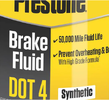
I noticed this on the brake fluid I bought last week.

1779410943940.png

50,000 mile fluid life.

Chris
These kinds of claims always make me smile, a bit like the "long life" engine oil sold at exorbitant prices... it doesn't excuse you from following the manufacturer's maintenance schedule.
 
I think they are only saying it'll last 50,000 miles. With a car, most people take the car somewhere to have the brakes changed. The fluid would get changed at that time as well. So the 50,000 miles is a safe bet.

But why would a motorcycle be any different? We baby our motorcycles for the most part, making sure everything is perfect. While the car...eh. Who cares? It starts and takes me down the road just fine.
Extensive research (ie. couple of minutes on google) - consensus seems to be the relatively small volume of fluid in a MC compared to a car means it contaminates "easier". Interestingly enough, my wife's Acura service interval, for flushing the brakes, is 3 yrs/30,000 miles.:shrug2:
The infamous SMC issue on the ST is probably caused by moisture.
 
Back
Top Bottom