
You are using an out of date browser. It may not display this or other websites correctly.
You should upgrade or use an alternative browser.
You should upgrade or use an alternative browser.
Ultrasonic cleaner
- Thread starter SMSW
- Start date

Andrew Shadow
Site Supporter
Ultrasonic cleaner:
I have a Cree 6 litre (1.5 US gallons) digital ultrasonic cleaner. I bought it based on several recommendations on this forum. It works great. It cleans both really well and quickly. My only real complaint about it is the heater. It takes for ever to get up to a useful temperature. To get around this I fill it with hot water. This works fine as I use it very infrequently. I suspect that all of the machines at this price level are the same in this respect.
Ultrasonic cleaning solutions:
Do not use any cleaning solution that is combustible. The ultrasound can cause them to produce explosive gases. Dedicated ultrasonic cleaning solutions are ridiculously expensive. I use Simple Green Aircraft cleaner. It is not the same as the regular Simple Green. It won't damage non-ferrous metals like aluminum, brass, bronze, etc., as the regular Simple Green can but it still cleans ferrous metals just as well. It has a very high dilution rate. That coupled with the fact that it remains effective over many uses the one gallon jug that I bought will last a long time. The bonus is, at least when I bought it, it was cheaper than the regular Simple Green.
Ultrasonic transducers:
Most of the machines designed for cleaning machinery parts, tools, etc., use 40KHz ultrasonic transducers. This frequency works great for machinery parts, carburetors, tools, etc.. For cleaning jewelry 60 KHz or higher is usually recommended, often 70 or 80KHz. 40 KHz is often cited as to aggressive and has the potential to damage the surfaces of some jewelry. Newer machines are available that are marketed as multipurpose ultrasonic cleaners. They also have 40KHz transducers but can be set to gentle mode which they claim reduces the power so that they can be used for more delicate items like jewelry. These were not around when I was researching so I don't know anything about that claim. They are not any more expensive than the fixed intensity ultrasonic cleaners so worth looking in to.
How's that for a start!
I have a Cree 6 litre (1.5 US gallons) digital ultrasonic cleaner. I bought it based on several recommendations on this forum. It works great. It cleans both really well and quickly. My only real complaint about it is the heater. It takes for ever to get up to a useful temperature. To get around this I fill it with hot water. This works fine as I use it very infrequently. I suspect that all of the machines at this price level are the same in this respect.
Ultrasonic cleaning solutions:
Do not use any cleaning solution that is combustible. The ultrasound can cause them to produce explosive gases. Dedicated ultrasonic cleaning solutions are ridiculously expensive. I use Simple Green Aircraft cleaner. It is not the same as the regular Simple Green. It won't damage non-ferrous metals like aluminum, brass, bronze, etc., as the regular Simple Green can but it still cleans ferrous metals just as well. It has a very high dilution rate. That coupled with the fact that it remains effective over many uses the one gallon jug that I bought will last a long time. The bonus is, at least when I bought it, it was cheaper than the regular Simple Green.
Ultrasonic transducers:
Most of the machines designed for cleaning machinery parts, tools, etc., use 40KHz ultrasonic transducers. This frequency works great for machinery parts, carburetors, tools, etc.. For cleaning jewelry 60 KHz or higher is usually recommended, often 70 or 80KHz. 40 KHz is often cited as to aggressive and has the potential to damage the surfaces of some jewelry. Newer machines are available that are marketed as multipurpose ultrasonic cleaners. They also have 40KHz transducers but can be set to gentle mode which they claim reduces the power so that they can be used for more delicate items like jewelry. These were not around when I was researching so I don't know anything about that claim. They are not any more expensive than the fixed intensity ultrasonic cleaners so worth looking in to.
How's that for a start!
Last edited:

sirbike
Site Supporter
I second simple green aircraft cleaner. Has basically no oder unlike the sickening to me regular version.

ST1100Y
Site Supporter
And how do you clean the brass requiring carburetor cleaner?Do not use any cleaning solution that is combustible.
Simple, I use tiny jam glasses (Darbo minis), stuff jets and cleaning solution in, screw the lid on and submerge the container the hot ultrasonic bath...

by this I also don't contaminate the solution of DI water and ultrasonic cleaner in the unit's tank...
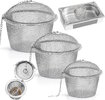
Another nifty accessory for not loosing small items in the depths of the tank:
I bought the CreWorks 10 litre cleaner. They have a bunch of different models from very small to quite large, but all save one were out of stock. They probably sold them all to resellers like Amazon and eBay. It works fine, and cleans my chainsaw chains very well.Ultrasonic cleaner:
I have a Cree 6 litre (1.5 US gallons) digital ultrasonic cleaner.
I bought some of that Simple Green Aero.... And I think the stuff stinks worse than regular ole Simple Green. It works fine - it just smells bad. Obviously, everyone's nose is different
I like your idea. I used one of those plastic containers with a lid that we get at supermarkets when buying bulk foods. The top bulged upward due to the heat of the US's hot water in the tank. I wonder if one of those jars would crack or break apart.Simple, I use tiny jam glasses (Darbo minis), stuff jets and cleaning solution in, screw the lid on and submerge the container the hot ultrasonic bath...
Andrew Shadow
Site Supporter
They do clean very well, and quickly too.
Many manufacturers of ultrasonic cleaning machines and cleaning solutions state that plastic reduces the efficacy of the ultrasonic and recommend using glass containers if containers are used. Many people will tell you that they use plastic jars all of the time and have had no problem. Probably both things are true- the efficacy is reduced but it is not reduced enough to make a difference with the items that most home users are cleaning. I bought a couple of small glass jars at the dollar store for a few bucks.
Many manufacturers of ultrasonic cleaning machines and cleaning solutions state that plastic reduces the efficacy of the ultrasonic and recommend using glass containers if containers are used. Many people will tell you that they use plastic jars all of the time and have had no problem. Probably both things are true- the efficacy is reduced but it is not reduced enough to make a difference with the items that most home users are cleaning. I bought a couple of small glass jars at the dollar store for a few bucks.
Is it one of the newer generation multi-purpose machines that has the gentle mode? The idea sounds good and, if it works as advertised, it adds the ability of cleaning a greater variety of items while not having to have more than one machine.I bought the CreWorks 10 litre cleaner.
Yes to gentle mode. Not sure if I'll use it for the hardware I'll be cleaning.Is it one of the newer generation multi-purpose machines that has the gentle mode? The idea sounds good and, if it works as advertised, it adds the ability of cleaning a greater variety of items while not having to have more than one machine.
ST1100Y
Site Supporter
Thick glass, metal lid with rubber seal, designed to boil jam inside...I wonder if one of those jars would crack or break apart.

So unless I drop it on the concrete floor, not much risk of braking...
(just did a set of ST1100 jets and tubes last Friday...)

Obo
East Coast Canada
My 2 uneducated cents....
6L is a fine size for most things. Go 10L if you normally do things that won't physically fit in a 6L basket size. 6L will save on cleaner fluid (although I'd never thought about the glass jars before so maybe a mute point.)
When comparing models, pick a high wattage transducer over a high wattage heater. The transducer drives cavitation which does the bulk of the cleaning. The heat doesn't clean directly, it just helps the process.
Gentle & degas modes are nice to haves, if you want to pay a bit more (sometimes.) Again, depends on what you're cleaning (tools vs jewellery etc.)
Manual knobs are preferable over digital controls in some cases. Digital are more precise and settings can be consistently replicated, but have more failure points. Manual, while a bit more "crude," are a bit more durable, cheaper to repair, and good for dirtier spots like garages. I think it was Igofar who recommended manual over digital when I was first looking.
6L is a fine size for most things. Go 10L if you normally do things that won't physically fit in a 6L basket size. 6L will save on cleaner fluid (although I'd never thought about the glass jars before so maybe a mute point.)
When comparing models, pick a high wattage transducer over a high wattage heater. The transducer drives cavitation which does the bulk of the cleaning. The heat doesn't clean directly, it just helps the process.
Gentle & degas modes are nice to haves, if you want to pay a bit more (sometimes.) Again, depends on what you're cleaning (tools vs jewellery etc.)
Manual knobs are preferable over digital controls in some cases. Digital are more precise and settings can be consistently replicated, but have more failure points. Manual, while a bit more "crude," are a bit more durable, cheaper to repair, and good for dirtier spots like garages. I think it was Igofar who recommended manual over digital when I was first looking.

wjbertrand
Ventura Highway
I’ve got a professional one from VWR that I was allowed to acquire when the company I was retiring from shut down our facility. Heavy duty built and runs at 35kHz. I suspect these are going to be on the expensive side to buy though.
Obo
East Coast Canada
I’ve got a professional one from VWR.... I suspect these are going to be on the expensive side to buy though.
A quick peek looks like they start at $735 for a 2L, digital timer, no heat. They run up to $4312 for a 28L, digital timer, degas and heat.
They also sell them by the pallet of 36. The price? $42,567.03
Andrew Shadow
Site Supporter
Where is previously worked we had banks of commercial cleaning machines including ultrasonic cleaners, some costing in the $100,000 dollar range. We also had caustic soda cleaners, sand blasters, bead blasters, plastic bead blasters, everything imaginable. To go with the machines we had an army of fully trained cleaners. I was really spoiled. I could get anything professionally cleaned no matter what it was made of whenever I needed to. Because of that experience I knew of the benefits of ultrasonic. Now I have a 6L home ultrasonic machine and a dollar store scrub brush. Both work just fine for my needs.

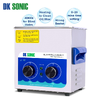
My research several years ago led me to choose an ultrasonic bath that used mechanical temperature and timer controls. Many of the reviews of those with digital controls with membrane touch switches reported that they failed over time as the plastic layer of the touch switches failed with heavy use. Mine's worked perfectly over the past five years. My only regret was not buying one with a larger volume. I can submerge and clean all or portions of most parts. A couple of float bowls will submerge fine, but an entire carb is a challenge and requires multiple cycles with reorienting the carb body to successively clean each dirty section. I would go with something substantially larger in volume than 2L; at least 4L, maybe 6L for a one-time purchase.
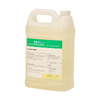
I also researched and selected "Master STAGES CLEAN2020/1G Clean 2020 Washing Compound for Ultrasonic and Immersion Washers" and have had excellent results. It's a concentrate that I dilute with water and can collect the clear portion after the debris settles and get multiple wash cycles out of a batch.
I work with ultra and megasonic cleaners in the semiconductor industry and can attest that a plastic container holding another bath inside the ultrasonic tank will attenuate the energy delivered to the parts being cleaned. But the real proof of the pudding is, "does it get your parts clean?" If it does, then who cares?
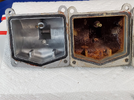
I'm very pleased with the results I've obtained working to clean the float bowls of my 75 CB400F.

And apologizes for being pedantic, but the frequencies in question are in kilohertz, kHz, not hertz, Hz. FYI...
Hi Gang! No I haven't fallen off the planet. (Though I am in Tokyo once again if that counts)
I also researched and selected "Master STAGES CLEAN2020/1G Clean 2020 Washing Compound for Ultrasonic and Immersion Washers" and have had excellent results. It's a concentrate that I dilute with water and can collect the clear portion after the debris settles and get multiple wash cycles out of a batch.
I work with ultra and megasonic cleaners in the semiconductor industry and can attest that a plastic container holding another bath inside the ultrasonic tank will attenuate the energy delivered to the parts being cleaned. But the real proof of the pudding is, "does it get your parts clean?" If it does, then who cares?
I'm very pleased with the results I've obtained working to clean the float bowls of my 75 CB400F.
And apologizes for being pedantic, but the frequencies in question are in kilohertz, kHz, not hertz, Hz. FYI...
Hi Gang!
No I haven't fallen off the planet. (Though I am in Tokyo once again if that counts)
ST1100Y
Site Supporter
I come along fine with my 3ltr/101 fl oz unit... (with membrane buttons...)I would go with something substantially larger in volume than 2L; at least 4L, maybe 6L for a one-time purchase.
It holds an ST1100 brake caliper, other parts can just be flipped for a 2nd cycle...
Larger units require more storage/bench space, more liquid & solvent to be used and longer heating times...
I preheat the DI water in an electric kettle aside, so I don't have to wait for the internal heater to reach the desired 60°C/140°F, but it'll hold the temp perfectly from there...
Drop 5ml/0.17oz cleaner concentrate (designated for carburetor cleaning) in... and always end up amazed just how well that concept works... clouds of dirt emerge from visually clean parts...
The heat also aids/speeds up proper dry/blow off with compressed air afterwards...
I come along fine with my 3ltr/101 fl oz unit... (with membrane buttons...)
It holds an ST1100 brake caliper, other parts can just be flipped for a 2nd cycle...
Larger units require more storage/bench space, more liquid & solvent to be used and longer heating times...
I preheat the DI water in an electric kettle aside, so I don't have to wait for the internal heater to reach the desired 60°C/140°F, but it'll hold the temp perfectly from there...
Drop 5ml/0.17oz cleaner concentrate (designated for carburetor cleaning) in... and always end up amazed just how well that concept works... clouds of dirt emerge from visually clean parts...
The heat also aids/speeds up proper dry/blow off with compressed air afterwards...
No argument. This is why one size doesn't fit all.
Andrew Shadow
Site Supporter
To say that you are being correct, or precise, or factual, would be more to the point and something that I always appreciate. Don't know how I screwed that up as I know that. I have corrected all of my faux pas, so everything should be OK now.And apologizes for being pedantic, but the frequencies in question are in kilohertz, kHz, not hertz, Hz. FYI...
When I use up that gallon of Simple Green Aero I'll look into your washing compound.I also researched and selected "Master STAGES CLEAN2020/1G Clean 2020 Washing Compound for Ultrasonic and Immersion Washers"
But the real proof of the pudding is, "does it get your parts clean?" If it does, then who cares?
Hi Gang!
For the 5 chainsaw chains I've cleaned in this CreWorks u-s cleaner, the answer is yes. But I'm a bit afraid the top will come off the food storage container I use (since it is plastic) and make a bit of a mess. I'll try a jar next time.
I had a budget for this device, and as often as I will use it, I think I lucked out in my choice. Many of the cleaners seem to be targeted to folks cleaning jewelry and dentures(?). And some have tall and narrow reservoirs.
If you can figure out a way to fall off the planet, you might give Musk a run for his money. Enjoy your vacation/trip/work.

I have a harbor freight and use dawn in it. So far it has cleaned quite a few parts.
Andrew Shadow
Site Supporter
Curious as to why you subject chainsaw chains to such a rigorous cleaning protocol as using an ultrasonic. What advantage does it provide? After removing any debris and sawdust I resharpen the teeth and then give them a good coating of chain oil before putting them away.For the 5 chainsaw chains I've cleaned in this CreWorks u-s cleaner, the answer is yes.
How are you sharpening your chains? I'm using a CBN wheel because the pink wheel that came with my grinder was heating the cutters too much. If the chain is not clean (no oil, sawdust, dirt) the wheel can load up with dirt and grindings and we are back to heating the teeth. After sharpening I hit the chains with WD40 and put them individually in a box. If I'm going to use the chain soon (been sawing 3 weekends on that big tree in my other post) I don't bother with the WD. I was submerging the chains in Simple Green in a shallow pan for half an hour or so, then hitting the chain with either a tooth brush or a small, stiff brush (think fingernail brush). That was too messy and sometimes half an hour proved to be not long enough to clean the chain. So far, those 5 chains came clean in the u-sonic in 20 minutes at 125ºF.Curious as to why you subject chainsaw chains to such a rigorous cleaning protocol as using an ultrasonic. What advantage does it provide? After removing any debris and sawdust I resharpen the teeth and then give them a good coating of chain oil before putting them away.
If I'm in the field, I'll usually just swap chains after 2 or 3 tanks of gas, but sometimes I pull out a little clamp I made after seeing one on a chainsaw forum. I welded two C clamps to a piece of steel channel. This gets screwed to a log and the clamps hold the saw's bar. I then touch up the cutters with the appropriate file.