Hey gear heads, I need some advice on the purchase of a good multimeter to determine and diagnose problems when working on the ST and automotive applications. I know Fluke makes good quality meters but they can be costly. What other brands are comparable in quality but maybe a little cheaper. What features should I look for, and features are really not needed. What else would complement the meter for diagnostics ( 12volt test lights, etc ). Where to buy. I know the basics when working on vehicles but I’m looking to expand my knowledge, especially on the electronics end of things. Help me out here please. Thanks in advance to everyone.

You are using an out of date browser. It may not display this or other websites correctly.
You should upgrade or use an alternative browser.
You should upgrade or use an alternative browser.
Need advice from the collective about multimeters
- Thread starter Billy Collins
- Start date
Klein makes several models (I have one and a Fluke) that in numerous tests, gave a reading that was the same or close enough to my Fluke for horseshoes and hand grenades. The Klein cost well under $100, my Fluke is a specialized insulation tester and DVM that 15 years ago cost around $700
Features? Most every DVM that I've looked at has AC, DC, resistance, continuity w/ audible signal, and current testing modes, as well as a few others. The REALLY useful option is an auto ranging meter - you don't have to guess the voltage range or resistance range and set that on the meter before use. This is more a time saver and not a deal breaker, but once you try an auto ranging meter, you won't want to go back. Make sure the meter you select has a back light option (really nice in low light levels), even if that shortens the battery life. Another useful feature is a strap w/ a magnet inside so you can hang the meter from a nearby piece of steel (on a car, a hood or fender). My meters' probes came w/ sharp points and also slip on/screw on alligator clips. Fluke offers many styles of probes and some are standardized and will fit most any meter. Both of my meters have an auto shut off feature if it is not used for 15 minutes.
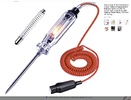
Like @Larry Fine has said, I find the old fashioned automotive circuit tester with a light bulb in the (ice pick style) handle more useful for trouble shooting on a bike. Depending on your knowledge of electronics, and what you expect to be testing/troubleshooting, it is probable that many of the features of most DVMs will go unused. I almost always leave my meter in the tool box and use either the automotive tester or audible continuity tester when working on my bike or car.
Features? Most every DVM that I've looked at has AC, DC, resistance, continuity w/ audible signal, and current testing modes, as well as a few others. The REALLY useful option is an auto ranging meter - you don't have to guess the voltage range or resistance range and set that on the meter before use. This is more a time saver and not a deal breaker, but once you try an auto ranging meter, you won't want to go back. Make sure the meter you select has a back light option (really nice in low light levels), even if that shortens the battery life. Another useful feature is a strap w/ a magnet inside so you can hang the meter from a nearby piece of steel (on a car, a hood or fender). My meters' probes came w/ sharp points and also slip on/screw on alligator clips. Fluke offers many styles of probes and some are standardized and will fit most any meter. Both of my meters have an auto shut off feature if it is not used for 15 minutes.
Like @Larry Fine has said, I find the old fashioned automotive circuit tester with a light bulb in the (ice pick style) handle more useful for trouble shooting on a bike. Depending on your knowledge of electronics, and what you expect to be testing/troubleshooting, it is probable that many of the features of most DVMs will go unused. I almost always leave my meter in the tool box and use either the automotive tester or audible continuity tester when working on my bike or car.

Obo
East Coast Canada
You don't need an expensive multimeter. As long as it does DC volts, and can check for continuity, you're good.
Obo
East Coast Canada
I have a variety of multimeters (analogue, digital, auto ranging) as well as basic tests lights and test lights that show voltage.
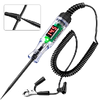
The above is around $10 on Amazon.
I usually grab the test probe above for quick voltage checks, and the multi-meter for continuity if I want more. I also have some short alligator wires for when I need to be more hands free when testing.
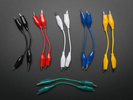
The above is around $10 on Amazon.
I usually grab the test probe above for quick voltage checks, and the multi-meter for continuity if I want more. I also have some short alligator wires for when I need to be more hands free when testing.
Last edited:

ST1100Y
Site Supporter
As actual accessibility and excluding any contact issues during the process matter, I went beyond that:I also have some short alligator wires for when I need to be more hands free when testing.
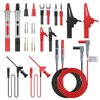
Its a PITA intending to accurately measure low resistance stator windings while unintentional hand tremors vary the contact between lead tips and wiring/crimp connectors...
And accessing any blank piece inside those multi-connector shells with the thick, standard tips is nearly impossible...
Yeah a FLUKE is nice (got their 325 clamps on meter in my HVAC service tool-bag), but pretty much overkill (and overpriced) for the occasional 'chasing an electrical gremlin on my bike' sessions...
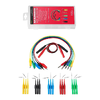
So a standard multimeter in the € 20~50,- range with protective cover and fold out leg serves well, and invest the savings into a proper test lead set as pictured instead...

Nashcat
Site Supporter
Check local pawn shops. That’s how I ended up with 3 Flukes and an Actron multimeter. The Actron will also measure RPM and temperature with optional probes. I also have a Simpson 260 analog meter that is better than digital for locating loose connections. When you wiggle or stretch a bad wire, you can see the needle jump on the meter, better than fluctuating numbers on the digital screen.
Don’t overlook inexpensive, pocket sized meters to carry on the bike. Even the cheap ones will cover everything you need for a bike.
John
Don’t overlook inexpensive, pocket sized meters to carry on the bike. Even the cheap ones will cover everything you need for a bike.
John
ST1100Y
Site Supporter
And I believed I'm the only "old guy" who prefers the good old analog...... analog meter that is better than digital for locating loose connections. When you wiggle or stretch a bad wire, you can see the needle jump on the meter, better than fluctuating numbers on the digital screen...


slmjim
Hopeless Tool Junkie
- Joined
- Jan 16, 2011
- Messages
- 13
- Bike
- Which one today...?
A continuous sounder (beeper) to indicate change of state by changing tone, whether voltage, continuity or current. Can audibly mimic the momentary deflection of an analog meter needle.
High / low hold.
High-contrast display that doesn't wash out in direct sun. Backlighting can be useful.
A battery compartment that doesn't require removing screw(s) to change. (Invest in quality lithium primary battery for longevity and leak safety. No alkalines.)
A hang strap and a back prop.
Auto-OFF timer.
I'm on the fence about built-in flashlight.
slmjim

I tell everyone that's getting started in HVAC to spend about $150 on a clip / multimeter and if you want a second one that doesn't measure amperage I like my Amprobe AM 520 which I don't think costs more than 120 or so and has the
zero to ten ampere fused circuit. I notice this function absent on the more expensive fluke clip [902 I think it is] and fluke 116 multimeter which I never take out until I need a third or fourth meter.
Same holds for automotive; you need basically DC Volts, Continuity, Resistance, and the ability to put the meter inline and see up to 10 amps comes in more than handy, I can't understand why that seems to be no longer be a basic feature
I've had all the various fluke lead attachments which after a few years [well maybe decades] the insulation deteriorated. I've got extra leads from meters past dropped, crunched, destroyed where I've cut the leads off and attached alligator clips
unless you have four hands, you have to have at least one set of those along with the standard tips
[edit] I wish I would have kept my old Simpson meter and of all things [one] of my old Amprobe RS100 clip / multimeters; especially for AC inrush and locked rotor. A little off topic but once you have a meter you'll use it for everything else.
Last edited:

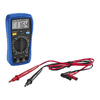
I have one of these from Harbor Freight. It does everything that I need. $30.00. I just wish the probe tibs were longer. I also have one of their $5.00 test lights that gets used more than the Multi Meter. There are times when I need an extra hand and have no place to set the meter so I can see it. No need to spend big money on these things if you are only going to use it now and then.
ST1100Y
Site Supporter
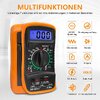
Ditto, ~ € 11- at Amazon... (or motorcycle accessory outlets like Louis...)I have one of these from Harbor Freight. It does everything that I need. $30.00. I just wish the probe tibs were longer. I also have one of their $5.00 test lights that gets used more than the Multi Meter. There are times when I need an extra hand and have no place to set the meter so I can see it. No need to spend big money on these things if you are only going to use it now and then.
Including that yellow silicone protection cover...
(the vibrations of an engine idling will always drop them off the tank/frame, right when you're not looking...
)
bin the flimsy leads those come with, get a set with multiple tips and clamps as mentioned above and you're set...
And no big loss if you really drop a tool, an engine part or spill some liquids on it...
Workshop life is hard...

Whatever you get, include a diode check function. I've done fine with the Walmart cheapo ones for a quick checker, and I have a used Fluke. I also have a Craftsman that does have the diode function. And a test light is real handy for voltage check as well as sending voltage to a relay for testing.

What model of craftsman was it and is it still available? Lowe’s home improvement stores carry craftsman and was just wondering if it maybe available there in stock at the brick and mortar store.Whatever you get, include a diode check function. I've done fine with the Walmart cheapo ones for a quick checker, and I have a used Fluke. I also have a Craftsman that does have the diode function. And a test light is real handy for voltage check as well as sending voltage to a relay for testing.
What model of Klein do you have? I looked at several of their models online and seriously was considering them. I think you’re right on the auto ranging feature. Time saving features are a bigKlein makes several models (I have one and a Fluke) that in numerous tests, gave a reading that was the same or close enough to my Fluke for horseshoes and hand grenades. The Klein cost well under $100, my Fluke is a specialized insulation tester and DVM that 15 years ago cost around $700
Features? Most every DVM that I've looked at has AC, DC, resistance, continuity w/ audible signal, and current testing modes, as well as a few others. The REALLY useful option is an auto ranging meter - you don't have to guess the voltage range or resistance range and set that on the meter before use. This is more a time saver and not a deal breaker, but once you try an auto ranging meter, you won't want to go back. Make sure the meter you select has a back light option (really nice in low light levels), even if that shortens the battery life. Another useful feature is a strap w/ a magnet inside so you can hang the meter from a nearby piece of steel (on a car, a hood or fender). My meters' probes came w/ sharp points and also slip on/screw on alligator clips. Fluke offers many styles of probes and some are standardized and will fit most any meter. Both of my meters have an auto shut off feature if it is not used for 15 minutes.
Like @Larry Fine has said, I find the old fashioned automotive circuit tester with a light bulb in the (ice pick style) handle more useful for trouble shooting on a bike. Depending on your knowledge of electronics, and what you expect to be testing/troubleshooting, it is probable that many of the features of most DVMs will go unused. I almost always leave my meter in the tool box and use either the automotive tester or audible continuity tester when working on my bike or car.
 with me. Is the pictured circuit tester from Amazon? I was planning on purchasing one of these as well as some additional probes for the meter.
Maybe get a cheaper one for riding and a better one for the shop at home - not a bad ideaCheck local pawn shops. That’s how I ended up with 3 Flukes and an Actron multimeter. The Actron will also measure RPM and temperature with optional probes. I also have a Simpson 260 analog meter that is better than digital for locating loose connections. When you wiggle or stretch a bad wire, you can see the needle jump on the meter, better than fluctuating numbers on the digital screen.
Don’t overlook inexpensive, pocket sized meters to carry on the bike. Even the cheap ones will cover everything you need for a bike.
John
I wouldn’t want to be stuck in the middle of nowhere without at least a chance to wrench my way out of the situation.
I have an old Radio Shack multi-meter that my Dad gave me ...hmm...60 or so years ago. It's analog. It'll do far more than I use it for. I basically use it to check for continuity (does the needle swing over to the right, or not), and DC voltage.
The real simple testers like the ice pick and bulb work fine for voltage.
The real simple testers like the ice pick and bulb work fine for voltage.
Not available anymore. I've had it for well over a decade, but a quick search shows a few floating around on fleaBay. Example here:What model of craftsman was it and is it still available? Lowe’s home improvement stores carry craftsman and was just wondering if it maybe available there in stock at the brick and mortar store.
https://www.amazon.com/dp/B003BS7JCU?plpRedirect=mhFallback&ref=clp_hp_h_sad
Autoranging is a nice feature, but except for resistance, you're not really dealing with a wide range of values in a 12V system. I wouldn't get hung up over it but apples to apples I'd opt for it. Second the pawn shops where you can check it out yourself.
I was afraid you’d say that. Is it just me or is it they don’t make ‘em like they used to anymore. We have a bunch of pawnshops around here so maybe it’s getting time to hit a few of them up and maybe I’ll get luckyNot available anymore. I've had it for well over a decade, but a quick search shows a few floating around on fleaBay. Example here:
https://www.amazon.com/dp/B003BS7JCU?plpRedirect=mhFallback&ref=clp_hp_h_sad
Autoranging is a nice feature, but except for resistance, you're not really dealing with a wide range of values in a 12V system. I wouldn't get hung up over it but apples to apples I'd opt for it. Second the pawn shops where you can check it out yourself.


From the Facing Wiring thread:
There is also fall-of-potential testing, which is checking for voltage between the battery + and the load + terminal, and between battery — and the load — terminal.
Switches that are on, good fuses, solid connections, etc., should test just like solid wire, with no voltage across them. The load must be connected and on for this to work.
The idea is to make sure that points that should be energized really are energized (at 12v), and that points that should be grounded really are grounded (at 0v.)
Any appreciable voltage drop between points (that should be at the same voltage) will indicate a resistance in the current pathway that should not be present.
The fault in the pathway can be pinpointed by a process of elimination, with additional point-to-point testing, until you find voltage between points should not be there.
A test light is much easier for most troubleshooting than a voltmeter for just about everything except for when you need to know the actual voltage, which is rare.
As an electrician, I use a solenoid type of voltage tester 99% of the time. It requires “real” power to indicate voltage, and ignores “phantom” (induced) voltage.
I meant to say that I use a solenoid tester for building electrical work, 120v and up AC, not low voltage and DC. It requires enough current to eliminate induced voltage due to capacitive coupling.
For fall-of-potential testing as described above, unless testing for a complete open circuit such as no power to the load at all, the voltmeter is good for high-resistance partial voltage testing.
Another helpful troubleshooting tool for a short circuit that blows fuses is to place an incandescent bulb in place of the fuse, which will act as both a current limiter and an indicator as you hunt for the problem.