Post-trip maintenance

Joined
Jan 14, 2026
Messages
25
Age
26
Location
Central NJ
Bike
93 Pan
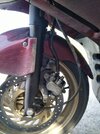
Hey all, just got back from an 1800mi trip recently and working on some things that I noticed pop up while I was gone. My fork seals started weeping pretty significantly, so I'm looking at servicing them as I already have a set of SHOWA slider and guide bushings, as well as a seal set. So I have enough to do one fork. Is there a difference I should be concerned about between the SHOWA and non-SHOWA parts? Not sure where that discrepancy came from. Also, looking at the resources out there, it's a bear of a job. Y'all think if I take parts, a Clymer manual, and the forks to a bike shop they would service them for me (and treat them well)?

Finally, right at the end of my trip I noticed a little bit of a speed wobble when I let go of the handlebars. That's historically been something I've kept an eye out for and it definitely wasn't there, so I'd like to nip it in the bud quickly. My instinct says the steering head bearing could be at fault. Any other suggestions of things I could check?
 
I've only used aftermarket fork seals for every bike I've owned since 1980, in my experience seals are seals.

If your fork bushings don't look worn, I wouldn't bother replacing them, others here may have a different opinion. When they wear there's a noticeable color difference that's visible. (how many miles on the bike?)

No, I wouldn't take them to a bike shop, its an easy job if you're mechanically inclined and used to working on things. But, to put it back together it helps to make your own driving tool, which can be fabricated out of simple PVC/ABS pipe from Home Depot.

front end wobble could be from a worn tire, bearing replacement is a bit of a chore so I'd make sure its really necessary before going that route. And if you have the OEM bearings you may just need to re-adjust the tightness of the steering stem nut. For bearing replacement I think there's a tool around somewhere that you can borrow to remove the old races, which will make the job much easier than trying to pound them out with a long metal rod like I did almost 30 years ago.
 
I've only used aftermarket fork seals for every bike I've owned since 1980, in my experience seals are seals.

If your fork bushings don't look worn, I wouldn't bother replacing them, others here may have a different opinion. When they wear there's a noticeable color difference that's visible. (how many miles on the bike?)

No, I wouldn't take them to a bike shop, its an easy job if you're mechanically inclined and used to working on things. But, to put it back together it helps to make your own driving tool, which can be fabricated out of simple PVC/ABS pipe from Home Depot.

front end wobble could be from a worn tire, bearing replacement is a bit of a chore so I'd make sure its really necessary before going that route. And if you have the OEM bearings you may just need to re-adjust the tightness of the steering stem nut. For bearing replacement I think there's a tool around somewhere that you can borrow to remove the old races, which will make the job much easier than trying to pound them out with a long metal rod like I did almost 30 years ago.
95k miles on the bike, brand new tires before aforementioned trip so likely not that. Hard to know if bushings are worn before actually getting in there. I've done everything on this bike myself so far, pretty sure I messed up the forks on my last motorcycle trying to do seals though (oops!) I'll look into tightness of the nut, that's a good recommendation.
 
the nut that matters is a special nut that they make a Honda tool to fit, its not a regular hex nut. However, IIRC for a quick adjustment you can grab it with channellocks and tighten it a little if needed. Having the tool allows you to set the torque to spec, but I think you can adjust by steering feel just as well anyway without the tool.
 
Wobble on decel , got cured on my ST when I installed new Bridgestone's (T 32's iirc) and tightened the Steering bearing to specs, Tapered bearings, like 3 pounds pull with the Fish scale I bought from Bass pro.
 
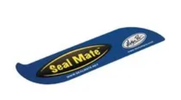
Just a thought regarding the fork seal leak. Did you try something like a Sealmate fork seal cleaner? https://sealmate.net/

You can make one yourself from some plastic. I carry one with me all the time.

1785003533655.png

Chris
 
Speed wobble? What speed? If over 60mph possible front tire out of balance. Put bike on center stand, get the front wheel off the ground and turn left to right. It should be smooth and not "notchy"
 
Just a thought regarding the fork seal leak. Did you try something like a Sealmate fork seal cleaner? https://sealmate.net/

You can make one yourself from some plastic. I carry one with me all the time.

1785003533655.png

Chris
I haven't seen those before! Might be worth a try. Although I will say, there was quite a bit leaking all the way around the seal. So may be a crusty seal instead of grime.
Speed wobble? What speed? If over 60mph possible front tire out of balance. Put bike on center stand, get the front wheel off the ground and turn left to right. It should be smooth and not "notchy"
When I first noticed it, it was happening around the 30-40 range. Putting around town, not on the highway
 
I haven't seen those before! Might be worth a try. Although I will say, there was quite a bit leaking all the way around the seal. So may be a crusty seal instead of grime.
They are simple, but effective. On my F800GT, I was getting a fork leak. My mistake was in getting the "tool" under the dust seal, but not far enough in to reach the actual seal. Once I realized that, I cleaned it out removing some crud and all was well. Sold the bike with 107,000 miles on it and never took the forks apart.

Here's a simple picture of how to use it.

1785011305900.png

Chris
 
the nut that matters is a special nut that they make a Honda tool to fit, its not a regular hex nut. However, IIRC for a quick adjustment you can grab it with channellocks and tighten it a little if needed. Having the tool allows you to set the torque to spec, but I think you can adjust by steering feel just as well anyway without the tool.
I wrap electrical tape around my channellocks and use them for all sorts of things. More tape = more padding (and a corresponding less grip).
 
They are simple, but effective. On my F800GT, I was getting a fork leak. My mistake was in getting the "tool" under the dust seal, but not far enough in to reach the actual seal. Once I realized that, I cleaned it out removing some crud and all was well. Sold the bike with 107,000 miles on it and never took the forks apart.

Here's a simple picture of how to use it.

1785011305900.png

Chris

I used a slightly different tool, but this exact same thing twice now on two bikes (a vfr1200x and my wife's F800ST). The VFR was leaking like a sieve when i bought it in september and the F800 had a minor leak. Getting the dust cap off, cleaning the seal, and then regreasing the seal fixed both of them. No disassembly required. The F800 i did a few weeks ago, the VFR's been going strong since September and about 5000km since that repair. It's worth a try before you commit to taking the forks apart.

The tool i used was one like THIS

Good luck!

~Dave
 
Pulling the forks, should you decide to replace the bushings is not a big deal. I did it on my 1300 (I know you have an 1100) and I confess I was intimidated by the task. However, the process is nothing more than a set of relatively simple steps. I removed the front wheel, hung the calipers from the handlebars (wire supports), removed the fender and the brake line supports, and then loosened the 4 bolts on the fork clamps and dropped them out of the bike (first I loosened the top two bolts, loosened the fork caps, THEN the bottom two bolts and dropped the forks). I fashioned a wood clamp for the forks by drilling a hole in a piece of 2 x 4 and sanding it to size, slotted the wood and used a piece of threaded rod to make it a clamp. This was held in a vise, the wood clamp held the fork leg vertical. I then proceeded to take each leg apart. Really no big deal.
 
I used a slightly different tool, but this exact same thing twice now on two bikes (a vfr1200x and my wife's F800ST). The VFR was leaking like a sieve when i bought it in september and the F800 had a minor leak. Getting the dust cap off, cleaning the seal, and then regreasing the seal fixed both of them. No disassembly required. The F800 i did a few weeks ago, the VFR's been going strong since September and about 5000km since that repair. It's worth a try before you commit to taking the forks apart.

The tool i used was one like THIS

Good luck!

~Dave
They are simple, but effective. On my F800GT, I was getting a fork leak. My mistake was in getting the "tool" under the dust seal, but not far enough in to reach the actual seal. Once I realized that, I cleaned it out removing some crud and all was well. Sold the bike with 107,000 miles on it and never took the forks apart.

Here's a simple picture of how to use it.

1785011305900.png

Chris
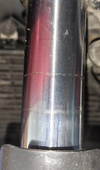
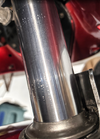
I just gave it a shot with the seal mate and it seems to have helped - I wasn't really able to get a lot out with the tool, but like you said I may not have been getting it all the way in to where it needed to be. However, the protectors, dust seals, and top of the oil seals and clips were all pretty grimy and needed a thorough cleaning. After cleaning and pumping a few times to reseat the seals, it seems to have helped quite a bit! On the damper rod fork there still seems to be a few bubbles around the back but on the other it seems completely clean. I'll give it a couple rides and check again to see how they're actually doing.
Here's a before and after: 1785284225090.png1785284252984.png

There was some interesting, orangey-brown gunk between the oil and dust seals, any suggestions as to what that may be are welcome. In addition, I'm curious if there's any way to check the fork oil level without just dropping and refilling it. Nervous about how much they may have leaked before I got around to this.
 
Last edited:
I don't know about the ST's for checking fork oil level, but on my F800GT I could take the cap off the top and measure how much of an air gap there was. From that, there was a spec for how much that should be. Maybe the ST forks are similar?

The forks are simple from what people tell me. My own experience taught me a few things. On motor oil, if the viscosity is 30, then it is 30. Period. Doesn't matter which brand you are using. But on fork oil...it varies widely. And since the front suspension's dampening is dependent on the fork oil viscosity, you may find some unexpected results.

Chris
 
the before/after pictures look different, but it still looks like you're leaking some oil in the after picture.

as far as how much has already leaked, a negligible amount in the scheme of things, don't worry about it.

Keep an eye on it, if it still continues weeping out like in the after picture, time to replace the seals.
 
Keep an eye on it, if it still continues weeping out like in the after picture, time to replace the seals.
And really keep a close eye on that, they'll fail progressively fast, soak your calipers, pads and rotors with fork oil in no time...

IMG_20230906_123200.jpg

(Norway 2023, daily procedure to rinse calipers, pads and rotors with brake cleaner; by the time I got back home the forks where pretty much empty, under-lubricated, both fork bottoms FUBAR...)
 
There was some interesting, orangey-brown gunk between the oil and dust seals, any suggestions as to what that may be are welcome. In addition, I'm curious if there's any way to check the fork oil level without just dropping and refilling it. Nervous about how much they may have leaked before I got around to this.

I've used a seal mate type tool on my St1100 and it worked well.

I make a point of giving my fork tubes a shot of silicone lube between general bike washes and then wiping away dirt with a rag to keep them as clean as possible. Minimal dirt on the tubes means less makes its way to the seals.

Some people pull the dust seal and apply a thin coat of bearing grease or something similar to lube the tubes ongoing and to also catch dirt before it hits the seals. Maybe that is what the orange gunk is.
 
I just gave it a shot with the seal mate and it seems to have helped - I wasn't really able to get a lot out with the tool, but like you said I may not have been getting it all the way in to where it needed to be. However, the protectors, dust seals, and top of the oil seals and clips were all pretty grimy and needed a thorough cleaning. After cleaning and pumping a few times to reseat the seals, it seems to have helped quite a bit! On the damper rod fork there still seems to be a few bubbles around the back but on the other it seems completely clean. I'll give it a couple rides and check again to see how they're actually doing.
Here's a before and after: 1785284225090.png1785284252984.png

There was some interesting, orangey-brown gunk between the oil and dust seals, any suggestions as to what that may be are welcome. In addition, I'm curious if there's any way to check the fork oil level without just dropping and refilling it. Nervous about how much they may have leaked before I got around to this.
The first for tube is pitted and scored
 
Back
Top Bottom