Looking for something close and found something interesting:
(C)ouchville
500' straight ahead to where Couchville used to be.
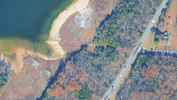
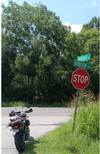
The old Couchville Pike runs through both lakes (Priest and Couchville)

Submerged black community of Couchville, Tennessee
Titles are generated by AI from Meta
Submerged Heritage: Unearthing the Lost Black Community of Couchville, Tennessee, in Honor of Black History Month
As Black History Month unfolds, the story of Couchville, Tennessee—a once-thriving, self-sustaining Black community now lying beneath the waters of J. Percy Priest Lake—serves as a poignant reminder of resilience, land ownership, and the often-overlooked costs of progress. Founded in the post-emancipation era by free Black families and formerly enslaved individuals, Couchville exemplified early Black autonomy in the rural South, only to be erased in the 1960s through federal infrastructure projects that disproportionately displaced African American communities.
Couchville, located along the Stones River in Davidson County near present-day Mt. Juliet, was established before 1880 and featured a U.S. Post Office, farms, churches, and schools that fostered a close-knit society. Residents lived off the land, passing properties through generations and building institutions like Bryant’s Grove School, which operated from around 1880 to the 1940s on land donated by prominent Black families. This rural enclave was tied to figures such as Sherrod Bryant, a free person of color and one of the wealthiest Black men in Davidson County during the antebellum period. Bryant amassed significant land holdings, which he divided among his children from two marriages.
The community's heart was Bryant’s Grove, named after Sherrod Bryant's descendants, situated in Rutherford County but extending into Davidson along Couchville Pike. Historical maps from 1871 show properties owned by Bryant's children, including Laurenzella Scott Bryant, John Bryant, Catherine Dungy, and Sarah Bryant, clustered along McCrory Creek near what was then Chicken Pike (now Elm Hill Pike). By 1926, these lands had evolved, with roads like Combs Road (today's Couchville Pike) running through the area, supporting a vibrant Black neighborhood complete with a cemetery—potentially Nashville's oldest Black burial ground—a Rosenwald school, and a church that hosted community picnics and social gatherings.
Life in Couchville and Bryant’s Grove reflected the broader struggles and triumphs of Black Tennesseans in the Jim Crow era. Families farmed timber and grain, navigated floods from the Stones River, and educated their children despite systemic barriers. The Bryant’s Grove School, for instance, served as a beacon for Black education, drawing students from nearby areas after other schools were closed by county officials. Yet, this self-reliance was fragile. Incidents like the expulsion of the four Davis brothers from Bryanttown for mischief highlight the tight community bonds and the challenges of maintaining order in isolated rural settings.
The turning point came in the mid-1960s with the construction of the J. Percy Priest Dam by the U.S. Army Corps of Engineers, which impounded the Stones River to create a 42-mile-long reservoir for flood control, electricity generation, and recreation. Couchville, with fewer than 75 residents at the time, was inundated, forcing families to relocate as their homes, roads, and farmlands vanished underwater. Part of the community's main road still rests at the lake's bottom, a silent testament to what was lost. Bryant’s Grove was similarly devastated, with most of its Rutherford County portion submerged, disrupting generational wealth and cultural ties.
This displacement fits a larger pattern in U.S. history, where infrastructure developments like dams and lakes disproportionately affected Black and low-income communities. In Tennessee alone, similar fates befell towns like Loyston on Norris Lake, where residents—Black and white—were uprooted by the Tennessee Valley Authority. For Couchville, the loss was profound: thriving Black neighborhoods on Jefferson Street in Nashville were also decimated around the same time, compounding the erasure of Black spaces.
Today, echoes of Couchville endure in names like Couchville Cedar Glade State Natural Area and Couchville Recreation Area on Percy Priest Lake. A historical marker for Bryant’s Grove, relocated inside a park for better visibility, commemorates the community's legacy. Efforts to reclaim this history, such as the book "Under the Waters: History of the Lands and Communities Lost to the Impoundment of J. Percy Priest Lake," draw on personal recollections and archives to preserve stories of destruction and flooding.
In Black History Month 2026, reflecting on Couchville underscores the enduring fight for recognition of Black contributions and the injustices faced. As one social media commenter noted, "Before it was Percy Priest Lake it was farmland. And before that it was home." These submerged stories remind us that progress often comes at the expense of marginalized voices, urging a commitment to equity in future developments.
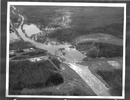








 The little bit I could find -