Good morning y'all. My ST1100 has been doing me really well since I bought it last year. But this morning everything initially turned on perfectly, including the headlights, auxiliary lights, volatage gauage, engine, and fans. But about 20 seconds later, the headlights, aux lights, and voltage gauge shuts off completely. Does anyone have any idea where to start? This is my only vehicle. The yellow lights on the mirrors and the rear lights work fine.

You are using an out of date browser. It may not display this or other websites correctly.
You should upgrade or use an alternative browser.
You should upgrade or use an alternative browser.
Headlights and auxiliary lights, and voltage gauge went out.
- Thread starter TheRedHareRider
- Start date

I will check that once I am off work or on break. I had to ride to work at 0330 here in TX. I will check that first.Aux lights and voltmeter aren’t OEM, so wiring could be anywhere. But if they’re hooked to the headlight circuit, have you checked the fuses? Especially fuse “C”.
I am looking online and I am quite confused. Is the st1100 not have an ordinary fuse box?Aux lights and voltmeter aren’t OEM, so wiring could be anywhere. But if they’re hooked to the headlight circuit, have you checked the fuses? Especially fuse “C”.

The fuse box is on the left side of the bike, you need to remove the. Left pannier and the left side panel. It’s nestled in the frame below the seat. The guide to the fuses is in side the lid of the fuse box.
What model year is your bike?
What model year is your bike?


refer pages 65 onward & 90 onward...
I have a 2001. Everything has been pretty normal up until this morning. Only thing i can think of that might've messed it up is, having my rear brake lock up yesterday during a near miss, but my lights were working fine. I'll check that fuse for sure. Man i hope it isnt something crazy.The fuse box is on the left side of the bike, you need to remove the. Left pannier and the left side panel. It’s nestled in the frame below the seat. The guide to the fuses is in side the lid of the fuse box.
What model year is your bike?
Unless you have a police model, the voltmeter and aux lights are not OEM. So now comes the process of elimination.
Obviously you have a break in the circuit. A fuse, a bad ground, or a power wire to the load.
Do the high beams work?
Spray contact cleaner into both handlebar controls, rock the highbeam and Stop switch a few times whilst spraying.
It is possible both the low beams have burned out…stuff happens.
Do you have a multi meter or trouble light?
Unplug the headlight and check the connector for power with ignition on. Some owners have tapped in to the headlight connector to power aux lights, you may want to check that connection if that’s the case.
Trace the wiring to the volt meter. Check those connections where it’s tapped in are sound, confirm with multimeter.
Check the headlight harness for modifications, some owners have installed an extra ground wire from headlights to the frame.
Obviously you have a break in the circuit. A fuse, a bad ground, or a power wire to the load.
Do the high beams work?
Spray contact cleaner into both handlebar controls, rock the highbeam and Stop switch a few times whilst spraying.
It is possible both the low beams have burned out…stuff happens.
Do you have a multi meter or trouble light?
Unplug the headlight and check the connector for power with ignition on. Some owners have tapped in to the headlight connector to power aux lights, you may want to check that connection if that’s the case.
Trace the wiring to the volt meter. Check those connections where it’s tapped in are sound, confirm with multimeter.
Check the headlight harness for modifications, some owners have installed an extra ground wire from headlights to the frame.
The highbeams do not work.Unless you have a police model, the voltmeter and aux lights are not OEM. So now comes the process of elimination.
Obviously you have a break in the circuit. A fuse, a bad ground, or a power wire to the load.
Do the high beams work?
Spray contact cleaner into both handlebar controls, rock the highbeam and Stop switch a few times whilst spraying.
It is possible both the low beams have burned out…stuff happens.
Do you have a multi meter or trouble light?
Unplug the headlight and check the connector for power with ignition on. Some owners have tapped in to the headlight connector to power aux lights, you may want to check that connection if that’s the case.
Trace the wiring to the volt meter. Check those connections where it’s tapped in are sound, confirm with multimeter.
Check the headlight harness for modifications, some owners have installed an extra ground wire from headlights to the frame.
I do not have multi meter or trouble light.
I really appreciate the breakdown. I will let you know of any updates after work.
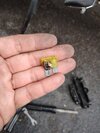
Surge of power, The headlight relay may have malfunctioned. The fuse gets old and weak over time. It’s possible if the aux lights may have overloaded the system, depending on how and what circuit they were connected to.Like a sick cavity... Hopefully changing this will fix everything. Can someone explain how something like this would happen??
Thanks again everyone


Good that you found the smoking gun, but that is not a regular way for a fuse to blow; a short circuit would just burn out the little bridge section, the plastic would be unaffected. I think you are seeing the results of some corrosion on your fuse terminals. Corrosion causes resistance, resistance causes heat, heat causes melting. If that were mine, I would be pulling all the fuses out as a precaution, clean off the terminals with a wire brush and spray some contact cleaner into the sockets. And maybe do the same with the rest of the connectors around the bike. I recommissioned a 1990 ST1100 that had stood for 10 years, that had a terrible missfire that I eventually traced to dirty connectors feeding power to/from the right switch pod causing low voltage.
Looks like a loose/corroded contact (increased resistance causing heat...)Can someone explain how something like this would happen??
I'd inspect the backside of the fuse box for traces of corrosion/melting wire insulation and repair/replace items as required...
No abs. And not a former police bike2001 ST1100
ABS?
Former police bike?
Police bike right side controller?
Thank you, I will definitely do that. I have noticed one of my auxiliary lights turn on and off periodically while riding today. Well it's off when I'm at idle, but once I'm rolling and moving, it turns on, and stays on until I turn the bike off.Good that you found the smoking gun, but that is not a regular way for a fuse to blow; a short circuit would just burn out the little bridge section, the plastic would be unaffected. I think you are seeing the results of some corrosion on your fuse terminals. Corrosion causes resistance, resistance causes heat, heat causes melting. If that were mine, I would be pulling all the fuses out as a precaution, clean off the terminals with a wire brush and spray some contact cleaner into the sockets. And maybe do the same with the rest of the connectors around the bike. I recommissioned a 1990 ST1100 that had stood for 10 years, that had a terrible missfire that I eventually traced to dirty connectors feeding power to/from the right switch pod causing low voltage.

Depending on whether you have the standard model or the ABS/CBS/TCS model - there may be just one fuse or two fuses supplying the headlights
The only ways that I can think of to can get a burned out fuse like that :
1. One of the wires between the fuse and the headlight / headlight relay has been rubbing and worn away the plastic insulation and contacted the frame. The offending wire will also be blackened / burned at the point where it made contact.
2. Someone has wired in additional components and decided that the existing headlight wiring is a good place to connect to. It isn't.
Some modles have two 10A fuses for the headlights. The standard model has just one twenty amp fuse. I guess yours is that one because the fuse that you show is yellow = 20A.
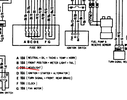
Each headlight is probably 60W or maybe 60/55. Lets assume bothe filaments (high and low beam) are 60W. 60w at 12v require 5 amps current (5x12 =60) / Watts = volts x amps). So for both bulbs that is 10A. The cable needs to be able to carry 10 A. But looking at the circuit diagram, it shows that the 'dimmer' switch - as they call it - that switches from high beam to low beam also has an N position when both high and low beam are connected to the power. That is 20 amps. There is no more capacity on that circuit for any more devices to be powered.
What is possible is that someone has tapped into the headlight circuit for the extra lighting and the circuit cannot handle that.
Alternatively, some of the connections are corroded. That adds resistance to the circuit so it needs more power. The wiring/fuse doesn't have the capacity so in this case the demand is not a sudden surge, but a gradual increase during which time the fue has been on its limit and running hot, not quite enough to melt the fuse wire.
Sometimes in order to prevent a fuse blowing people have been known to add extra equipment to existing wiring, and then add a bigger fuse to stop the original one from blowing. That is a disaster waiting to happen, because then, instead of the fuse blowing, the wire gets overloaded and the wire runs hot. The fuse cannot blow because it can handle the current, but the wire can't. The heat in the wire is conducted through the blades of the fuse and the palstic melts.
I'd do what @ST1100Y said and inspect behind the fuse box and try to check the wire elsewhere.
Also try to find where the accessories are connected and consider disconnecting it. It should be easy if you did it, and if you didn't it will also be easy because it will be obvious.
The only ways that I can think of to can get a burned out fuse like that :
1. One of the wires between the fuse and the headlight / headlight relay has been rubbing and worn away the plastic insulation and contacted the frame. The offending wire will also be blackened / burned at the point where it made contact.
2. Someone has wired in additional components and decided that the existing headlight wiring is a good place to connect to. It isn't.
Some modles have two 10A fuses for the headlights. The standard model has just one twenty amp fuse. I guess yours is that one because the fuse that you show is yellow = 20A.
Each headlight is probably 60W or maybe 60/55. Lets assume bothe filaments (high and low beam) are 60W. 60w at 12v require 5 amps current (5x12 =60) / Watts = volts x amps). So for both bulbs that is 10A. The cable needs to be able to carry 10 A. But looking at the circuit diagram, it shows that the 'dimmer' switch - as they call it - that switches from high beam to low beam also has an N position when both high and low beam are connected to the power. That is 20 amps. There is no more capacity on that circuit for any more devices to be powered.
What is possible is that someone has tapped into the headlight circuit for the extra lighting and the circuit cannot handle that.
Alternatively, some of the connections are corroded. That adds resistance to the circuit so it needs more power. The wiring/fuse doesn't have the capacity so in this case the demand is not a sudden surge, but a gradual increase during which time the fue has been on its limit and running hot, not quite enough to melt the fuse wire.
Sometimes in order to prevent a fuse blowing people have been known to add extra equipment to existing wiring, and then add a bigger fuse to stop the original one from blowing. That is a disaster waiting to happen, because then, instead of the fuse blowing, the wire gets overloaded and the wire runs hot. The fuse cannot blow because it can handle the current, but the wire can't. The heat in the wire is conducted through the blades of the fuse and the palstic melts.
I'd do what @ST1100Y said and inspect behind the fuse box and try to check the wire elsewhere.
Also try to find where the accessories are connected and consider disconnecting it. It should be easy if you did it, and if you didn't it will also be easy because it will be obvious.