


In a motorcycle industry increasingly guided by market trends and standardized platforms, JT Nesbitt has spent his career doing something far riskier: building machines that challenge conventional design.
His work has never been about chasing fads. It’s about pursuing ideas, sometimes strange, often ambitious, and always deeply personal. From his early days sketching concepts to designing some of the most visually arresting American motorcycles of the modern era, Nesbitt has carved out a space that feels closer to industrial art than traditional product design.
Now, with the Magnolia 4, he may be taking his boldest swing yet.
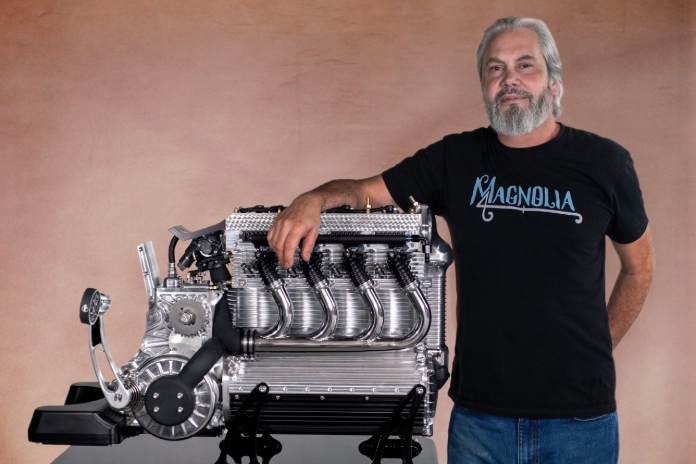
JT Nesbitt is the owner of Bienville Studios, located in the Marigny neighborhood of New Orleans. Here he stands proudly with his first test engine for the Magnolia 4. (Photos courtesy JT Nesbitt)
To understand Nesbitt, you must start in New Orleans. As a Louisiana native, the city isn’t just his home; it’s embedded in the way he thinks about machines.
“A lot of people don’t know this, but New Orleans has a pretty vibrant history of innovative motorcycle design and manufacturing. In fact, in 1952, when Indian went out of business, the second largest producer of motorcycles in the United States (Simplex Manufacturing Corporation) was located on Carrollton Avenue,” Nesbitt explained.
New Orleans is layered with history. Its elegance brushes up against decay. Improvisation is baked into daily life. That same sensibility shows up in Nesbitt’s work. There’s rhythm in the proportions, tension in the lines, and a willingness to embrace imperfection if it serves the larger idea. The Magnolia 4 has NOLA written all over it.
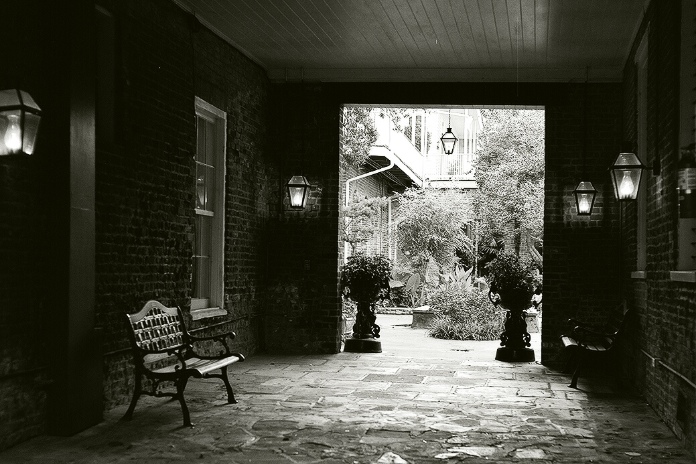
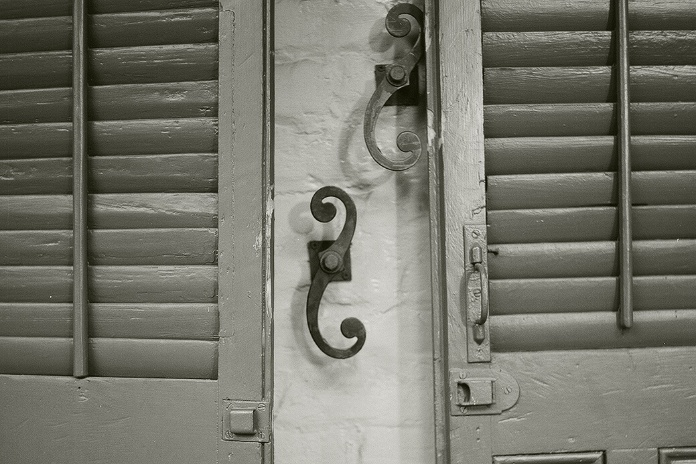
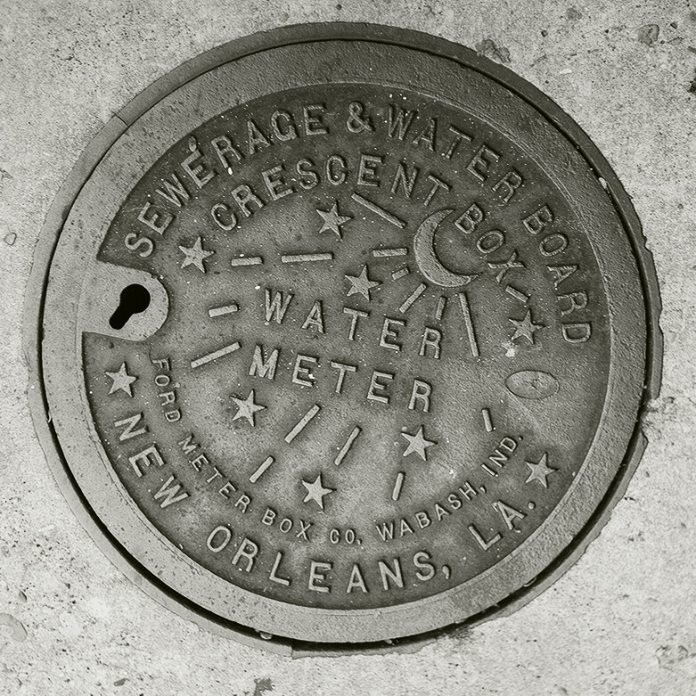
“Designing from within my culture is so easy. All I have to do is take a sketchbook and walk around the French Quarter. All the colors, the textures, the shapes and forms. They’re all right there. Then I come back to the studio and get to work,” said Nesbitt.
Unlike many designers who come up through formal automotive pipelines, Nesbitt’s path was more organic. He didn’t come up in a corporate design studio. He was hands-on, making and building, combining fine art with his passion for motorcycles.
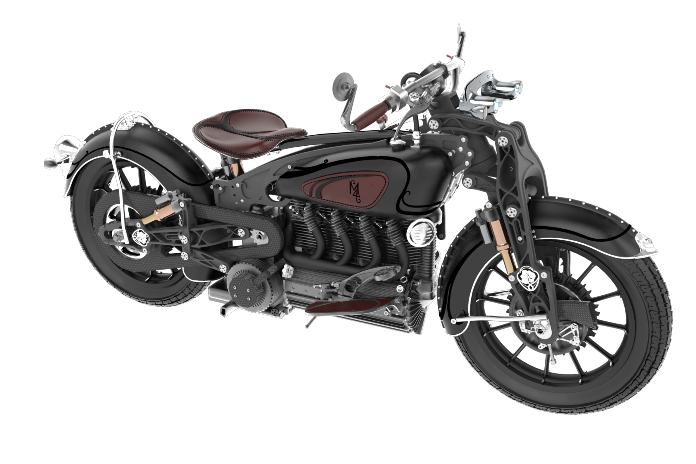
“In college, I was turning in wacky motorcycle projects and expecting a grade from classically trained professors,” said Nesbitt. “So I had to do twice the work. I went back into fine arts to do the painting, the drawing, the sculpture in the traditional way.”
One of Nesbitt’s final school projects was a wild looking chopper built around a Moto Guzzi. He then spent time riding it around the country and writing for Iron Horse magazine. That’s how Nesbitt caught the eye of Matt Chambers, founder of Confederate Motorcycles, one of the most polarizing and influential American motorcycle brands of the early 2000s.
Chambers hired Nesbitt to be head designer at Confederate Motorcycles, where he found both a platform and a proving ground. The company was already known for pushing boundaries, but under his design leadership, it began producing machines that looked like they were from another universe. The most iconic of these was the Wraith.
With its machined aluminum construction, girder-style front suspension, and skeletal minimalism, the Confederate Wraith rejected conventional motorcycle aesthetics entirely. For some, it was radical to the point of absurdity. For others, it was one of the most exciting American motorcycles in decades.
“At the time, it was certainly controversial,” Nesbitt explained. “It was 90% ‘I hate this,’ 10% ‘This is the most wonderful thing I’ve ever seen.’ Having that polarizing design is what gave it such impact. But again, let’s contextualize what the Wraith is. It’s an homage. A love letter to board-track racers from the early 1900s. That’s where the overall proportion and design language come from.”
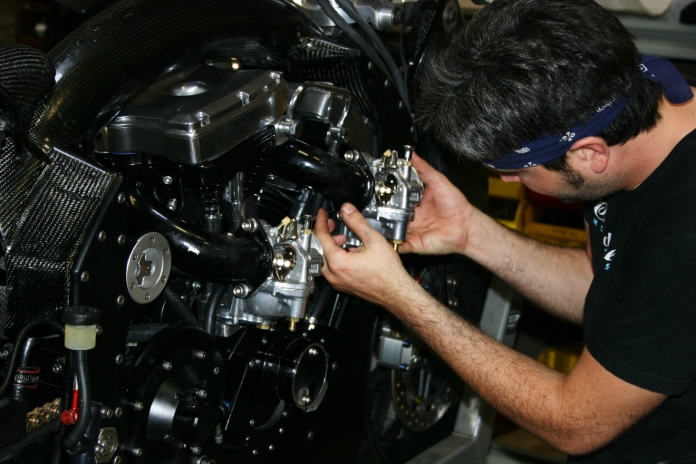
Nesbitt works on the Wraith.
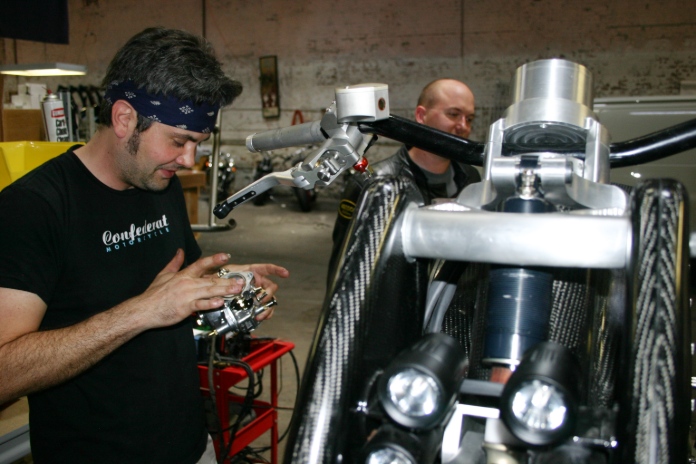
After the Hellcat came the Wraith, which began as an after-hours passion project for the Confederate crew.
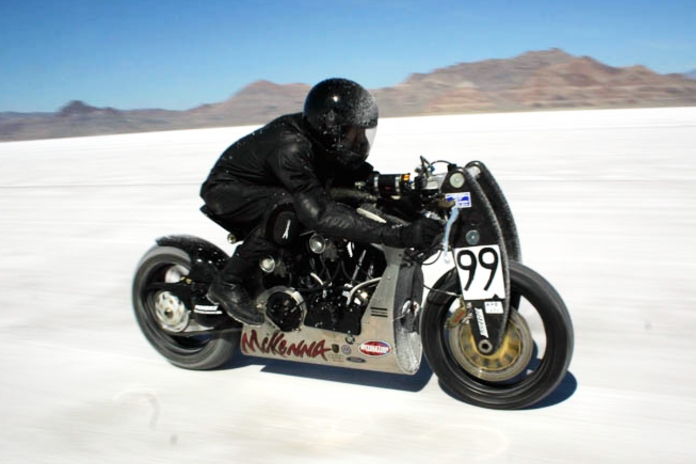
The Bonneville Salt Flats seemed like the most fitting place to test the Wraith’s first prototype.
That polarization didn’t bother Nesbitt. If anything, it validated the approach. His goal was never universal approval, it was authenticity. But then came a turning point that would reshape both his career and his philosophy.
While Nesbitt and Chambers were overseas locking in a pivotal investment for Confederate, the ground shifted back home. Hurricane Katrina tore through New Orleans with catastrophic force, reshaping the city in a matter of hours.
For Nesbitt, the timing felt almost surreal. In less than 24 hours, he experienced the validation of years of work cresting into a breakthrough moment, followed immediately by the gutting realization that his hometown – and Confederate’s headquarters – had been destroyed.
After Hurricane Katrina devastated New Orleans, countless residents and businesses had to make impossible decisions. Confederate, thrown a lifeline by Barber Vintage Motorsports Museum founder George Barber, relocated its operations to Birmingham, Alabama. Nesbitt chose a different path.
“I stayed here in New Orleans because I felt like I had unfinished business,” he said. That unfinished business was the Magnolia 4.
Walking away from Confederate Motorcycles was a pivotal moment for Nesbitt. He had finally gotten recognition for his innovative design work. By venturing out on his own, he leapt into the unknown with no safety net.

Katrina may have destroyed the studio, but it didn’t destroy Nesbitt’s passion for designing motorcycles in New Orleans. (Photo by Greg Drevenstedt)
Those who stayed in New Orleans after Katrina were dedicated to rebuilding their city, and Nesbitt was one of them. He took jobs here and there to help support himself and his community. From serving drinks to cleaning bathrooms, the work wasn’t glamorous, but he endured for the sake of his life’s mission. After work, he would go back to his studio and draw motorcycles. It was all he could afford to do.
His main focus during this time was an early-1900s American longitudinal 4-cylinder engine, which he worked with obsessively in his sketches and had since he started working for Confederate in 1999.
“It was the worst time of my life,” Nesbitt explained. “That pain still lingers. It’s still here. The funny thing is when you know exactly why you’re on planet Earth and you’re able to fulfill that mission, it’s the most blissful sensation you can imagine. But when you know why you’re on planet Earth and you’re unable to fulfill that mission, it’s abject misery. The reason why I exist is to build series-production motorcycles in New Orleans.”
Remaining in New Orleans meant continuing to build in a place that resisted easy answers. It meant embracing constraints rather than escaping them. And it meant doubling down on independence.
During this time he built a few cars, including the Stinkin’ Linkin, a flooded 1998 Lincoln Mark 8 build which went on to compete for a land speed record at the Bonneville Salt Flats. Next was the Magnolia Special, a complete ground-up custom automobile that ran on natural gas. Nesbitt raced it from coast to coast and held the record for alternative energy vehicles (with a time of 89 hours) for two years.
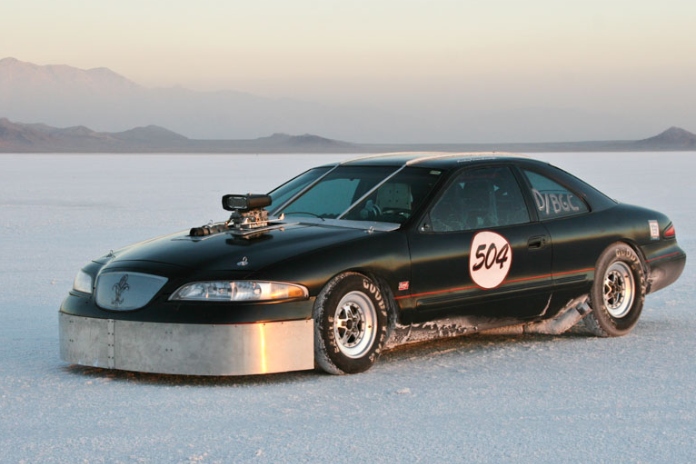
The Stinkin’ Linkin was Nesbitt’s way to overcome the loss of his home and studio after Katrina.
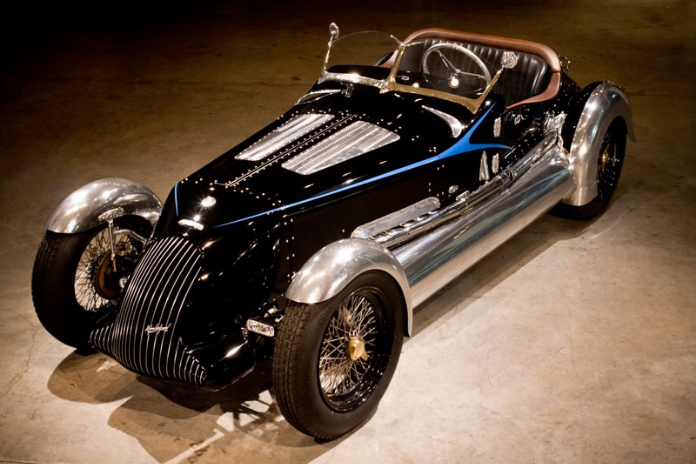
The Magnolia Special came a couple years after the Stinkin’ Linkin.
In 2012, Nesbitt unveiled the Legacy, a prototype motorcycle with an elaborate perimeter chassis of his own design built around a Motus V-4. Three years later, motorjournalist and former racer Alan Cathcart rode the Legacy at the Goodwood Festival of Speed in the U.K.
For his next project, Nesbitt teamed up again with Matt Chambers. In 2017, Chambers rebranded his company as Curtiss Motorcycles and sold Confederate to Ernest Lee, who moved operations to Utah. Nesbitt designed the Curtiss One, a futuristic all-electric motorcycle with exposed architecture and a price tag around $100,000.
In an industry that often gravitates toward large-scale production, Nesbitt leaned further into a boutique, atelier-like approach to motorcycle design. That independence would define everything that came next.
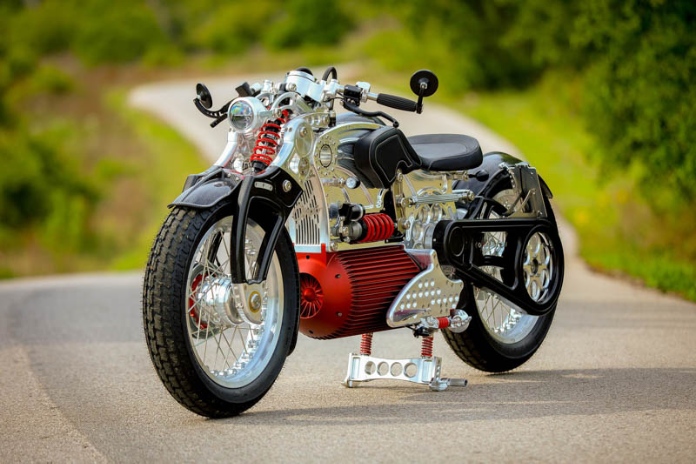
The Curtiss One became the fourth motorcycle platform that Nesbitt designed in New Orleans. This futuristic looking machine is built around its exposed battery and beautifully machined components.
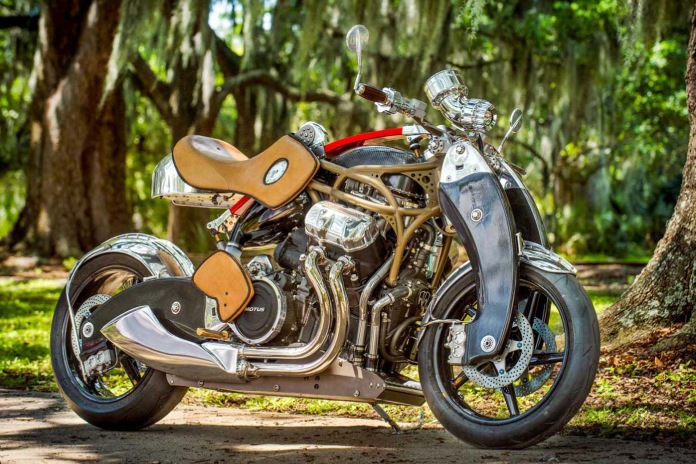
Bienville Legacy
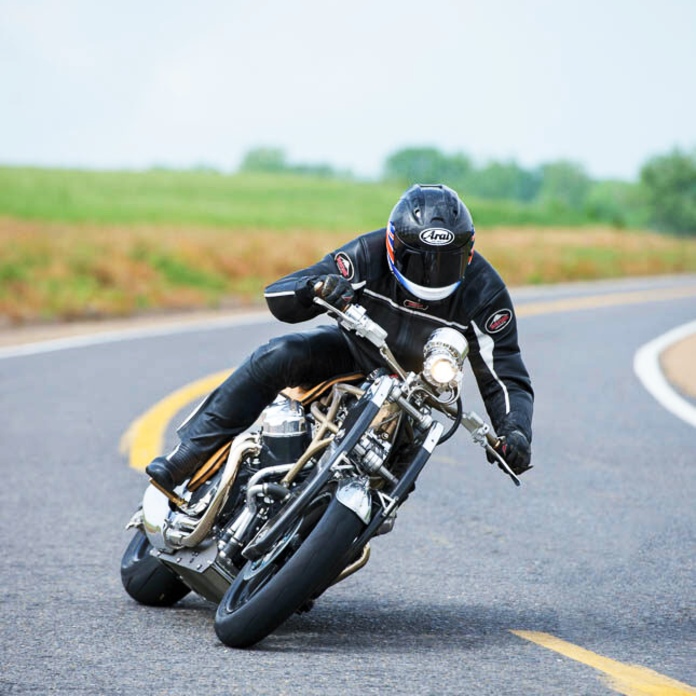
The Bienville Legacy went on to compete in the Goodwood Festival of Speed hillclimb event, piloted by Alan Cathcart. Only three prototypes of this design were ever built.
Operating his own design firm, Bienville Studios, Nesbitt has built a body of work that feels less like a product catalog and more like an evolving conversation.
Through sketches, prototypes, and video journals, he’s documented not just what he builds but how he thinks. Influences span New Orleans culture, Japanese swordcraft, aviation, and the work of great designers like William Henderson, Ettore Bugatti, and John Britten. There’s a recurring theme: respect for lineage without being bound by it. That philosophy comes into sharp focus with the Magnolia 4.
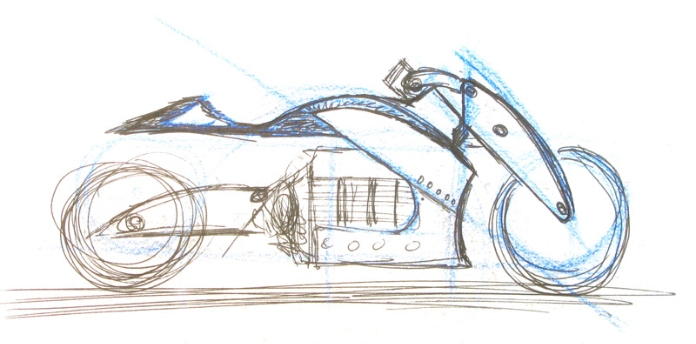
The earliest gesture sketches of what would become the Magnolia 4 were drawn in 1999.
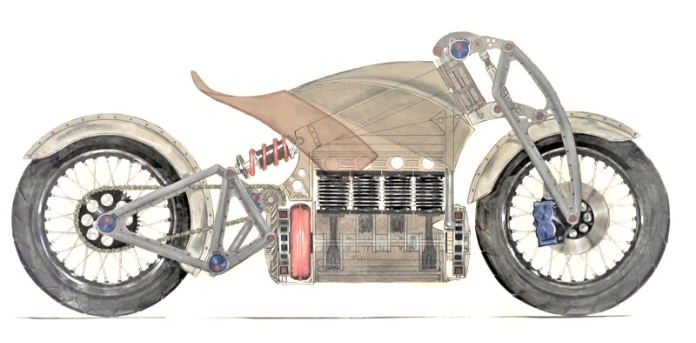
Over the years, the Magnolia 4 slowly began to take shape on paper.
At first glance, the idea sounds almost academic: an American-style longitudinal inline-Four, a deliberate throwback to early U.S. motorcycle design. The Pierce Four, built in 1909 by the Pierce Motorcycle Company, was the first production 4-cylinder motorcycle in the United States. The last was the Indian Four, produced from 1928-1942. This distinctly American design was renowned for its remarkable smoothness, delivering a level of comfort and luxury rarely found on prewar motorcycles.
When asked why the American 4-cylinder went away, Nesbitt said, “I lay the blame for that squarely on a poverty of the imagination by those who are in control of this industry. There are plenty of other interesting American motorcycles that have been designed in the past 84 years, and none of them have bothered to revisit their heritage.”
Resurrecting the longitudinal Four is an idea that’s been slowing evolving in Nesbitt’s head for decades. The Magnolia 4 is the first American interpretation of this configuration in more than eight decades. That alone makes it noteworthy. But the significance runs even deeper.
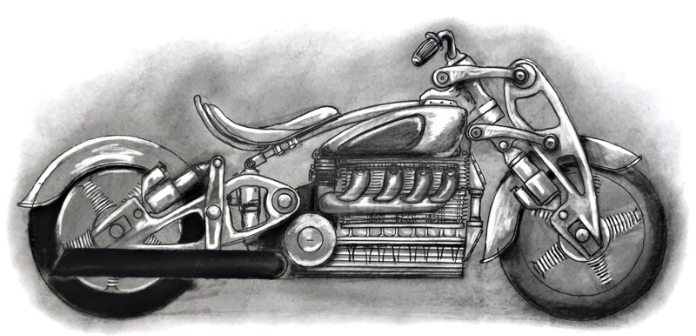
Finally, in the winter of 2023, Nesbitt began bringing this project to life.
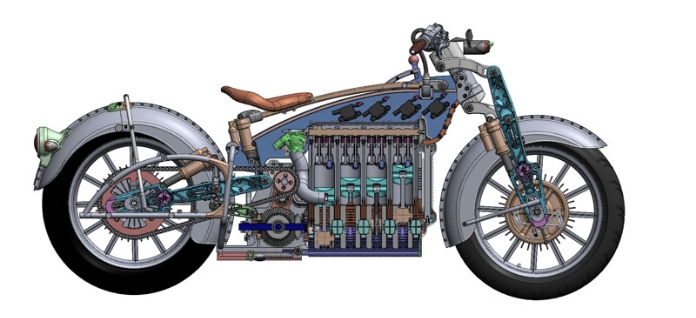
This illustration details much of the component design used on the Magnolia 4.
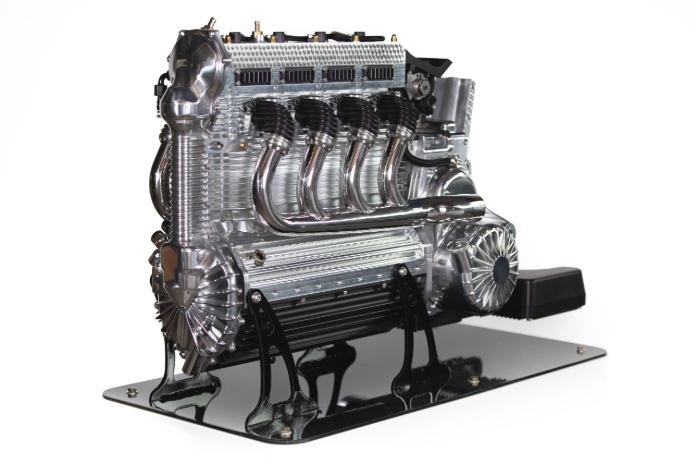
Most American motorcycles are defined by their V-Twin architecture. Iconic, yes, but also limiting in certain ways. The longitudinal inline-Four, by contrast, opens up entirely different possibilities in terms of balance, chassis requirements, and visual identity.
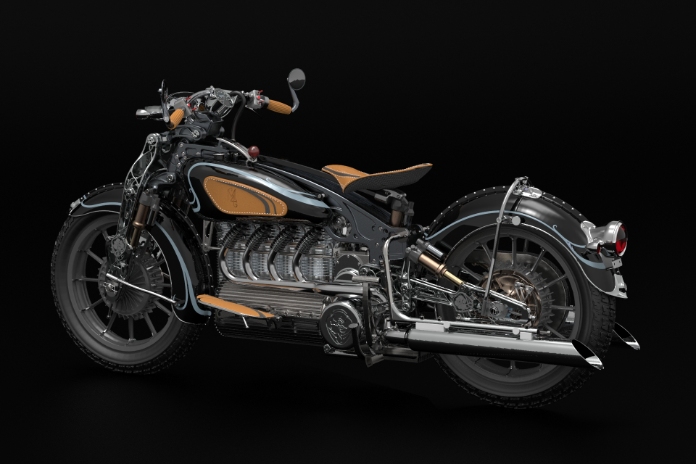
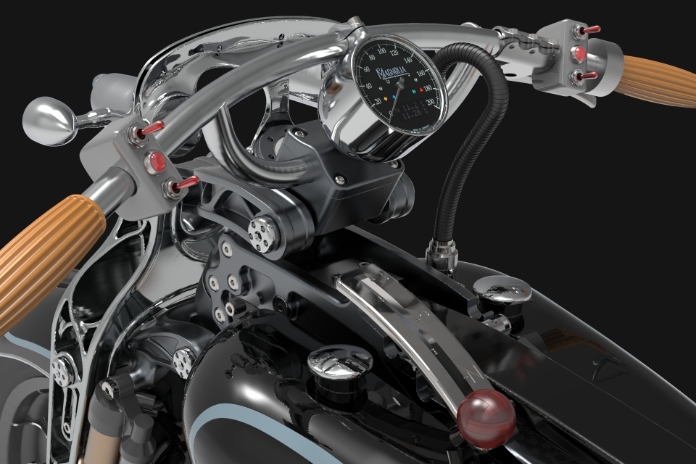
In addition to the engine configuration, the Magnolia 4 has a purpose not found in any modern-day motorcycle. It’s designed to be a century cycle: Every component is designed to endure for the next 100 years. Drum brakes instead of hydraulics, an oil screen instead of a replaceable filter, and optimized cooling fins that eliminate the need for a water-cooling system. These are just a few of the components that are designed to last.
On the Magnolia 4, the engine becomes the centerpiece, not hidden away but integrated into the overall composition. The chassis, the proportions, even the stance of the bike are all shaped around this core idea. And everything is created to survive the next 100 years.
Every designer has a project that feels like a culmination – a point where past experience, personal philosophy, and technical ambition converge. For Nesbitt, the Magnolia 4 is his magnum opus.
Part of its importance lies in its independence. This isn’t a commission or a corporate directive. It’s a self-driven exploration, free from the constraints that often dilute bold ideas. In an era where motorcycles are increasingly homogenized, optimized for global markets, and regulated into similarity, the Magnolia 4 pushes in the opposite direction. It celebrates mechanical individuality.
“We have a problem in our culture, as motorcyclists, in the way that we value things,” said Nesbitt. “American motorcycles aren’t very good at generating aspirational behavior. In the car world, they’ve got that really figured out. It’s so much more mature.”
In an industry often defined by sales numbers, JT Nesbitt’s legacy will be measured differently. It will be measured in influence, and in the way his work challenges other designers to think more boldly. The way it reminds riders that motorcycles can be more than transportation or recreation. They can be expressions of philosophy and culture.
Perhaps most importantly, it will be measured in the ideas Nesbitt leaves behind. Because long after specific models fade from memory, the questions he asks – the ones embedded in machines like the Magnolia 4 – will continue to resonate.
What if we did motorcycle design differently? For JT Nesbitt, the question isn’t theoretical; it’s the entire point.
Learn more about the motorcycle that will last 100 years
The Magnolia 4 is still a developing story. It exists somewhere between prototype and production, with nine units already reserved. For Nesbitt, the process is as important as the result. When asked if there is an expected completion date, Nesbitt said, “The Magnolia 4 is on its own timeline.” The project is currently looking for funding to get production started.
No matter when the Magnolia 4 project is completed, the impact is already clear. It reinforces the idea that there’s still room in motorcycling for experimentation, individuality, and expression.
Learn more about JT Nesbitt and reserve your Magnolia 4 at the Bienville Studios website.
Listen to our podcast interview with Nesbitt on Episode 84 of the Rider Magazine Insider Podcast.
The post JT Nesbitt: An American Original appeared first on Rider Magazine.
Continue reading...
His work has never been about chasing fads. It’s about pursuing ideas, sometimes strange, often ambitious, and always deeply personal. From his early days sketching concepts to designing some of the most visually arresting American motorcycles of the modern era, Nesbitt has carved out a space that feels closer to industrial art than traditional product design.
Now, with the Magnolia 4, he may be taking his boldest swing yet.
JT Nesbitt is the owner of Bienville Studios, located in the Marigny neighborhood of New Orleans. Here he stands proudly with his first test engine for the Magnolia 4. (Photos courtesy JT Nesbitt)
A Designer Shaped by Place
To understand Nesbitt, you must start in New Orleans. As a Louisiana native, the city isn’t just his home; it’s embedded in the way he thinks about machines.
“A lot of people don’t know this, but New Orleans has a pretty vibrant history of innovative motorcycle design and manufacturing. In fact, in 1952, when Indian went out of business, the second largest producer of motorcycles in the United States (Simplex Manufacturing Corporation) was located on Carrollton Avenue,” Nesbitt explained.
New Orleans is layered with history. Its elegance brushes up against decay. Improvisation is baked into daily life. That same sensibility shows up in Nesbitt’s work. There’s rhythm in the proportions, tension in the lines, and a willingness to embrace imperfection if it serves the larger idea. The Magnolia 4 has NOLA written all over it.
“Designing from within my culture is so easy. All I have to do is take a sketchbook and walk around the French Quarter. All the colors, the textures, the shapes and forms. They’re all right there. Then I come back to the studio and get to work,” said Nesbitt.
Unlike many designers who come up through formal automotive pipelines, Nesbitt’s path was more organic. He didn’t come up in a corporate design studio. He was hands-on, making and building, combining fine art with his passion for motorcycles.
“In college, I was turning in wacky motorcycle projects and expecting a grade from classically trained professors,” said Nesbitt. “So I had to do twice the work. I went back into fine arts to do the painting, the drawing, the sculpture in the traditional way.”
One of Nesbitt’s final school projects was a wild looking chopper built around a Moto Guzzi. He then spent time riding it around the country and writing for Iron Horse magazine. That’s how Nesbitt caught the eye of Matt Chambers, founder of Confederate Motorcycles, one of the most polarizing and influential American motorcycle brands of the early 2000s.
Confederate and the Birth of a Signature Style
Chambers hired Nesbitt to be head designer at Confederate Motorcycles, where he found both a platform and a proving ground. The company was already known for pushing boundaries, but under his design leadership, it began producing machines that looked like they were from another universe. The most iconic of these was the Wraith.
With its machined aluminum construction, girder-style front suspension, and skeletal minimalism, the Confederate Wraith rejected conventional motorcycle aesthetics entirely. For some, it was radical to the point of absurdity. For others, it was one of the most exciting American motorcycles in decades.
“At the time, it was certainly controversial,” Nesbitt explained. “It was 90% ‘I hate this,’ 10% ‘This is the most wonderful thing I’ve ever seen.’ Having that polarizing design is what gave it such impact. But again, let’s contextualize what the Wraith is. It’s an homage. A love letter to board-track racers from the early 1900s. That’s where the overall proportion and design language come from.”
Nesbitt works on the Wraith.
After the Hellcat came the Wraith, which began as an after-hours passion project for the Confederate crew.
The Bonneville Salt Flats seemed like the most fitting place to test the Wraith’s first prototype.
That polarization didn’t bother Nesbitt. If anything, it validated the approach. His goal was never universal approval, it was authenticity. But then came a turning point that would reshape both his career and his philosophy.
While Nesbitt and Chambers were overseas locking in a pivotal investment for Confederate, the ground shifted back home. Hurricane Katrina tore through New Orleans with catastrophic force, reshaping the city in a matter of hours.
For Nesbitt, the timing felt almost surreal. In less than 24 hours, he experienced the validation of years of work cresting into a breakthrough moment, followed immediately by the gutting realization that his hometown – and Confederate’s headquarters – had been destroyed.
Staying Behind After the Storm
After Hurricane Katrina devastated New Orleans, countless residents and businesses had to make impossible decisions. Confederate, thrown a lifeline by Barber Vintage Motorsports Museum founder George Barber, relocated its operations to Birmingham, Alabama. Nesbitt chose a different path.
“I stayed here in New Orleans because I felt like I had unfinished business,” he said. That unfinished business was the Magnolia 4.
Walking away from Confederate Motorcycles was a pivotal moment for Nesbitt. He had finally gotten recognition for his innovative design work. By venturing out on his own, he leapt into the unknown with no safety net.
Katrina may have destroyed the studio, but it didn’t destroy Nesbitt’s passion for designing motorcycles in New Orleans. (Photo by Greg Drevenstedt)
Those who stayed in New Orleans after Katrina were dedicated to rebuilding their city, and Nesbitt was one of them. He took jobs here and there to help support himself and his community. From serving drinks to cleaning bathrooms, the work wasn’t glamorous, but he endured for the sake of his life’s mission. After work, he would go back to his studio and draw motorcycles. It was all he could afford to do.
His main focus during this time was an early-1900s American longitudinal 4-cylinder engine, which he worked with obsessively in his sketches and had since he started working for Confederate in 1999.
“It was the worst time of my life,” Nesbitt explained. “That pain still lingers. It’s still here. The funny thing is when you know exactly why you’re on planet Earth and you’re able to fulfill that mission, it’s the most blissful sensation you can imagine. But when you know why you’re on planet Earth and you’re unable to fulfill that mission, it’s abject misery. The reason why I exist is to build series-production motorcycles in New Orleans.”
Remaining in New Orleans meant continuing to build in a place that resisted easy answers. It meant embracing constraints rather than escaping them. And it meant doubling down on independence.
During this time he built a few cars, including the Stinkin’ Linkin, a flooded 1998 Lincoln Mark 8 build which went on to compete for a land speed record at the Bonneville Salt Flats. Next was the Magnolia Special, a complete ground-up custom automobile that ran on natural gas. Nesbitt raced it from coast to coast and held the record for alternative energy vehicles (with a time of 89 hours) for two years.
The Stinkin’ Linkin was Nesbitt’s way to overcome the loss of his home and studio after Katrina.
The Magnolia Special came a couple years after the Stinkin’ Linkin.
In 2012, Nesbitt unveiled the Legacy, a prototype motorcycle with an elaborate perimeter chassis of his own design built around a Motus V-4. Three years later, motorjournalist and former racer Alan Cathcart rode the Legacy at the Goodwood Festival of Speed in the U.K.
For his next project, Nesbitt teamed up again with Matt Chambers. In 2017, Chambers rebranded his company as Curtiss Motorcycles and sold Confederate to Ernest Lee, who moved operations to Utah. Nesbitt designed the Curtiss One, a futuristic all-electric motorcycle with exposed architecture and a price tag around $100,000.
In an industry that often gravitates toward large-scale production, Nesbitt leaned further into a boutique, atelier-like approach to motorcycle design. That independence would define everything that came next.
The Curtiss One became the fourth motorcycle platform that Nesbitt designed in New Orleans. This futuristic looking machine is built around its exposed battery and beautifully machined components.
Bienville Legacy
The Bienville Legacy went on to compete in the Goodwood Festival of Speed hillclimb event, piloted by Alan Cathcart. Only three prototypes of this design were ever built.
Bienville Studios & The Century Cycle
Operating his own design firm, Bienville Studios, Nesbitt has built a body of work that feels less like a product catalog and more like an evolving conversation.
Through sketches, prototypes, and video journals, he’s documented not just what he builds but how he thinks. Influences span New Orleans culture, Japanese swordcraft, aviation, and the work of great designers like William Henderson, Ettore Bugatti, and John Britten. There’s a recurring theme: respect for lineage without being bound by it. That philosophy comes into sharp focus with the Magnolia 4.
The earliest gesture sketches of what would become the Magnolia 4 were drawn in 1999.
Over the years, the Magnolia 4 slowly began to take shape on paper.
At first glance, the idea sounds almost academic: an American-style longitudinal inline-Four, a deliberate throwback to early U.S. motorcycle design. The Pierce Four, built in 1909 by the Pierce Motorcycle Company, was the first production 4-cylinder motorcycle in the United States. The last was the Indian Four, produced from 1928-1942. This distinctly American design was renowned for its remarkable smoothness, delivering a level of comfort and luxury rarely found on prewar motorcycles.
When asked why the American 4-cylinder went away, Nesbitt said, “I lay the blame for that squarely on a poverty of the imagination by those who are in control of this industry. There are plenty of other interesting American motorcycles that have been designed in the past 84 years, and none of them have bothered to revisit their heritage.”
Resurrecting the longitudinal Four is an idea that’s been slowing evolving in Nesbitt’s head for decades. The Magnolia 4 is the first American interpretation of this configuration in more than eight decades. That alone makes it noteworthy. But the significance runs even deeper.
Finally, in the winter of 2023, Nesbitt began bringing this project to life.
This illustration details much of the component design used on the Magnolia 4.
Most American motorcycles are defined by their V-Twin architecture. Iconic, yes, but also limiting in certain ways. The longitudinal inline-Four, by contrast, opens up entirely different possibilities in terms of balance, chassis requirements, and visual identity.
In addition to the engine configuration, the Magnolia 4 has a purpose not found in any modern-day motorcycle. It’s designed to be a century cycle: Every component is designed to endure for the next 100 years. Drum brakes instead of hydraulics, an oil screen instead of a replaceable filter, and optimized cooling fins that eliminate the need for a water-cooling system. These are just a few of the components that are designed to last.
On the Magnolia 4, the engine becomes the centerpiece, not hidden away but integrated into the overall composition. The chassis, the proportions, even the stance of the bike are all shaped around this core idea. And everything is created to survive the next 100 years.
A Different Kind of Legacy
Every designer has a project that feels like a culmination – a point where past experience, personal philosophy, and technical ambition converge. For Nesbitt, the Magnolia 4 is his magnum opus.
Part of its importance lies in its independence. This isn’t a commission or a corporate directive. It’s a self-driven exploration, free from the constraints that often dilute bold ideas. In an era where motorcycles are increasingly homogenized, optimized for global markets, and regulated into similarity, the Magnolia 4 pushes in the opposite direction. It celebrates mechanical individuality.
“We have a problem in our culture, as motorcyclists, in the way that we value things,” said Nesbitt. “American motorcycles aren’t very good at generating aspirational behavior. In the car world, they’ve got that really figured out. It’s so much more mature.”
In an industry often defined by sales numbers, JT Nesbitt’s legacy will be measured differently. It will be measured in influence, and in the way his work challenges other designers to think more boldly. The way it reminds riders that motorcycles can be more than transportation or recreation. They can be expressions of philosophy and culture.
Perhaps most importantly, it will be measured in the ideas Nesbitt leaves behind. Because long after specific models fade from memory, the questions he asks – the ones embedded in machines like the Magnolia 4 – will continue to resonate.
What if we did motorcycle design differently? For JT Nesbitt, the question isn’t theoretical; it’s the entire point.
Learn more about the motorcycle that will last 100 years
The Magnolia 4 Timeline
The Magnolia 4 is still a developing story. It exists somewhere between prototype and production, with nine units already reserved. For Nesbitt, the process is as important as the result. When asked if there is an expected completion date, Nesbitt said, “The Magnolia 4 is on its own timeline.” The project is currently looking for funding to get production started.
No matter when the Magnolia 4 project is completed, the impact is already clear. It reinforces the idea that there’s still room in motorcycling for experimentation, individuality, and expression.
Learn more about JT Nesbitt and reserve your Magnolia 4 at the Bienville Studios website.
Listen to our podcast interview with Nesbitt on Episode 84 of the Rider Magazine Insider Podcast.
The post JT Nesbitt: An American Original appeared first on Rider Magazine.
Continue reading...