
You are using an out of date browser. It may not display this or other websites correctly.
You should upgrade or use an alternative browser.
You should upgrade or use an alternative browser.
Knee Replacement Infection
- Thread starter okckeith
- Start date

Fingers crossed it all goes smoothly from here. It's impressive what you've managed to overcome, good on ya!


How long until you'll be taking names and kicking azz?Well I finally got my new knee replacement on Friday 5-15-26. Came home today. I had a little scare Friday night. I ran a temperature for a few hours. Took a Tylenol injection and all was good. Now for the rehab.

I feel for you and like everyone else, I wish you the best...and to never go through this again.
I met a guy at Boeing. He had the desk next to mine and was going through this. He told me about how he'd had the old knee taken out and a bag of anti-biotics put in instead for about six months. There were a bunch of complications. Long story short, I think he said he had been going through this for about 18 months. I was going to suggest he have my surgeon do the next knee replacement. Everything I'd heard about this surgeon was that he was one of the best in the area. Turns out that was who he had replace his knee.
I was in the area and so stopped by my surgeon's office. My TKR was in November 2015. I asked if I should still be taking anti-biotics for dental appointments. Even for dental cleanings. The nurse at the reception desk said they consider it mandatory for the first two years and highly recommended for the rest of your life. For a dental cleaning?!?!? This infection stuff is serious.
And if you're wondering why take anti-biotics for dental work when you have a knee replaced, as I understand it, the germs gravitate towards metal. How and why that happens, I don't know.
I'm glad you're on the mend. I hope and pray it stays trouble-free from now on.
Chris
I met a guy at Boeing. He had the desk next to mine and was going through this. He told me about how he'd had the old knee taken out and a bag of anti-biotics put in instead for about six months. There were a bunch of complications. Long story short, I think he said he had been going through this for about 18 months. I was going to suggest he have my surgeon do the next knee replacement. Everything I'd heard about this surgeon was that he was one of the best in the area. Turns out that was who he had replace his knee.
I was in the area and so stopped by my surgeon's office. My TKR was in November 2015. I asked if I should still be taking anti-biotics for dental appointments. Even for dental cleanings. The nurse at the reception desk said they consider it mandatory for the first two years and highly recommended for the rest of your life. For a dental cleaning?!?!? This infection stuff is serious.
And if you're wondering why take anti-biotics for dental work when you have a knee replaced, as I understand it, the germs gravitate towards metal. How and why that happens, I don't know.
I'm glad you're on the mend. I hope and pray it stays trouble-free from now on.
Chris
I was going for a shoulder replacement that was supposed to happen April 5 (but did not...that's another story). I asked my doc at our meeting a month before the scheduled day about infections. He said there is no blood supply to plastic and metal joints and thus no white cells. Any ole bacteria that is floating around that finds the new joint looks at it as safe haven, and can get a foothold (well, knee or shoulder hold) to grow until it becomes a problem.And if you're wondering why take anti-biotics for dental work when you have a knee replaced, as I understand it, the germs gravitate towards metal. How and why that happens, I don't know.
Interesting. Up here the Canadian Dental Association, Canadian Orthopedic Association and Association of Medical Microbiology and Infectious Disease (Canada) say prophylactic antibiotics are not recommended.
Much like lawyers, you ask three doctors for an opinion and you get three different opinions.....
Much like lawyers, you ask three doctors for an opinion and you get three different opinions.....
Last edited:

Uncle Phil
Site Supporter


My position is that my original surgeon said definitely to do it so I'll go with the one that fixed me.Interesting. The up here the Canadian Dental Association, Canadian Orthopedic Association and Association of Medical Microbiology and Infectious Disease (Canada) say prophylactic antibiotics are not recommended.
Much like lawyers, you ask three doctors for an opinion and you get three different opinions.....
And my dentist always offers them but it is up to you to decide.
Besides, the small dose you receive will not harm you - it's not like you are taking them for 2 weeks.

So I'll 'err' on the side of caution because it doesn't hurt and if it helps in any way to prevent what Keith just went through then it is well worth it.


Hope it doesn't look like mine when I came home. Glad to hear it's back together....
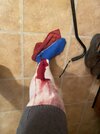


Ahhhhhhhhhhhh!Hope it doesn't look like mine when I came home. Glad to hear it's back together....

It's good to hear you have a knee again, and I hope it's all good from here !

wjbertrand
Ventura Highway
After a career in biomedical technologies and biomaterials I could totally geek out explaining this. Bacteria aren’t just attracted to metal, but to almost any artificial material implanted in the body. It’s all surface energies, interfaces, biofilms, etc.And if you're wondering why take anti-biotics for dental work when you have a knee replaced, as I understand it, the germs gravitate towards metal. How and why that happens, I don't know.

It's been over ten years since the ADA decided antibiotics are not generally recommended at the dentist. About 15 years ago when they removed my failed ankle replacement, I was left with plenty of hardware in my leg, but have never been told I needed antibiotics at the dentist. I guess once that expensive joint replacement is out, they don't care about a few rods and plates, lol.
Uncle Phil
Site Supporter
I love dentists but I'll stick with the recommendation of the feller that installed my hardware.It's been over ten years since the ADA decided antibiotics are not generally recommended at the dentist. About 15 years ago when they removed my failed ankle replacement, I was left with plenty of hardware in my leg, but have never been told I needed antibiotics at the dentist. I guess once that expensive joint replacement is out, they don't care about a few rods and plates, lol.
I tend to follow doc's orders too. But life is a balancing act, and even single occasional use of an antibiotic can drive resistance, as it's an accumulative effect. So while it doesn't "hurt anything" to take a dose, it's not completely benign. Lol, heck, I just figured I'm more likely to pick up a bacteria from a cut or scrape around the house, than at the dentist.I love dentists but I'll stick with the recommendation of the feller that installed my hardware.
I had to go for a cytoscopy about a month after I had my knee replacement. The doctor doing it wrote a script for a one time antibiotic. Figured he has a few more years of medical school under his belt than me so I made sure to take it.
Uncle Phil
Site Supporter
I've done the antibiotic route since 2010 and have had no issues so I'll stick with what has worked for me.I tend to follow doc's orders too. But life is a balancing act, and even single occasional use of an antibiotic can drive resistance, as it's an accumulative effect. So while it doesn't "hurt anything" to take a dose, it's not completely benign. Lol, heck, I just figured I'm more likely to pick up a bacteria from a cut or scrape around the house, than at the dentist.
Per Mr. Google -
While a single low-dose exposure generally has a mild impact, repeated or long-term courses can cause persistent loss of beneficial bacteria, mucosal damage, and increased antibiotic resistance.
I'm perfectly happy with a 'mild impact' versus the risk of having a joint ripped out like poor Keith just went through.
I've had four joint replacements - both knees and both shoulders - so I have a much bigger 'infection' target according to Jeff in Post #91.
You have to do what suits you not what suits me.
I had to go for a cytoscopy about a month after I had my knee replacement. The doctor doing it wrote a script for a one time antibiotic. Figured he has a few more years of medical school under his belt than me so I made sure to take it.
 I'd take the antibiotic too, with the well known problems they have completely sterilizing those scopes between use.
I'm certainly glad I didn't read this before I had the procedure

Not meaning to tell anyone what to do, just a little FYI. I apologize if that came off wrong.I've done the antibiotic route since 2010 and have had no issues so I'll stick with what has worked for me.
Per Mr. Google -
While a single low-dose exposure generally has a mild impact, repeated or long-term courses can cause persistent loss of beneficial bacteria, mucosal damage, and increased antibiotic resistance.
I'm perfectly happy with a 'mild impact' versus the risk of having a joint ripped out like poor Keith just went through.
I've had four joint replacements - both knees and both shoulders - so I have a much bigger 'infection' target according to Jeff in Post #91.
You have to do what suits you not what suits me.
Sorry didn't mean to scare you.....some places have adopted single use disposable scopes.I'm certainly glad I didn't read this before I had the procedure