Rear brake binding

1. Are the front brakes binding - particularly the front left ?
The front brakes are binding not to the extent of the rear, spins half a turn. Cannot tell if left or right binding.


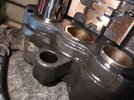
The rear reservoir has air space as pictured.
1000006765.jpg
I have replaced the pistons, seals, pads, pad pin, bracket in the rear caliper, all are genuine Honda parts from Fowlers Bristol. The front SMC has been replaced genuine part from fowlers Bristol.
The pads in the front are as I had the bike.
I will check my invoice from fowlers to confirm the right pads are in the rear.
1000006766.jpg1000006767.jpg
2b. Front Left caliper. Remove the pads. Remove the caliper from the fork legs. Press the rear brake pedal slightly - careful - you don't want to eject the centre piston entirely. Just move it out a little bit. Then using thumb pressure on the front left centre piston, (having made sure that the piston itself is clean and shiny), push it in to its bore. It should move in easily.
Purpose - to find out whether the rear master cylinder near to the rear reservoir is allowing fluid to return to the reservoir. If it isn't then we have one probably reason. That relief port - the compensation port in the rear master cylinder needs to be clear otherwise the rear brakes will lock up.
2c. Replace the front left caliper and pads - loosely for now - to avoid accidentally ejecting fluid and pistons all over the garage floor.
1000006774.jpg1000006776.jpg1000006777.jpg1000006779.jpg1000006780.jpg1000006781.jpg1000006787.jpg
I have followed this procedure and the piston pumped out and then pushed back into the caliper. Then replaced the pads.
A new set of rear pads have been ordered from Fowlers after telling them the Vin number to avoid receiving the wrong part.
Will continue tomorrow.
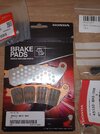
The pads have arrived.
20250830_121502.jpg
 
1. Are the front brakes binding - particularly the front left ?
The front brakes are binding not to the extent of the rear, spins half a turn. Cannot tell if left or right binding.


The rear reservoir has air space as pictured.
1000006765.jpg
I have replaced the pistons, seals, pads, pad pin, bracket in the rear caliper, all are genuine Honda parts from Fowlers Bristol. The front SMC has been replaced genuine part from fowlers Bristol.
The pads in the front are as I had the bike.
I will check my invoice from fowlers to confirm the right pads are in the rear.
1000006766.jpg1000006767.jpg
2b. Front Left caliper. Remove the pads. Remove the caliper from the fork legs. Press the rear brake pedal slightly - careful - you don't want to eject the centre piston entirely. Just move it out a little bit. Then using thumb pressure on the front left centre piston, (having made sure that the piston itself is clean and shiny), push it in to its bore. It should move in easily.
Purpose - to find out whether the rear master cylinder near to the rear reservoir is allowing fluid to return to the reservoir. If it isn't then we have one probably reason. That relief port - the compensation port in the rear master cylinder needs to be clear otherwise the rear brakes will lock up.
2c. Replace the front left caliper and pads - loosely for now - to avoid accidentally ejecting fluid and pistons all over the garage floor.
1000006774.jpg1000006776.jpg1000006777.jpg1000006779.jpg1000006780.jpg1000006781.jpg1000006787.jpg
I have followed this procedure and the piston pumped out and then pushed back into the caliper. Then replaced the pads.
A new set of rear pads have been ordered from Fowlers after telling them the Vin number to avoid receiving the wrong part.
Will continue tomorrow.
3. Add a bleed tube to the front left caliper, lower bleed valve. A vertical tube is good enough.
Go to the rear caliper. Remove pads, Remove bracket. Open up the front left lower bleed valve and pump a little fluid into the tube so that you can see the level of fluid in the tube.
Using thumb pressure, push in the rearmost piston in the rear caliper. The front piston should move out easily. Now push in the front piston - the rear piston should move easily. Now push in both together. They will move not as easily - and you should see the fluid in the bleed tube on the front left lower bleed valve go up.
If it does, close the bleed valve. Refit bracket loosely.
Purpose. The rear caliper fluid must be able to escape through the compensation port in the SMC. Normally it flows out to the lines to the rear master cyclinder - but it does that by going past the front left centre piston. You have been checking whether or not fluid is getting through the SMC and the compensation port. The results of this may determine whether a new SMC is required.

I added a bleed tube to the front left caliper, Then I removed the rear pads and bracket.
1000006808.jpg
I opened up the front left lower bleed valve and fluid came out without pumping.
1000006801.jpg
I pushed in the rear most piston in the rear caliper the front piston moved out but not by much. The bleed valve is open on the front caliper at this point.
Pushing the front the rear moves.. I pushed them in together and the fluid went up in the tube it was moving up on its own. I added a longer tube to the front bleed valve.

1000006808.jpg1000006801.jpg1000006806.jpg1000006804.jpg
1000006803.jpg
 
Last edited:
3. Add a bleed tube to the front left caliper, lower bleed valve. A vertical tube is good enough.
Go to the rear caliper. Remove pads, Remove bracket. Open up the front left lower bleed valve and pump a little fluid into the tube so that you can see the level of fluid in the tube.
Using thumb pressure, push in the rearmost piston in the rear caliper. The front piston should move out easily. Now push in the front piston - the rear piston should move easily. Now push in both together. They will move not as easily - and you should see the fluid in the bleed tube on the front left lower bleed valve go up.
If it does, close the bleed valve. Refit bracket loosely.
Purpose. The rear caliper fluid must be able to escape through the compensation port in the SMC. Normally it flows out to the lines to the rear master cyclinder - but it does that by going past the front left centre piston. You have been checking whether or not fluid is getting through the SMC and the compensation port. The results of this may determine whether a new SMC is required.

I added a bleed tube to the caliper, Then I removed the rear pads and bracket.
1000006808.jpg
I opened up the front left lower bleed valve and fluid came out without pumping.
1000006801.jpg
I pushed in the rear most piston in the rear caliper the front piston moved out but not by much. The bleed valve is open on the front caliper at this point.
Pushing the front the rear moves.. I pushed them in together and the fluid went up in the tube it was moving up on its own. I added a longer tube to the front bleed valve.

1000006808.jpg1000006801.jpg1000006806.jpg1000006804.jpg
1000006803.jpg
4. With the rear caliper bracket in place, and no pads installed. Bracket held firmly enough by the axle - grab hold of the caliper by its top and move it across so the the pistons touch the brake disk surface. (You may want to protect your disks from oil/grease with a paper towel). It should move all the way very easily. Let go of the caliper. It should stay put.
Then pull it all the way towards you until the other side of the caliper meets the disk. Again - very little resistance, easy movement and when you let go, it should not move back by itself.
Purpose. You are checking that the caliper is able to move easily on its slider pins. If it doesn't move the full range, then suspect that the slider pins are not parallel. If it moves by itself when you let go, then suspect that the slider pin is fighting against too much grease or air pressure.

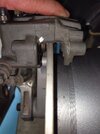
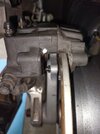
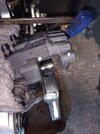
Caliper pushed over to right. The caliper stayed in place. Third picture caliper pulled over to the left.


.1000006810.jpg1000006812.jpg1000006814.jpg

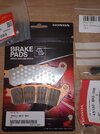
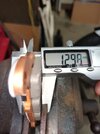
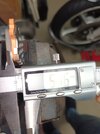
The pictures below are the thickness off the new pads delivered today and a comparison with the removed pads.
1000006790.jpg1000006796.jpg1000006797.jpg1000006798.jpg1000006799.jpg
 
So with those fluid flow tests done, you know that there is no hydraulic issue that is causing the brake to bind.
So whatever remains must be mechanical.

Test 4. Caliper movement - smooth easy movement, no resistance ?

Slider pin - in an earlier photo, the rubber boot through which the rear slider pin moves, was torn. That MUST be renewed.
Check out the other. Any chance that water can get in will result in crud and corrosion and prevent easy caliper movement. After a wet ride that can happen in a couple of weeks.

They are new pads. The disk surface is rusty. You can expect some drag in the garage. How many turns do you get from the rear wheel if the pads are not installed ?
 
So with those fluid flow tests done, you know that there is no hydraulic issue that is causing the brake to bind.
So whatever remains must be mechanical.

Test 4. Caliper movement - smooth easy movement, no resistance ?

Slider pin - in an earlier photo, the rubber boot through which the rear slider pin moves, was torn. That MUST be renewed.
Check out the other. Any chance that water can get in will result in crud and corrosion and prevent easy caliper movement. After a wet ride that can happen in a couple of weeks.

They are new pads. The disk surface is rusty. You can expect some drag in the garage. How many turns do you get from the rear wheel if the pads are not installed ?
I have the replacement rubber boots fir the rear caliper to install.
I will check the rear wheel spin.
I searched the forum last evening and there rear brake pads with 3mm more braking material per pad.
So the rear pistons are extending too far.
This was the reason I gave fowlers the vin number.
I will give the calipers a clean and report back.
 
I have the replacement rubber boots fir the rear caliper to install.
I will check the rear wheel spin.
I searched the forum last evening and there rear brake pads with 3mm more braking material per pad.
So the rear pistons are extending too far.
This was the reason I gave fowlers the vin number.
I will give the calipers a clean and report back.
Without rear brake pads installed the rear wheel spins one and a half turns, giving a good spin.
 
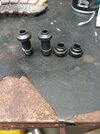
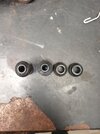
First, the piston(s) in the first picture are so filthy that I am surprised they move at all.
I have not commented much, as the "real" brake pros are giving you all great information... but to echo Larry's remark, if the pistons are that dirty, i can't see how the piston bore in the caliper wouldn't likewise be contaminated with rust or debris.
@ST1 you will have fabulous braking action when you're done! Good on you for doing this the right way.
 
Last edited:
Without rear brake pads installed the rear wheel spins one and a half turns, giving a good spin.
A comparison of old and new rear caliper rubber boots.
20250831_152502.jpg20250831_152502.jpg20250831_152453.jpg
 

Attachments

  • 20250831_151837.jpg
    20250831_151837.jpg
    122.3 KB · Views: 24
I have not commented much, as the "real" brake pros are giving you all great information... but to echo Larry's remark, if the pistons are that dirty, i can't see how the piston bore in the caliper wouldn't likewise be contaminated with rust or debris.
@ST1 you will have fabulous breaking action when you're done! Good on you for doing this the right way.
The bike is unrideable as is, keep going until it is finished.
 
I'm not familiar with the rubber boots, but to me it looks like the old and new ones are different parts. This is just an observation, as I said, I really don't know, but parts usually look the same.

Second caliper pic the bottom piston looks etched/corroded a bit or is that just reflection and or brake juice on the piston? Third caliper pic the middle piston shows the same - reflection of light or damage to the piston? Unfortunately, mechanical things don't heal, they get worse if not fixed or replaced.
 
A comparison of old and new rear caliper rubber boots.
20250831_152502.jpg20250831_152502.jpg20250831_152453.jpg
Wheel reattached, new rubber boots.
All toqed up, stopper bolt first.
No pads in caliper one and a quarter turn of Wheel. Pads in one full turn.
Rear brake pedal applied a quarter turn.
Push back caliper manually.
Applied smc one and a quarter turns of Wheel
So the center piston is not returning.
Have ordered a new one.
20250831_195559.jpg
 
The boots are correct - there is one long one and one short one that make up the odd pair. The older ones are greasy and have a slightly larger hole - probably because 'normal' grease was used to smear on the slider pins. Use only a smear of silicone grease on the slider pins (or 'red' rubber grease designed for hydraulic systems). Normal petroleum based greases cause the rubber to swell and they do not seal.

The rear pads are much thicker than the front pads and they are much thicker than EBC pads. They are a close fit when new - the pistons have to be all the way in to accomodate them. If they cannot push all the way in, then you have found a problem. First application of the brakes will move them out a little bit. You had the correct pads. They are normally fitted with the white heat shield sandwiched between the bronze back of the pads and the chrome anti-squeal plate. They just fit inside the caliper.

No pads in caliper one and a quarter turn of Wheel. Pads in one full turn.
Rear brake pedal applied a quarter turn.

So there is clearly some binding in the bearing of the rear wheel. You can expect the amount of turn to be less when the pads are fitted, because the pads will still be in contact with the brake disks and dragging slightly. When the wheel is moving it nudges them away a little bit more.

Push back caliper manually.
Applied smc one and a quarter turns of Wheel
So the center piston is not returning.
Have ordered a new one.
If you pushed the caliper pistons back manually I wouldn't have drawn the conclusion that the SMC wasn't working.
It takes a few pumps of the SMC to move the pistons in that situation. And it would have to move the pistons back to meet the disk.
Normally the travel on the SMC is about 1-2mm. The wheel will turn with your foot (cos you have to lie down next to the bike in order to turn the wheel and apply the SMC. You apply the SMC With your hand and the rear wheel should lock - you cannot move it with just your foot.
The real test is whether or not in releases the rear wheel when you release the SMC - so that you can move it with your foot.

Below are the photos that I took of the barke pads for the ST1300A6 when I had one. At the time, the 06435-MCS-GO2 pads were the ones that were available. The G03 variant came later, and I also use that. The rear pads have been the same sort for the A6 and my current A9 model. Not so the front pads - they changed on 08. I keep a set in stock so that I can change them when they need changing, and I order a new set when I intend to change them - so I get to compare the the later version with the previous version. I could not find a difference.

In the photo, the two pads on the right - one upright, one lying down - are for the front. The rear pads (left one of the pair leaning against each other) have the square notch in the tab end, the front ones do not.

1756677146754.jpeg

If you feel that there is really not enough room in the caliper, then take out the white heat shield from the pad that is furthest way from the pistons. Put it on one side and replace it a couple of weeks later when the pads have bedded in. But it is there for a reason and the pads should fit with it in place. Mine do. It is there to prevent the heat from the brake pads from being transferred to the caliper and the brake fluid - because the rear caliper is in the hot air flow from the engine and is right next to the exhaust. You really don't want the build up of heat to melt your piston seals - which is what will happen - That is the top of the snake straight back to square one.

I always think that the pads are a bit of a tight fit when I put them in, but once in position and aligned properly and the wheel has turned - they are prefectly OK. And your disks will have worn down a bit over the years so it really shouldn't be a problem.

This is a photo of brand new pads fitted to my current ST1300A9 - later model bike but the caliper, the bracket and the pads are the same as yours.
Pistons are pushed in all of the way. There is plenty of room as you can see.

1756715530705.png

As I mentioned above - the SMC for the A6 is very different from the SMC for the A8 - so hopefully they will send the right one !

But I had a question mark about the SMC with my current bike. I wasn't sure what I was seeing, but the SMC was one possibility. I ordered a new one because it was worth the money to get that niggle out of my head. The issue was not with the SMC at all - I can't remember what the issue was now, it's probably on these pages somewhere. But I fitted the new one and examined the old one. It was perfectly OK. So that is cleaned and dried and stowed away in parts.

Whereabouts in the UK are you ?

 
Last edited:
If you are replacing one of the pistons, I hope you are also installing a new square (cross section) o-ring in that piston's cylinder bore.
 
The boots are correct - there is one long one and one short one that make up the odd pair. The older ones are greasy and have a slightly larger hole - probably because 'normal' grease was used to smear on the slider pins. Use only a smear of silicone grease on the slider pins (or 'red' rubber grease designed for hydraulic systems). Normal petroleum based greases cause the rubber to swell and they do not seal.

The rear pads are much thicker than the front pads and they are much thicker than EBC pads. They are a close fit when new - the pistons have to be all the way in to accomodate them. If they cannot push all the way in, then you have found a problem. First application of the brakes will move them out a little bit. You had the correct pads. They are normally fitted with the white heat shield sandwiched between the bronze back of the pads and the chrome anti-squeal plate. They just fit inside the caliper.
The pads shown in the caliper are the ones I fitted about a year ago I also replace the rear disk as I wanted a permanent fix using all original parts. I suspect I did not bleed the SMC circuit properly for the SMC to activate properly.
I will try the new pads in the caliper to see if they are the same as yours and not showing excessive piston area.
So there is clearly some binding in the bearing of the rear wheel. You can expect the amount of turn to be less when the pads are fitted, because the pads will still be in contact with the brake disks and dragging slightly. When the wheel is moving it nudges them away a little bit more.
Yes I agree with you.
If you pushed the caliper pistons back manually I wouldn't have drawn the conclusion that the SMC wasn't working.
It takes a few pumps of the SMC to move the pistons in that situation. And it would have to move the pistons back to meet the disk.
Normally the travel on the SMC is about 1-2mm. The wheel will turn with your foot (cos you have to lie down next to the bike in order to turn the wheel and apply the SMC. You apply the SMC With your hand and the rear wheel should lock - you cannot move it with just your foot.
The real test is whether or not in releases the rear wheel when you release the SMC - so that you can move it with your foot.
I pushed the caliper back after applying the rear brake pedal, I was barely getting a quarter of a turn.
I operated the SMC whilst a helper turned the rear wheel wheel, it took a good pump of the SMC to stop the rear wheel. I put this down to the fluid being extracted in earlier tests. After this the the SMC stopped the rear wheel immediately and released. The operation of the rear brake pedal causes the rear brake to bind heavily.
Below are the photos that I took of the barke pads for the ST1300A6 when I had one. At the time, the 06435-MCS-GO2 pads were the ones that were available. The G03 variant came later, and I also use that. The rear pads have been the same sort for the A6 and my current A9 model. Not so the front pads - they changed on 08. I keep a set in stock so that I can change them when they need changing, and I order a new set when I intend to change them - so I get to compare the the later version with the previous version. I could not find a difference.

In the photo, the two pads on the right - one upright, one lying down - are for the front. The rear pads (left one of the pair leaning against each other) have the square notch in the tab end, the front ones do not.

1756677146754.jpeg

If you feel that there is really not enough room in the caliper, then take out the white heat shield from the pad that is furthest way from the pistons. Put it on one side and replace it a couple of weeks later when the pads have bedded in. But it is there for a reason and the pads should fit with it in place. Mine do. It is there to prevent the heat from the brake pads from being transferred to the caliper and the brake fluid - because the rear caliper is in the hot air flow from the engine and is right next to the exhaust. You really don't want the build up of heat to melt your piston seals - which is what will happen - That is the top of the snake straight back to square one.

I always think that the pads are a bit of a tight fit when I put them in, but once in position and aligned properly and the wheel has turned - they are prefectly OK. And your disks will have worn down a bit over the years so it really shouldn't be a problem.

This is a photo of brand new pads fitted to my current ST1300A9 - later model bike but the caliper, the bracket and the pads are the same as yours.
Pistons are pushed in all of the way. There is plenty of room as you can see.

1756715530705.png

As I mentioned above - the SMC for the A6 is very different from the SMC for the A8 - so hopefully they will send the right one !

But I had a question mark about the SMC with my current bike. I wasn't sure what I was seeing, but the SMC was one possibility. I ordered a new one because it was worth the money to get that niggle out of my head. The issue was not with the SMC at all - I can't remember what the issue was now, it's probably on these pages somewhere. But I fitted the new one and examined the old one. It was perfectly OK. So that is cleaned and dried and stowed away in parts.

Whereabouts in the UK are you ? South Wales.
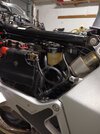
 
The boots are correct - there is one long one and one short one that make up the odd pair. The older ones are greasy and have a slightly larger hole - probably because 'normal' grease was used to smear on the slider pins. Use only a smear of silicone grease on the slider pins (or 'red' rubber grease designed for hydraulic systems). Normal petroleum based greases cause the rubber to swell and they do not seal.
The boots are the ones fitted when i purchased the bike 2 years ago. I used red rubber grease to lubricate the slider pins.
The rear pads are much thicker than the front pads and they are much thicker than EBC pads. They are a close fit when new - the pistons have to be all the way in to accomodate them. If they cannot push all the way in, then you have found a problem. First application of the brakes will move them out a little bit. You had the correct pads. They are normally fitted with the white heat shield sandwiched between the bronze back of the pads and the chrome anti-squeal plate. They just fit inside the caliper.
I will fit the pad set sent to me from Fowlers, pictured earlier to see if this fills the caliper better.
So there is clearly some binding in the bearing of the rear wheel. You can expect the amount of turn to be less when the pads are fitted, because the pads will still be in contact with the brake disks and dragging slightly. When the wheel is moving it nudges them away a little bit more.


If you pushed the caliper pistons back manually I wouldn't have drawn the conclusion that the SMC wasn't working.
It takes a few pumps of the SMC to move the pistons in that situation. And it would have to move the pistons back to meet the disk.
Normally the travel on the SMC is about 1-2mm. The wheel will turn with your foot (cos you have to lie down next to the bike in order to turn the wheel and apply the SMC. You apply the SMC With your hand and the rear wheel should lock - you cannot move it with just your foot.
The real test is whether or not in releases the rear wheel when you release the SMC - so that you can move it with your foot.

Below are the photos that I took of the barke pads for the ST1300A6 when I had one. At the time, the 06435-MCS-GO2 pads were the ones that were available. The G03 variant came later, and I also use that. The rear pads have been the same sort for the A6 and my current A9 model. Not so the front pads - they changed on 08. I keep a set in stock so that I can change them when they need changing, and I order a new set when I intend to change them - so I get to compare the the later version with the previous version. I could not find a difference.

In the photo, the two pads on the right - one upright, one lying down - are for the front. The rear pads (left one of the pair leaning against each other) have the square notch in the tab end, the front ones do not.

1756677146754.jpeg

If you feel that there is really not enough room in the caliper, then take out the white heat shield from the pad that is furthest way from the pistons. Put it on one side and replace it a couple of weeks later when the pads have bedded in. But it is there for a reason and the pads should fit with it in place. Mine do. It is there to prevent the heat from the brake pads from being transferred to the caliper and the brake fluid - because the rear caliper is in the hot air flow from the engine and is right next to the exhaust. You really don't want the build up of heat to melt your piston seals - which is what will happen - That is the top of the snake straight back to square one.

I always think that the pads are a bit of a tight fit when I put them in, but once in position and aligned properly and the wheel has turned - they are prefectly OK. And your disks will have worn down a bit over the years so it really shouldn't be a problem.

This is a photo of brand new pads fitted to my current ST1300A9 - later model bike but the caliper, the bracket and the pads are the same as yours.
Pistons are pushed in all of the way. There is plenty of room as you can see.

1756715530705.png

As I mentioned above - the SMC for the A6 is very different from the SMC for the A8 - so hopefully they will send the right one !

But I had a question mark about the SMC with my current bike. I wasn't sure what I was seeing, but the SMC was one possibility. I ordered a new one because it was worth the money to get that niggle out of my head. The issue was not with the SMC at all - I can't remember what the issue was now, it's probably on these pages somewhere. But I fitted the new one and examined the old one. It was perfectly OK. So that is cleaned and dried and stowed away in parts.

Whereabouts in the UK are you ?
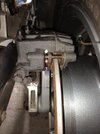
 
it took a good pump of the SMC to stop the rear wheel.
That is air in the system then.

The operation of the rear brake pedal causes the rear brake to bind heavily.
But not the SMC ? Does your rear brake pedal return properly - it should spring back up when you take your foot off it. Try lifting the brake lever up after you have applied it - see if that improves it.

If the old pads are not quite the right size, they may be jamming - but then the SMC operates the rear pads so they would do it then as well.

S Wales - its not somewhere I can get to in half an hour then !!
 
That is air in the system then.


But not the SMC ? Does your rear brake pedal return properly - it should spring back up when you take your foot off it. Try lifting the brake lever up after you have applied it - see if that improves it.
Yes the pedal returns. I removed it when I was undertaking other works, cleaned and lubricated. Did not adjust it.
If the old pads are not quite the right size, they may be jamming - but then the SMC operates the rear pads so they would do it then as well.

S Wales - its not somewhere I can get to in half an hour then !!
 
Back
Top Bottom