increasing
Site Supporter
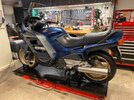
Bought ST1100 on May 20, 2025 and today I finished the work without having to stress about it this winter, I have taken my time on the whole job. Attached is a list of everything that has been done on the bike at km 105554. Now waiting for dry roads and warmer weather for a test drive.
Service ST1100 12.02.2026 km 105762
Timing belt replaced km 91035 (MC Huset Nydal AS) OK
Recall checked, no remaining OK
VIN check OK
Engine number check OK
Paint code check OK
Test drive OK
Light test OK
Horn OK
Steering bearing check OK
Exhaust system OK
Swingarm rust check OK
Cardan oil change + o-ring and aluminum ring OK
Rear shock absorber installed new Hagon OK
Choke check OK
Instruments warning light pressure gauge etc check OK
Temperature gauge 1/4 driving 1/2 city traffic OK
Rear frame crack check OK
Air filter change OK
Fuel filter change OK
Spark plugs change OK
Engine oil change OK
Oil filter change OK
Oil plug gasket change OK
Clutch fluid change, level glass cleaned OK
Brake pads change front, pistons, sliders, greased brake calipers OK
Rear brake pads OK
Brakes check SMC OK
Battery change OK
Change to original screws on fairing parts OK
Drainage fuel filler check for opening down behind engine OK
Tank cap lubricate gasket with vaseline OK
Cleaned rims removed solder, polished + wax OK
Painted balancer weights for wheels OK
Charging at fast idle with choke without light 14.38V, with light 14.02V OK
Breath filter change OK
Install new decal left front fender OK
Install bolts for fastback with correct length plus 4 blind plugs OK
Replaced OEM contact and starter relay with power supply 30A OK
Replaced tires front and rear + new valves + gold balancer weights OK
Final drive splines differential replaced + lubricated + 3 new o-rings OK
Replaced bushings and seals with new oil front fork OK
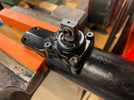
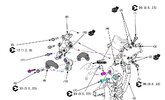
Anti-Dive right suspension strut replaced gaskets bushings etc OK
Installed original windshield with protective strip OK
Replaced brass lining on clutch lever OK
Brake fluid replaced, level glass cleaned OK
Washed bike without fairing parts OK
Coolant replaced OK
Radiator cleaned OK
Thermostat with o-ring replaced OK
Coolant overflow hose checked / open OK
Hose thermostat housing - overflow tank 2.5 cm kink from housing check OK
Valve clearance checked adjust + noted measurements OK
Compression test engine performed, within tolerance and deviation (measurements noted) OK
Painted center support and side support OK
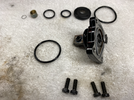
Fuel valve vacuum overhauled with repair kit OK
Service ST1100 12.02.2026 km 105762
Timing belt replaced km 91035 (MC Huset Nydal AS) OK
Recall checked, no remaining OK
VIN check OK
Engine number check OK
Paint code check OK
Test drive OK
Light test OK
Horn OK
Steering bearing check OK
Exhaust system OK
Swingarm rust check OK
Cardan oil change + o-ring and aluminum ring OK
Rear shock absorber installed new Hagon OK
Choke check OK
Instruments warning light pressure gauge etc check OK
Temperature gauge 1/4 driving 1/2 city traffic OK
Rear frame crack check OK
Air filter change OK
Fuel filter change OK
Spark plugs change OK
Engine oil change OK
Oil filter change OK
Oil plug gasket change OK
Clutch fluid change, level glass cleaned OK
Brake pads change front, pistons, sliders, greased brake calipers OK
Rear brake pads OK
Brakes check SMC OK
Battery change OK
Change to original screws on fairing parts OK
Drainage fuel filler check for opening down behind engine OK
Tank cap lubricate gasket with vaseline OK
Cleaned rims removed solder, polished + wax OK
Painted balancer weights for wheels OK
Charging at fast idle with choke without light 14.38V, with light 14.02V OK
Breath filter change OK
Install new decal left front fender OK
Install bolts for fastback with correct length plus 4 blind plugs OK
Replaced OEM contact and starter relay with power supply 30A OK
Replaced tires front and rear + new valves + gold balancer weights OK
Final drive splines differential replaced + lubricated + 3 new o-rings OK
Replaced bushings and seals with new oil front fork OK
Anti-Dive right suspension strut replaced gaskets bushings etc OK
Installed original windshield with protective strip OK
Replaced brass lining on clutch lever OK
Brake fluid replaced, level glass cleaned OK
Washed bike without fairing parts OK
Coolant replaced OK
Radiator cleaned OK
Thermostat with o-ring replaced OK
Coolant overflow hose checked / open OK
Hose thermostat housing - overflow tank 2.5 cm kink from housing check OK
Valve clearance checked adjust + noted measurements OK
Compression test engine performed, within tolerance and deviation (measurements noted) OK
Painted center support and side support OK
Fuel valve vacuum overhauled with repair kit OK