Article [11] ST1100 - Fuel Pump Replacement

You might see if you can find a 'replacement yoke' on EBay or one with a fuel pump attached.
Was kind of afraid of that.... of course, I've run a couple of years with the external pump.... I could always just purchase another one to carry with me. And who knows... it may not fail...

Odie1
 
Then I would 'attach' a new connection (so you can disconnect the harness from the bike if needed) and then drill the hole for the wire.
I just don't know what type of sealant you should use around the wire - but I'm sure someone will.
 
Well,

A few years ago I had my fuel pump fail and installed an external unit as many folks here have. I read through this thread multiple times, and picked up a lot of good info, and this looks like a good idea. I ordered one of the replacement pumps and set out to install it yesterday, figuring the external unit will fail someday, but it would be nice to have it as a backup..

But - came up with a few questions - and another problem...

First - maybe I a missing something, but like someone else stated... My brain is telling me that open electrical connections in a volatile liquid are a bad idea.... even worse if the fuel level gets low enough that the connections are in "vapor". Obviously, it's not since there are a couple of ground connections on the stem that are "open", but I keep thinking if one of the connections should spark.... uh-oh.... unwanted seat heater... But - other than in an aircraft years ago (that was tragic), I never hear of this happening. Back to the start - what am I missing?

Second - again - someone already mentioned - it appears the OEM pump had a by-pass - pressure regulator, something... and the replacement pump does not. Is there a problem with the new pump "over-running" the carbs? How much pressure can needle jet in the carbs take before they leak and flood everything?

And now the new problem -

One of the lugs - spades - whatever it is called on the top of the fuel pump assembly where the wires plug in outside the tank, has broken off....completely. And, as my luck typically holds, it is the "positive" side - the wire that goes directly to the pump. On the pump assembly, the spade is built in a plastic "plug" since it has to be sealed. The only metal remaining is buried deep in the plastic, and not at all accessible. All of the parts fiche's I have checked just show it as part of the pump assembly... nothing that can be replaced separately. So anyone have any idea how to wire around/through this - other than drilling a hole in it - feeding in a wire, then somehow sealing it back up... with...something?

As always, thanks in advance. This is always a great place info.

Odie1
I cant help you with the terminal issue but I did find a solution to the aftermarket internal fuel pump overpressure problem. You will cause problems for the carbs with too much pressure. I purchased a $50.00 aftermarket internal pump that was supposed to only produce 2psi. I installed the pump in the same place as the original pump and replaced the 30cm rubber pipe just in case. As long as you make sure your exposed terminals are tight there will be no issues with it being in vapor or liquid. After re installation of the whole assembly into the tank I thought id just check the pressure to make sure it was right as not always do items perform as advertised. It was outputting 20psi and this would have completely overpowered the carb floats. The original pump assembly bypass is literally to remove excess pressure. On the new 30cm rubber pipe between where it came off the new pump and before it left the tank through the top hose connection I drilled a simple hole with a 4.5mm drill bit approx 1cm from the pump outlet. By doing it down low it reduced any chance of frothing. Works a treat and its now been 3 months trouble free.
 
Thanks Jeff,

That is good to know. Why doesn't that ever work that way when we want it to?... like I'll pay a dollar for 2 tacos, then get 20 :)

Having a day or so to think about it, I am leaning toward just staying with the external pump. It has served me well for a couple of years now, and since I already kluged together a mount for it, another one may just find its way into the saddlebag, in case of emergency,

I do have one question - what did you use to measure the output pressure, and how might I ask? Curious to know what my current pump is producing. Some type of gauge you terminate the fuel line into (post pump) , or do you have to "tee" off the fuel line and measure it with the carbs full (bike not running) ?

Thanks.

EDIT - I do remember that the fuel relay will shut off the pump if the bikes NOT running, so, maybe with the bike running ? dunno....

Odie1

 
Thanks Jeff,

That is good to know. Why doesn't that ever work that way when we want it to?... like I'll pay a dollar for 2 tacos, then get 20 :)

Having a day or so to think about it, I am leaning toward just staying with the external pump. It has served me well for a couple of years now, and since I already kluged together a mount for it, another one may just find its way into the saddlebag, in case of emergency,

I do have one question - what did you use to measure the output pressure, and how might I ask? Curious to know what my current pump is producing. Some type of gauge you terminate the fuel line into (post pump) , or do you have to "tee" off the fuel line and measure it with the carbs full (bike not running) ?

Thanks.

EDIT - I do remember that the fuel relay will shut off the pump if the bikes NOT running, so, maybe with the bike running ? dunno....

Odie1
you can put a fuel gauge right on the pump output. key on will turn the pump on for a few seconds to read the pressure and you could also start the bike . It will run till the fuel runs out of the carb bowls.
 
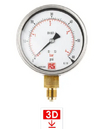
I powered the pump direct from the battery just for this test. I used a standard glycol filled 63mm pressure gauge that had a scale of 0 - 20psi. I just jammed a pipe onto the bottom. Similar to below picture.
1603845185398.png
 
Well, I had another 'stocker' fuel pump begin to fail - the typical 'run out of gas, wait a few minutes, and it works again'. I had my spare with me that I built in post #1 (fits nicely in a saddlebag), but I was hoping the 'stocker' would 'revive' since I was only 70 miles from my motel and it was dark and raining. It finally did and it ran all the way home the next day. This is the second time this one has quit on me, so I am installing the 'new' setup I created in post #1. After I get some miles on it, I'll let you know how well it works. In theory, all things work, in practice, sometimes yes sometimes no. :biggrin:
 
So, with about 150k miles between two ST11s with no fuel pump failures, am I living on borrowed time?
It's not so much as an if, it's probably more like a when ... :biggrin:
400,000+ miles, 4 stock fuel pump failures.
I do have a tendency to run my fuel level low so that may be a precipitating factor in the failures.
Or maybe it is the rate at which I burn fuel due to a problem with the throttle. :think1:
It usually happens when it is most inconvenient and so I just carry a spare in the saddlebag on trips of any length.
The bag includes the assembly, a new gasket, and the socket and ratchet (10 mm) it takes to remove and replace it.
If the tank is at least 1/2 empty, it's probably a 15 minute job at the most.
If you have to call for help, it could be a long time waiting - and I have Honda 'recovery' service.
I'd rather have it and not need it as to need it and not have it! ;)
 
OK, so I guess I'll need to build one of these. If Stagecoach happens, let's discuss there, and please bring yours along as a visual aid. ;)

Of course, that's assuming my fuel pump doesn't go bad on the way down. :eek:
 
OK, so I guess I'll need to build one of these. If Stagecoach happens, let's discuss there, and please bring yours along as a visual aid. ;)

Of course, that's assuming my fuel pump doesn't go bad on the way down. :eek:
You can be sure I will have my 'kit' tucked in one of my saddlebags ... ;)
Just be careful - you may have just jinxed yourself ... :think1:
 
First note on 'new' installation - no choke needed on startup which tells me (I think), too much pressure from the new pump.
I have emailed the supplier and will let you know if and when they respond.
I've not checked it yet with a gauge.
The bike runs fine but this has me concerned.
**EDITED - I just ordered a fuel pressure gauge so I can check it out.
 
Last edited:
The supplier very quickly returned my email and offered for me to return it. They said they had not run into this issue with this particular pump.
I told them I had a gauge ordered and would test it first and then decide if I would return it or not. At least they were very responsive and very quick about it.
 
The makers of the Quantum just called me (after I gave them my phone number) and we had a good discussion.
I explained that I had 4 of these ST1100s and one since 1997 and could probably disassemble one with my eyes closed. ;)
We talked about pressure and what the pump did (5-8 PSI) and what the ST1100 carbs need (1-2 PSI).
I sent him pictures of a stock one installed, a stock one out of the rig, and marked the position of the stock regulator.
He is very interested in how the regulator I am waiting on works to solve the problem.
He says using a regulator should not harm the pump at all.
If I can 'dial in' the proper working pressure I will provide it to them.
They want to come up with solution (maybe a simple check valve) that works in this situation because they could use it in other pumps that they sell.
I'll keep you posted as we move along.
At least as a vendor they are listening and want to help solve the problem.
 
In my car hot rod days we used these all the time with no issues.
 
In my car hot rod days we used these all the time with no issues.
That's almost identical to what I have ordered off of Fleabay - just a different label.
 
Just temporarily installed the regulator, set it to 1 pound and the 'cold' bike started with the 'choke' and ran normally.
After warm up, it reved up fine.
I am now waiting for the bike to cool down and I am setting to 2 pounds to see if there is any difference.
Somewhere between those two settings should be the sweet spot.
It's a little bulky so the final installation will have to be a little more forward toward the filter - or maybe where the cutoff valve used to hang.
Then I will road test it and see how it does in the twisties and on the slabs and report back.
 
Just took the Redbird out with the in tank Quantum fuel pump and the Chinese fuel pressure regulator set to 1.5 PSI.
It 'choked' when cold just like it should and ran great.
I did twisties, up hills, down hills, long straights and threw in some slab to check out how the cruise control would work.
Never a stumble or a mumble, ran just like a ST1100 is supposed to run.
I am not real pleased with the installation/placement of the regulator but I will be putting some miles on the setup before I tinker with it.
The next question to answer which will only come with miles and time is how long the bits and pieces will last.
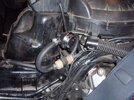
Here's what it looks like installed -

ST1100 With Regulator In Place.jpg

I did tape around the setting 'knob' on the regulator just to make sure it didn't move on me.
 
Back
Top Bottom