Stretching roughly 300 miles from downtown Chicago to the Mississippi River at St. Louis, Illinois serves as the opening chapter of America’s most famous highway. While many travelers associate Route 66 with deserts, mesas, and the wide-open spaces of the Southwest, Illinois tells a different story. Here, the Mother Road is rooted in Midwestern farmland, railroad towns, classic diners, and the communities that helped shape the automobile age.
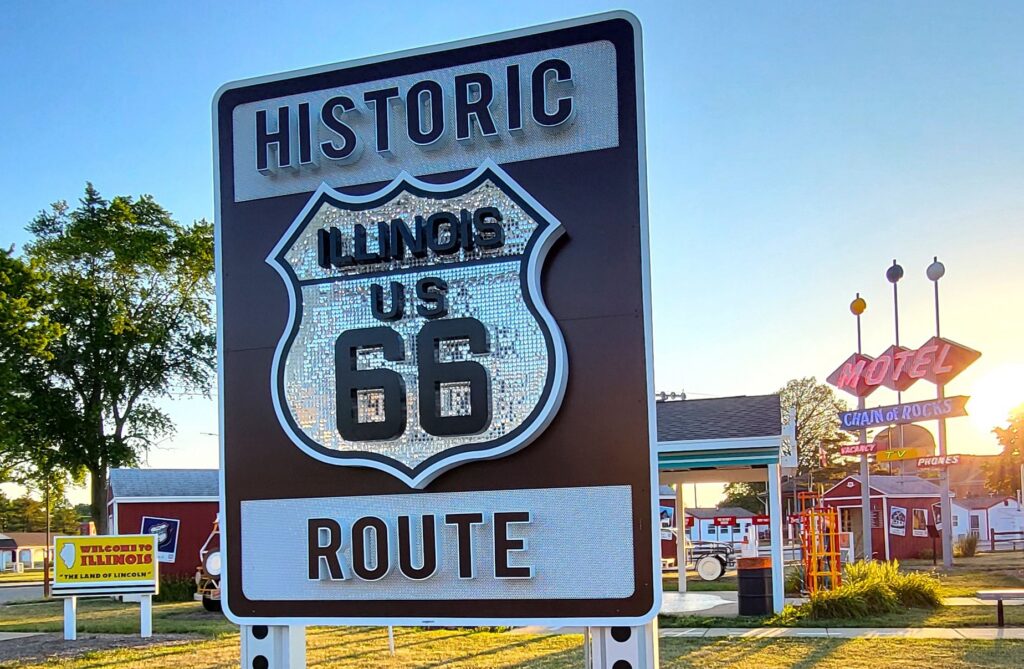
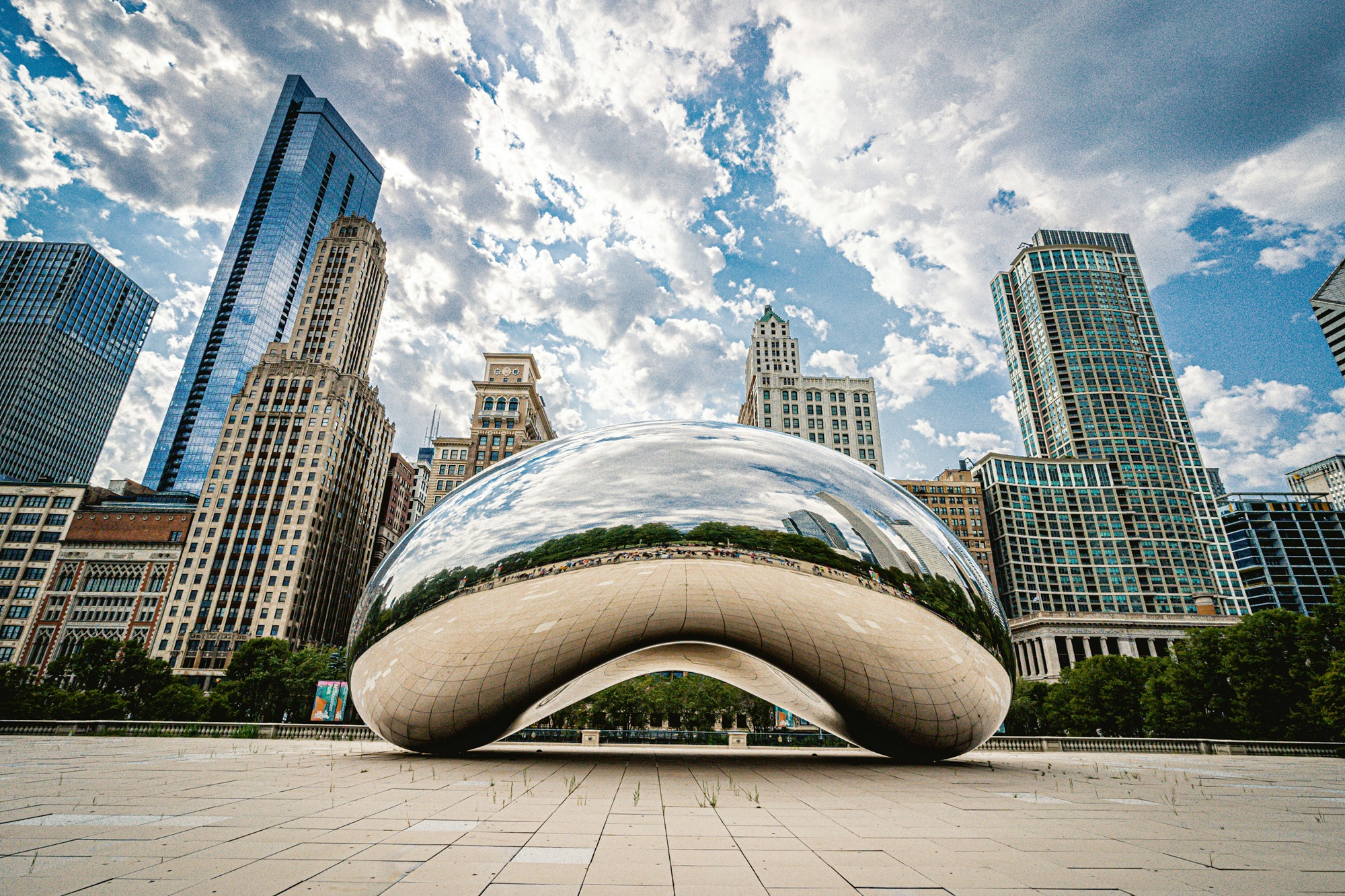
One moment you’re standing beneath towering skyscrapers at the famous Begin Route 66 sign, surrounded by the noise and energy of one of America’s largest cities. A few hours later, you’re cruising through quiet agricultural landscapes where grain elevators dominate the skyline and small-town main streets feel connected to another era.
Illinois played a critical role in the development of Route 66. When the highway was commissioned in 1926, the state already possessed some of the nation’s most developed road infrastructure. Earlier routes such as Illinois State Route 4 provided the backbone that would eventually become the Mother Road. In many ways, Illinois helped establish the blueprint for what Route 66 would become across the rest of the country.
As riders travel southwest, they encounter a remarkable collection of preserved Route 66 history. Vintage gas stations, restored motor courts, neon signs, and classic diners appear with surprising frequency. Towns such as Joliet, Pontiac, Springfield, and Litchfield have embraced their Route 66 heritage, preserving landmarks while creating new attractions that celebrate the road’s enduring legacy.
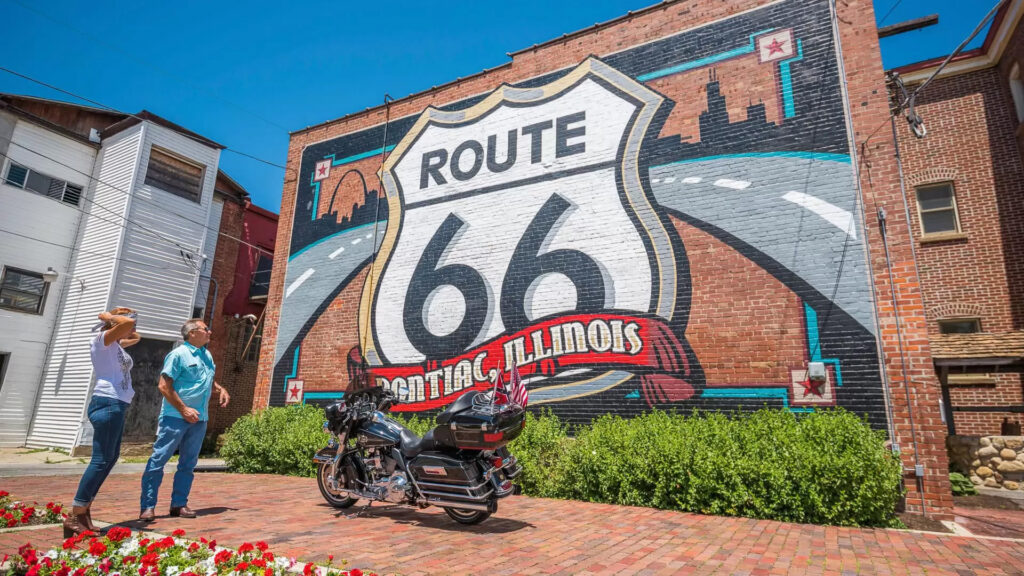
Pontiac stands out as one of the crown jewels of Illinois Route 66. Its colorful murals, museums, and welcoming downtown have transformed the community into one of the most beloved stops anywhere along the route. Nearby, travelers can explore Dead Man’s Curve in Towanda, where clever Burma-Shave advertisements once warned motorists about a notoriously dangerous bend in the road. Farther south you can roll your tires across one of the last remaining brick roads in America. Read about the brick road on page X.
Unlike some Western states where Route 66 survives in long uninterrupted stretches, Illinois often feels like a treasure hunt. Historic alignments branch away from modern highways, leading riders through forgotten downtowns and old service stations. The experience rewards curiosity and encourages travelers to slow down and explore.
Illinois may lack the deserts of Arizona or the mountains of New Mexico, but it offers something equally important. It provides the opening scene to the Route 66 story, introducing travelers to the people, places, and culture that transformed an ordinary highway into an American legend.
Location: Chicago to St. Louis
Distance: 301 miles
Ride Time: 2-3 days
Best Direction to Ride: East to West for the true Route 66 experience
Skill Level: Beginner to Intermediate
Best Bike Type: Any motorcycle
Click to view Illinois Route 66 on REVER
Click here to download the GPS files
Illinois offers some of the easiest and most accessible riding on Route 66. The route consists primarily of paved secondary highways, frontage roads, and city streets, with relatively gentle terrain and few technical challenges. Riders will encounter smooth pavement on most sections, though some original alignments feature aging concrete and occasional rough patches. Traffic can be heavy leaving Chicago and around Springfield, but much of the route passes through quiet farmland and small towns. Watch for agricultural equipment on rural roads and frequent speed-limit changes when entering communities.
Late spring through early fall provides the best riding conditions. May, June, September, and October offer comfortable temperatures, green landscapes, and lower humidity than midsummer. July and August can be hot and humid, while spring occasionally brings heavy thunderstorms and strong winds across open farmland. Fall is particularly scenic as fields turn gold and temperatures become ideal for long days in the saddle. Cell service is excellent throughout the state, and services are plentiful. A light rain layer is recommended, especially during spring and summer storm season.
Illinois is where Route 66’s roadside diner culture truly begins. Travelers can enjoy classic Midwest comfort food, from pork tenderloin sandwiches and horseshoe sandwiches to homemade pie and hearty breakfasts. Historic diners and family-owned restaurants line much of the route, particularly around Springfield and Pontiac. Chicago offers everything from deep-dish pizza to Italian beef sandwiches, while smaller communities preserve the kind of roadside cafes that helped define the golden age of American road travel.
Illinois offers a wide range of lodging options, from modern hotels in Chicago and Springfield to historic Route 66 motels and motor courts. Springfield makes an excellent overnight stop thanks to its central location and abundance of accommodations. Pontiac and Bloomington also offer comfortable lodging close to major Route 66 attractions. Campers will find numerous state parks and private campgrounds along the route, especially near rivers, lakes, and recreation areas.
For the list of 100+ best roadside attractions along Route 66, click here.
Illinois offers several worthwhile side trips beyond the Mother Road. History enthusiasts can spend additional time exploring Springfield, where Abraham Lincoln built his political career before becoming president. North of the route, Chicago provides world-class museums, architecture, lakefront riding, and food. South of Springfield, riders can explore the rolling hills and scenic backroads that begin the transition toward the Ozarks. For those interested in Route 66 history, Illinois contains some of the oldest surviving alignments, original gas stations, and restored roadside attractions anywhere on the route, making it an ideal state for slowing down and exploring beyond the highway itself.
The post The Beginning of the Dream—Illinois Route 66 appeared first on Rider Magazine.
Continue reading...
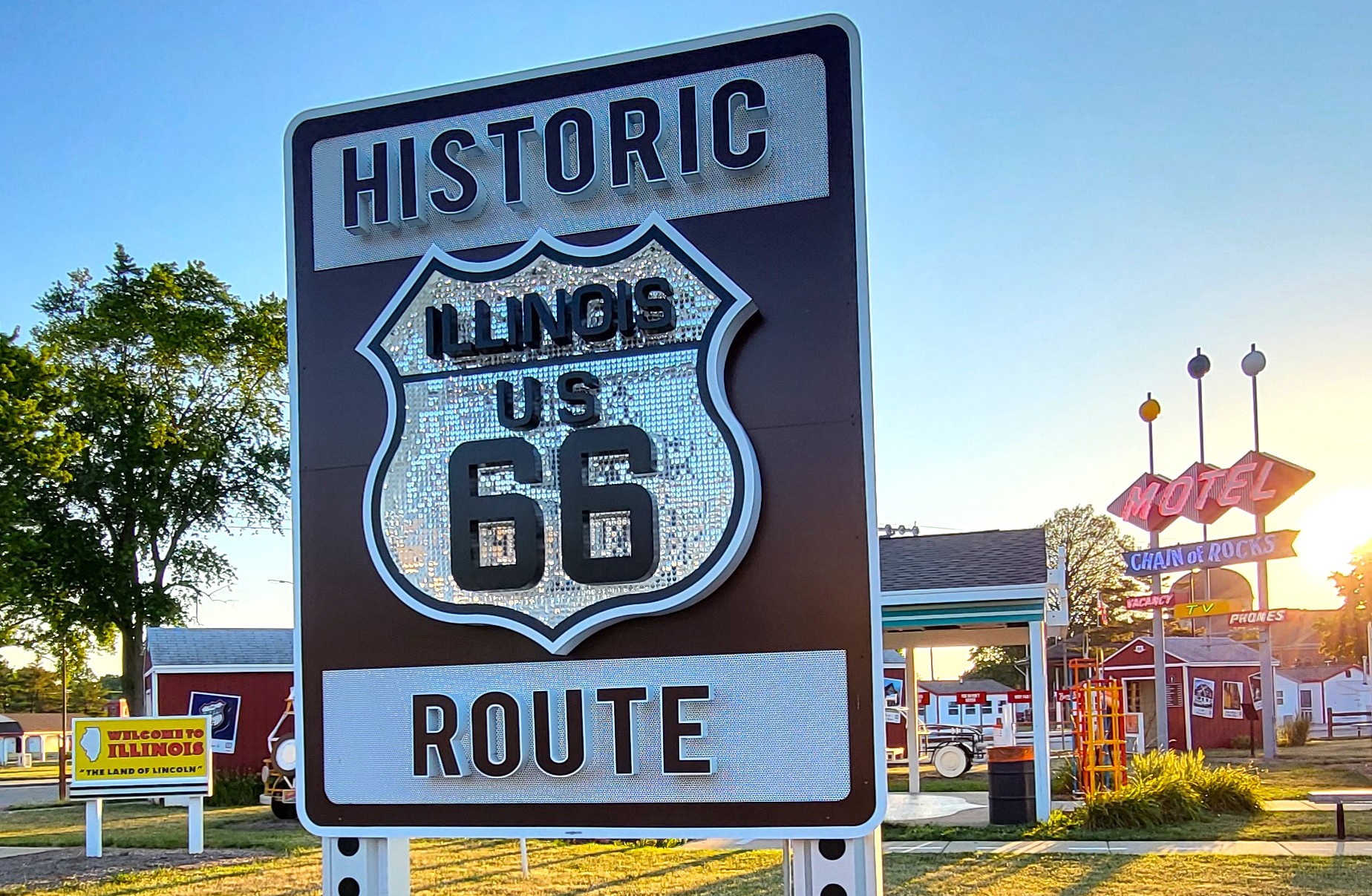
One moment you’re standing beneath towering skyscrapers at the famous Begin Route 66 sign, surrounded by the noise and energy of one of America’s largest cities. A few hours later, you’re cruising through quiet agricultural landscapes where grain elevators dominate the skyline and small-town main streets feel connected to another era.
Illinois played a critical role in the development of Route 66. When the highway was commissioned in 1926, the state already possessed some of the nation’s most developed road infrastructure. Earlier routes such as Illinois State Route 4 provided the backbone that would eventually become the Mother Road. In many ways, Illinois helped establish the blueprint for what Route 66 would become across the rest of the country.
As riders travel southwest, they encounter a remarkable collection of preserved Route 66 history. Vintage gas stations, restored motor courts, neon signs, and classic diners appear with surprising frequency. Towns such as Joliet, Pontiac, Springfield, and Litchfield have embraced their Route 66 heritage, preserving landmarks while creating new attractions that celebrate the road’s enduring legacy.
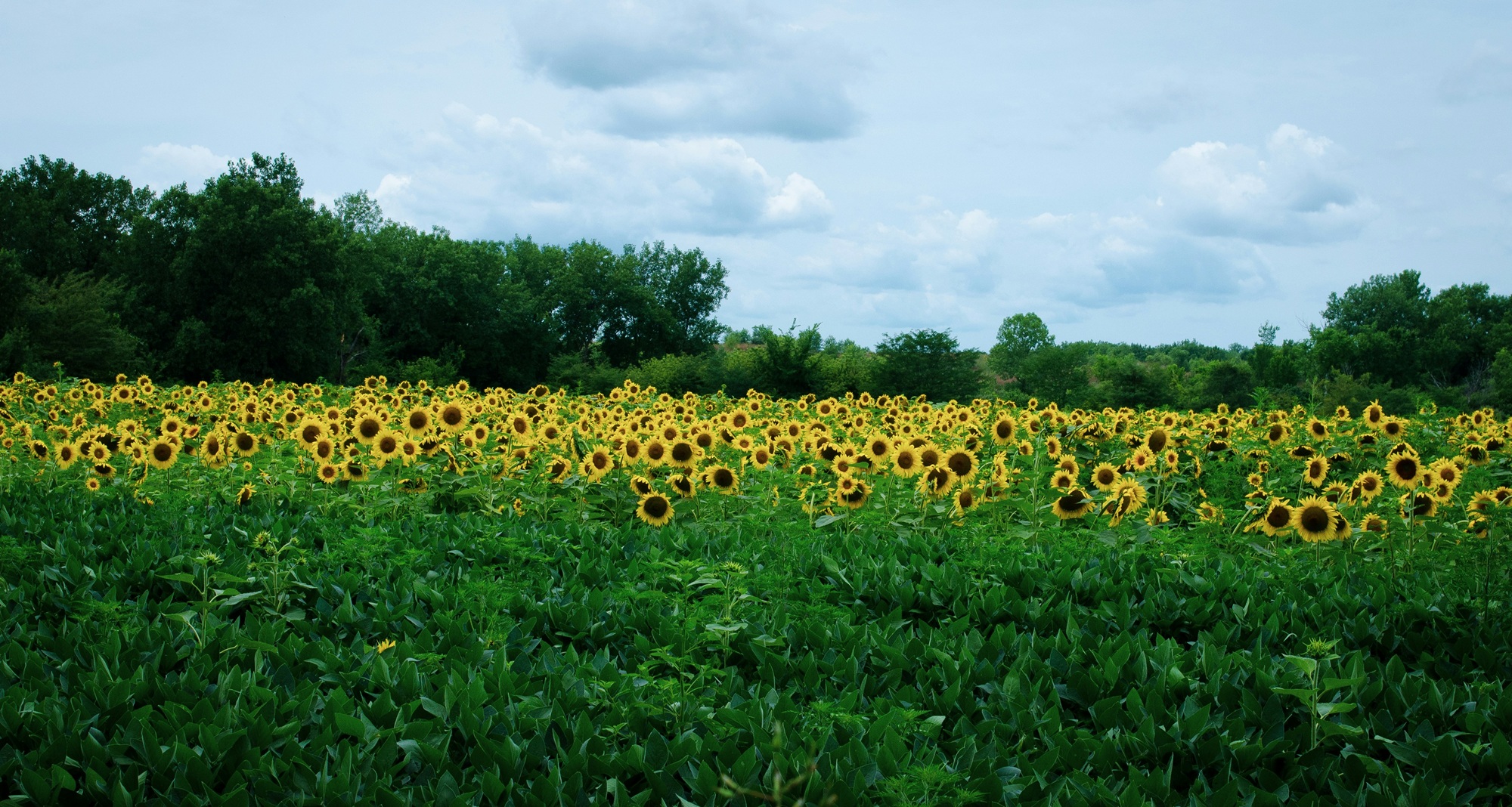
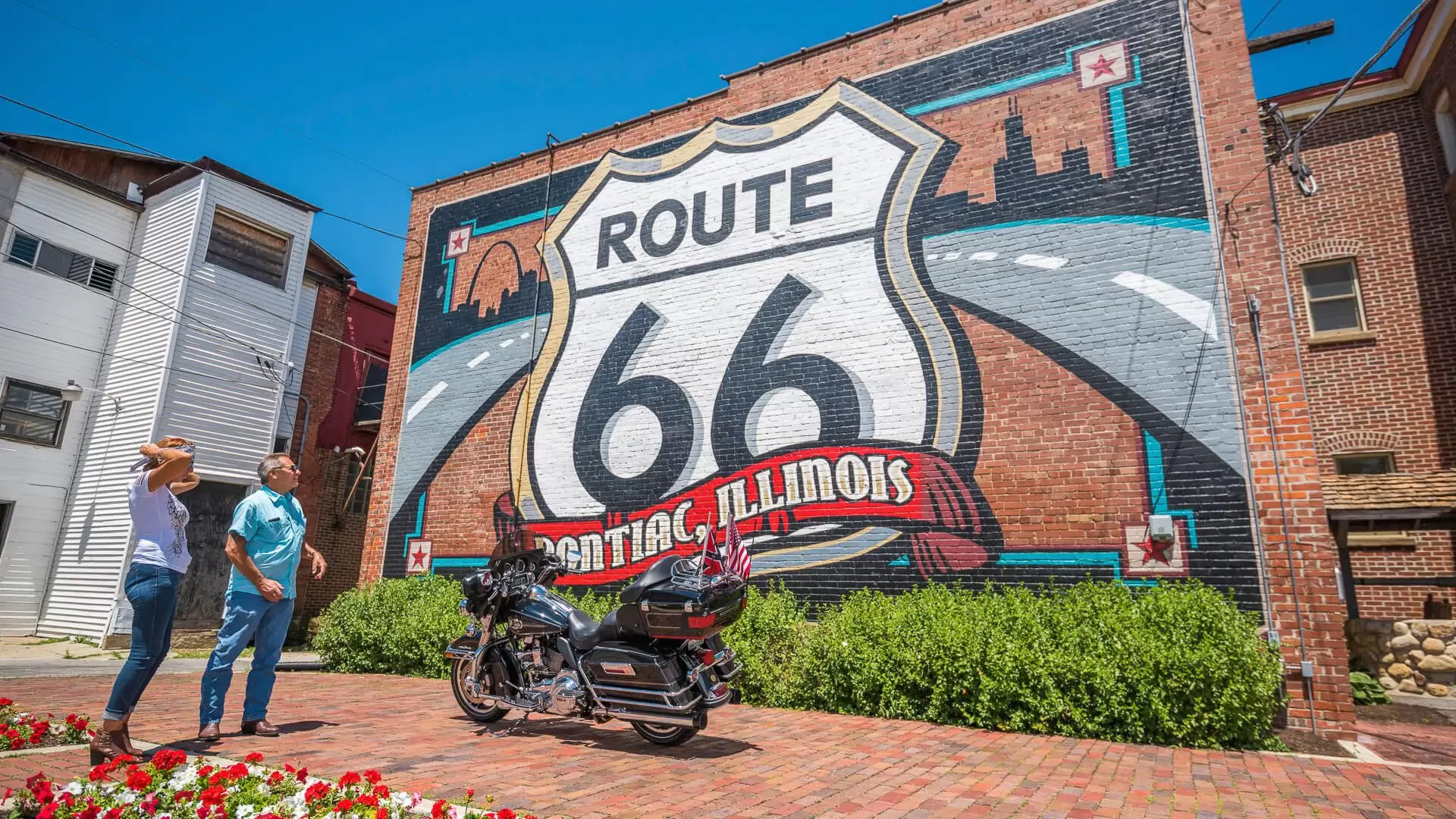
Pontiac stands out as one of the crown jewels of Illinois Route 66. Its colorful murals, museums, and welcoming downtown have transformed the community into one of the most beloved stops anywhere along the route. Nearby, travelers can explore Dead Man’s Curve in Towanda, where clever Burma-Shave advertisements once warned motorists about a notoriously dangerous bend in the road. Farther south you can roll your tires across one of the last remaining brick roads in America. Read about the brick road on page X.
Unlike some Western states where Route 66 survives in long uninterrupted stretches, Illinois often feels like a treasure hunt. Historic alignments branch away from modern highways, leading riders through forgotten downtowns and old service stations. The experience rewards curiosity and encourages travelers to slow down and explore.
Illinois may lack the deserts of Arizona or the mountains of New Mexico, but it offers something equally important. It provides the opening scene to the Route 66 story, introducing travelers to the people, places, and culture that transformed an ordinary highway into an American legend.
Travel Resources
At a Glance
Location: Chicago to St. Louis
Distance: 301 miles
Ride Time: 2-3 days
Best Direction to Ride: East to West for the true Route 66 experience
Skill Level: Beginner to Intermediate
Best Bike Type: Any motorcycle
Maps & Routes
Click to view Illinois Route 66 on REVER
Click here to download the GPS files
Road Conditions
Illinois offers some of the easiest and most accessible riding on Route 66. The route consists primarily of paved secondary highways, frontage roads, and city streets, with relatively gentle terrain and few technical challenges. Riders will encounter smooth pavement on most sections, though some original alignments feature aging concrete and occasional rough patches. Traffic can be heavy leaving Chicago and around Springfield, but much of the route passes through quiet farmland and small towns. Watch for agricultural equipment on rural roads and frequent speed-limit changes when entering communities.
When to Travel
Late spring through early fall provides the best riding conditions. May, June, September, and October offer comfortable temperatures, green landscapes, and lower humidity than midsummer. July and August can be hot and humid, while spring occasionally brings heavy thunderstorms and strong winds across open farmland. Fall is particularly scenic as fields turn gold and temperatures become ideal for long days in the saddle. Cell service is excellent throughout the state, and services are plentiful. A light rain layer is recommended, especially during spring and summer storm season.
Road Food
Illinois is where Route 66’s roadside diner culture truly begins. Travelers can enjoy classic Midwest comfort food, from pork tenderloin sandwiches and horseshoe sandwiches to homemade pie and hearty breakfasts. Historic diners and family-owned restaurants line much of the route, particularly around Springfield and Pontiac. Chicago offers everything from deep-dish pizza to Italian beef sandwiches, while smaller communities preserve the kind of roadside cafes that helped define the golden age of American road travel.
Where to Stay
Illinois offers a wide range of lodging options, from modern hotels in Chicago and Springfield to historic Route 66 motels and motor courts. Springfield makes an excellent overnight stop thanks to its central location and abundance of accommodations. Pontiac and Bloomington also offer comfortable lodging close to major Route 66 attractions. Campers will find numerous state parks and private campgrounds along the route, especially near rivers, lakes, and recreation areas.
Points of Interest
- Begin Route 66 Sign
- Chicago Route 66 starting point
- Lou Mitchell’s
- Route 66 Hall of Fame & Museum
- The Gemini Giant
- Polk-a-Dot Drive In
- Abraham Lincoln Presidential Library and Museum
- Abraham Lincoln historic sites in Springfield
- Illinois State Capitol
- Chain of Rocks Bridge
- Historic Route 66 brick-road segments near Auburn
- Route 66 murals and public art in Pontiac
For the list of 100+ best roadside attractions along Route 66, click here.
If You Have More Time
Illinois offers several worthwhile side trips beyond the Mother Road. History enthusiasts can spend additional time exploring Springfield, where Abraham Lincoln built his political career before becoming president. North of the route, Chicago provides world-class museums, architecture, lakefront riding, and food. South of Springfield, riders can explore the rolling hills and scenic backroads that begin the transition toward the Ozarks. For those interested in Route 66 history, Illinois contains some of the oldest surviving alignments, original gas stations, and restored roadside attractions anywhere on the route, making it an ideal state for slowing down and exploring beyond the highway itself.
More Information
- Illinois Route 66 Scenic Byway
- National Park Service – Route 66 Corridor Preservation Program
- Enjoy Illinois Tourism
The post The Beginning of the Dream—Illinois Route 66 appeared first on Rider Magazine.
Continue reading...