• A to Z Rules
      Start with a City beginning with A
    1. This is BY STATE
    2. Similar to the Tag contest, there will be one thread per state
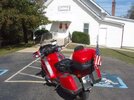
    3. Post a picture of your bike AND some sign, building etc which clearly shows the city/state you're in
    4. The next person posts from a city with the name beginning with B, then C, D, etc
    5. You can't posts back-to-back pics, you have to wait for a person to post the next city
    6. Once Z is reached, the game starts over with A
    7. If your state doesn't have a city beginning with the next letter in sequence, it's okay to skip that letter
    8. If the location sits for more than one month, the person that posted that is open to move it to the next letter.Previously Rule 8
    9. For some States there are tough letters to find such as Q, W, X, Y, Z - in those cases it is acceptable to find anything with those letters in the name to keep the game moving.

    The World Wide game is a bit different as it is by whatever is considered a geographic type of regional category, state/province/village etc. and all those will be in the single World Wide A-Z topic.
  • ST-Owners and the event organizer(s) are not responsible for the actions taken during any ride. Each member is responsible for determining if conditions are acceptable for riding and for their actions.

TN: A to Z (Round 10)

Johnsonville For A J -
Johnsonville.jpg

The town that was and still is but under water!

Johnsonville was originally was an Andrew Johnson named Union supply depot and Civil war battleground. It was originally destroyed by General Nathan Bedford Forrest in 1864 but later became a properous river-rail transfer point. Severe floods and then the creation of Kentucky Lake by the TVA in 1944 led to the town's submersion and official end, with residents moving to the area of the current town of New Johnsonville. The site of the original Johnsonville is now a state historic park, allowing visitors to explore the remnants of the Civil War-era fortifications.
 
Last edited:
Lenoir City For L -
Lenoir City.jpg

A bit of history -

Native Americans were living in the Lenoir City area for thousands of years before the arrival of the first European settlers. On Bussell Island, which lies across the Tennessee River to the south, archaeologists have discovered evidence of habitation dating to as early as 8000–1000 B.C.. The island is also believed to have been the location of "Coste", a village visited by Spanish explorer Hernando de Soto in 1540. The Cherokee called the Lenoir City area Wa'ginsi and believed it to be the home of a large serpent that brought bad luck to anyone who saw it. By the early 19th century, an early East Tennessee pioneer, Judge David Campbell, had laid claim to part of what is now Lenoir City, where he built a log cabin and a gristmill. In the early 19th century, the state of North Carolina granted General William Lenoir a 5,000-acre (2,000 ha) tract of land—which included what developed as Lenoir City—as payment for his services in the American Revolutionary War. Campbell and another early settler, Alexander Outlaw, filed a case against Lenoir in court, arguing they had already laid claim to parts of the Lenoir tract. After the case was settled in favor of Lenoir in 1809, Lenoir deeded the tract to his eldest son, William Ballard Lenoir. In 1810 the younger Lenoir moved to the tract with his wife and established a large plantation. After Lenoir's death, his estate was divided among his children. His sons formed the William Lenoir and Brothers Company to manage the family's businesses. When the railroad reached the Lenoir plantation in 1855, a depot was constructed. The community of Lenoir Station developed around it. In 1889, the Lenoir City Company purchased the Lenoir estate to create a planned industrial town, leading to the establishment of mills and the community's official incorporation in 1907. The town's history is marked by its textile mills, its development into an industrial center, and the preservation of its historic buildings like the Lenoir City Company building.
 
Last edited:
(M)idland

Midland, TN, is an unincorporated community in Rutherford County, Tennessee, known historically as Middleton and formerly containing a post office. Today, there is a prominent youth travel baseball organization called Midland Baseball of Tennessee, or Midland TN, with its own indoor facility in the Cool Springs area of Franklin, TN.


Historical Context
  • Origins:
    The area was once known as Middleton, with a post office established in 1832.
  • Community Life:
    The community featured a post office from 1886 to 1907 and a country store.

  • Midland School:
    A school called Midway Academy was founded in the area and later became Midland School, which operated from 1895 until 1962.
Modern "Midland" Association


  • Midland Baseball of Tennessee:
    The most recognized current use of "Midland TN" refers to a premier 8U-17U travel baseball organization.
  • Location:
    This baseball program is based in Cool Springs, Franklin, TN, and has its own exclusive indoor training facility.
  • Purpose:
    The organization focuses on providing high-caliber instruction and education to young athletes to help them succeed in baseball and in life.


1760042105292.png
 
Nosegay For N -
Nosegay TN.jpg

The only history I can find -

At one time there was a hotel where the Stage Road Stagecoach would stop, a post office and a store. These were located directly across from the cemetery in the picture which was established in 1907.
 
Time For A P - Pigeon Roost -

Pigeon Roost.jpg

The only history I could find -

The history of "Pigeon Roost" in Tennessee is
tied to the abundance of now-extinct passenger pigeons that once roosted in the area.
Among the early settlers in the neighborhood of Pulaski were David and Wm. Maxwell, Josiah P. Alexander, Wm. W. Woods, Gideon Phillips, the father of our present Captain John Phillips. These all settled on Pigeon Roost Creek on the southwest and south.
 
Last edited:
Bon A(Q)ua

Bon Aqua is a rural, unincorporated community in Hickman County, Tennessee, known for its history as a mineral springs resort and as the former home of singer Johnny Cash. Located about 40 miles southwest of Nashville, it is a peaceful community with a small-town feel, offering a mix of older and new homes. Key points include its historic Bon Aqua Springs Resort and The Hideaway Farm, Johnny Cash's former residence and now a museum.

History and key features
  • Bon Aqua Springs Resort: In the late 19th and early 20th centuries, the area was home to a popular health spa and summer retreat known as the "Queen of the Southern Spas". The springs were originally advertised as a health resort named Bon Aqua, which means "Good Water".
  • Johnny Cash's Hideaway Farm: The community is famous for being Johnny Cash's former home, where he lived for over 30 years. His property, known as the "center of his universe," is now The Hideaway Farm and Storytellers Museum and Hideaway Farm, a popular tourist attraction.
  • Rural setting: Bon Aqua is described as a peaceful and rural community with a tight-knit, friendly atmosphere, characterized by open spaces and lush greenery.

Demographics and cost of living
  • Population: As of late 2024, the population is estimated to be around 6,478 residents, though other sources provide different estimates for a specific "CDP" or area.
  • Demographics: The community is somewhat diverse, with the largest group identifying as White, followed by Asian. Common ancestries include German, Irish, English, Scottish, and Brazilian.
  • Cost of living: Bon Aqua is generally considered affordable, with a cost of living index well below the national average.
  • Median home values: The median home value is approximately $252,000.


1763501168159.png
 
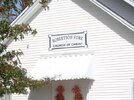
Robertson Fork For R -
Robertson Fork 01.jpg
Robertson Fork 02.jpg

A bit of history -

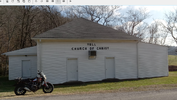
John Montgomery and Sam Montgomery settled on Robertson’s Fork early in 1808, and crossed the ridge at what was first called the Sam Montgomery gap, and afterwards known as the Dodson Gap. Leander M. Shields, father of John M. Shields, came in 1809 and settled near the church where he lived many years. Samuel Shields and James Shields came about the same time or soon after and settled in the same neighborhood. Samuel Shields was the father of the Honorable Ebenezer J. Shields – for several years a Representative in Congress from that district, and one of the most graceful and elegant public speakers our County has produced. The church was started in 1820 and there are minutes of the sessions and lists of both white and black members. Of particular interest are the minutes at the time of breaking with the Richland Creek Association of the Baptist Church and forming a Church of Christ in 1830. Included is a schedule of services of the church, September 21, 1969, with a short biographical sketch of Wade Barrett, minister of the church.
 
Trezevant For A T -
Trezevant.jpg

A bit of history -

Trezevant, Tennessee was established in 1859 on land purchased from locals, with merchants A. White and R. H. Algee setting up the first businesses and the first post office. The town's growth was linked to the railroad, as the Memphis & Louisville Railroad built a line through it and constructed a depot in 1860, a development that connected it to a larger regional network. The town is named after J. T. Trezevant, a prominent Memphis lawyer and railroad builder who was influential in the development of the Memphis & Ohio rail line.
 
(U)nion Hill

Union Hill (Nashville/Davidson County Area)

  • Location and Character: This area is a northern community within metropolitan Nashville/Davidson County, bordering Goodlettsville. It is known for its predominately rural character, featuring large farms and open land, with limited development due to factors like steep slopes and zoning policies.
  • Community and History:
    • The area has a rich history, with local stories often revolving around the old community lifestyle, including general stores and an old swimming hole.
    • The
      Union Hill Elementary School
      , an Art Deco building from the 1930s, is a local historic landmark that closed in 2000 and has sat abandoned since.
    • Music City Raceway
      , a drag strip just north of Nashville, is also associated with the Union Hill area.
    • The
      Union Hill Trading Post
      is a local "country watering hole" and sports bar in the area, known for cold beer, cocktails, and live music.
  • Planning: The community is part of the "Parkwood-Union Hill Community Plan" within the NashvilleNext long-range planning initiative.

1765574416520.png
 
Van Dyke For A V -

Van Dyke.jpg

A little history -

The Van Dyke Church of Christ Cemetery in Henry County, TN, is very old, with graves potentially dating back to the late 1800s or early 1900s (around WWI), though exact founding dates are hard to pin down, as many early markers are gone. It's associated with an old church site where burials happened long before the current church building, making it a historic community burial ground in Henry County.
 
(W)oodbury

Woodbury
is a historic town in Middle Tennessee and serves as the county seat of Cannon County. Located approximately 55 miles southeast of Nashville and 19 miles east of Murfreesboro, it is part of the Nashville Metropolitan Statistical Area.

Demographics & Geography
  • Population: The town's population is estimated at 2,831 for 2025.
  • Location: Situated in the valley of the East Fork of the Stones River, Woodbury covers approximately 2.0 square miles of land.
  • Climate: It features a wet subtropical climate with hot summers and mild winters, though it is known for extreme record high and low temperature variations.

Culture & Attractions
Woodbury is characterized by its rural charm, a historic town square, and a strong sense of community.
  • Historic Town Square: The center of town features unique antique shops, local restaurants, and professional services.
  • Arts & Entertainment:
    • Arts Center of Cannon County: A regional hub for theater, music, and fine arts exhibits.
    • Moonlite Drive-In: A classic outdoor movie theater.
    • Short Mountain Distillery: Located on a 387-acre farm, it offers tastings of Tennessee spirits, hiking trails, and disc golf.
  • Annual Events: The town hosts the Cannon County Good Ole Days festival, which includes food, crafts, pageants, and parades to support the local senior center.

Economy & Living
  • Housing: Woodbury is considered an affordable alternative to nearby Murfreesboro, with average home prices significantly lower (roughly $343,000 in late 2024 compared to over $500,000 in Murfreesboro).
  • Income: The median household income in Woodbury is approximately $51,506.
  • Primary Industries: The largest employment sectors in the surrounding Cannon County area are manufacturing, healthcare, and retail trade.

Local Government & Media
  • Government: The town is led by Mayor Stan Hollandsworth. Municipal offices are located at 101 W. Water Street.
  • News: Local news is provided by the Cannon Courier newspaper and the radio station WBRY FM 107.1 / AM 1540.

1766003640520.png
 
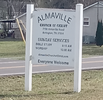
(A)lmaville

Community Overview
  • Location: Situated in the "Rockvale" area of Rutherford County, it is characterized by rural charm mixed with residential growth.
  • Demographics (2026):
    • Population: Approximately 1,574 residents in the "Almaville Exit" area.
    • Housing: High homeownership rates (86–92%) and an average resident age between 46 and 52.
    • Economics: Average household incomes range from $76,000 to $81,000.

History
  • Naming: Tradition holds that the community was named after Alma, a young local woman, by the first postmaster in 1879.
  • Historical Services: A post office operated from 1879 until 1905. The original Almaville School (rebuilt in 1952) served the area until closing in 1967 and now functions as a

1768336061269.png

1768336130878.png

Sounded like a ringding passing by.

1768336368824.png
 
Bells Bend For B (just across the Cumberland River from me! ;)) -

Bells Bend.jpg

Quite A Bit Of History -

Originally known as White’s Bend, after a 1789 3840-acre Revolutionary War land grant to James White, the area became known as Bells Bend when Montgomery Bell, a wealthy iron producer, bought more than 6000 acres, which were subsequently divided and sold. Hydes Ferry Turnpike connected the Bend to Nashville (now paralleled by Highway 12), and Tom Scott’s original store was near the intersection of Sulphur Creek, Bells Bend Road (now Old Hickory Blvd), and Hydes Ferry, and gave the name Scottsboro to the small community at the crossroads.
David Lipscomb, preacher, editor, and founder of the Church of Christ, built a log cabin on his property in McCord Hollow. He went on to found the Nashville Bible School, which became Lipscomb University. Lipscomb’s log house and property were bought by the McCord family. Young George Graves, coming out to the Bend to preach his first sermon, met Katherine, one of the McCord daughters, and the couple soon married and, after a few years away, returned to the farm. Mr. Graves headed the Bells Bend Church of Christ for many years.

His son, George W. Graves Jr., married Ann Walker, a neighbor, and raised 13 children in the old Lipscomb house, several of whom still live on the home property, raising gardens, corn, hay, and cattle. Jerry Graves manages a large sod farm in the Bend, and Eddie and his sons have a well-equipped yard maintenance business. The Clees brothers, seven Bavarian emigrants, moved to the bend in 1869, starting a farm and timber and sawmill business. They also established the ferry in the 1880’s, which continued to carry people, produce and cars across the river until the Judge Hickman, the last 8-car ferry, was shut down in 1990. The landing is still used for launching boats and is often known as “Cleece’s Ferry”, a popular misspelling of the original name. The Barnes family has also lived in the Bend since the mid-1870’s, and have extended family still in the area. Wesley Barnes, now in his 80’s, built many of the barns and fences in northwest Davidson county, and is well-known for the fine quality of his work. The Buchanans were another large landowning family, who successfully farmed about 2000 acres and ran crews that operated their threshing machines throughout the county. The Buchanan property was eventually sold to Eastman Kodak and was the site for the defeated dump/landfill proposal. It is now Bells Bend Park (the sign in the picture).

 
Back
Top Bottom