Headache with Brakes, any help appreciated

Joined
Nov 3, 2025
Messages
4
Age
60
Location
Shropshire
Bike
ST1300
Hi All,
I have a 2007 ST1300A and recently had a problem where the front left hand caliper detached from the bike (dont ask) resulting in me having no breaks but having to use what i did have until they failed completely.... The result, rebuilt the SMC with new parts, the screen filter is clean and the port free of blockages, rebuilt the master brake cylinder fitted new pads and have bled the system according to the Honda process steps. The calipers were all serviced in December of 25 and were working perfectly prior to the event. When i was fitting the new pads i noticed that as i pushed a piston in (centre) the two outers on the rear caliper would come out and vice versa. Fitted the pads all round and both the lever and the pedal felt good. However, after depressing the rear brake pedal the rear wheel is solid and does not rotate, if i crack the outer bleed nipple the wheel will turn. the fronts wheel is also binding slightly. I have never experienced this with a bike before but have with a car where the flexible brake hose had failed and would allow fluid to go one way but not return creating the same issue. Any advice on how to identify which pipe could be causing this as im guessing it could be any given the interlinked nature of the system would be appreciated. Another thing to note is that when the brakes failed the front brake leaver went solid and the rear pedal just traveled to the lower point. I have throughly bled the brakes and am sure that there is no air in the lines.
Thanks in advance
Stuart
 
If a locked rear wheel can be released by opening the bleed nipple it is almost guaranteed that the itty bitty tiny port in the SMC is blocked. As @Sadlsor said, there have been very very few successful SMC rebuilds, and I remember at least one of these was reported to fail roughly 6 months after the rebuild. (That thread is long since gone in the big evaporation.)

Just one question, did you perform the 7 step brake bleeding procedure outlined in the Honda Service Manual?

You are not a likely candidate to get Larry's help via phone since you are across the pond, however, I suggest you go to Articles>ST1300 and search for @jfheath's dissertation on the 1300's brakes.
 
Google Meet is free, with the advantage of live video.
Apples Face Time may be an option, or even Zoom.
"We can rebuild it / him.
We have the technology."
Not referring to the SMC rebuild kit, but rather the 1970s TV show "The 6 Million Dollar Man."
 
Last edited:
If a locked rear wheel can be released by opening the bleed nipple it is almost guaranteed that the itty bitty tiny port in the SMC is blocked. As @Sadlsor said, there have been very very few successful SMC rebuilds, and I remember at least one of these was reported to fail roughly 6 months after the rebuild. (That thread is long since gone in the big evaporation.)

Just one question, did you perform the 7 step brake bleeding procedure outlined in the Honda Service Manual?

You are not a likely candidate to get Larry's help via phone since you are across the pond, however, I suggest you go to Articles>ST1300 and search for @jfheath's dissertation on the 1300's brakes.
Hi, thanks for the reply, i am sure as i can be that the SMC rebuild is good and that the port is clear. I have concluded from yesterdays efforts that i will go back through the calipers and ensure all is good with them and not assume that they are given the December work. I will be on that this evening.
I did follow the bleeding process to the letter. :)
 
It is an old machine with the old style of SMC. This has a drain hole near the uphill end of the plunger - the idea being to drain away the water.
This was not often kept clear so the water that gathered around the rubber boot was prone to eventually seeping into the chamber.

Some people attampted to fix that based on ill-advised information about peeling the rubber boot back and packing it with silicone grease. If they had mentioned that they put the rubber boot back without saying how, then it is (in my opinion) almost certain that it wasn't put back properly. The reason that I say that is that when I took my old one apart, I found out how to do it properly. It requires a hefty push on the brim of the seal (deep down inside) and there is a VERY definite click as the spring in the brim is forced to compress and the brim slots into position with a clunk. Anyone that has doen this would surely have mentioned it.
I cannot get that brim back in without removing the bracket on the end (Which you are not supposed to do - because the measurement is absolutely critical). I measured it with a vernier caliper and when I put if back it wasn't the same. So I guessed that a bit of grit had got on the surface, cleaned it up and tried again. That did the trick. Without taking the measurement first, I would not have known.

So there are two issues both of which cause problems in the SMC. Both are to do with water. One caused by incorrect seating of the rubber boot, one caused by lack of proper servicing.

Here is what an old SMC from a friend's 2004 model (same as your 2006). This is what it looked like two years after fitting a new service kit.

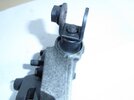
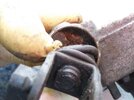
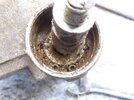
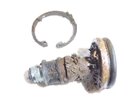
SMC-ST1300A4-05.jpg SMC-ST1300A4-08.jpg SMC-ST1300A4-09.jpg SMC-ST1300A4-10.jpg SMC-ST1300A4-11.jpgSMC-ST1300A4-12.jpg SMC-ST1300A4-14.jpg

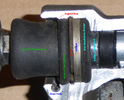
Note the first image - which is what it looked like before I started to take it to bits. The rubber boot looks to be OK, although it is not seated properly. (click the images to get a better view).

Sawn-in-half.JPG

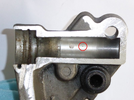
The above photo is what the same SMC looked like after I had sawn it lengthways and cleaned it up. Note the dark bit near the open end. That is corrosion on the inside of the bore caused by ingress of water. Once water gets past that rubber boot, there is nothing to stop it getting into the area before the secondary seal (the primary seal is the one that applies the pressure on the fluid to activate the rear outer pistons.)

That starts to become a problem because the spring does not have enough oomph to push the secondary seal past the corrosion and the build up of grunge that can be seen in the earlier photos.
It doesn't matter how clear the compensation port is: If the piston cannot move back far enough for the primary seal to clear the compensation port - the rear brakes cannot release their pressure.

End of lesson.

There are two things that you can do to check whether the problem might be one of the above.

1. Check that pressure is releasing. Put a bleed tube on the front left lower bleed valve (this is the centre piston). Part fill it with fluid and hold the open end upright. Keep the bleed valve closed. Press on the rear brake pedal hard. Like an emergency stop, and release the pedal. Remove the rear pads and get the rear caliper off the bike so that you can get at the pistons. Slacken the front left lower bleed valve and let the bubble of air from the bleed valve float up - if it will. Tap it if it won't. You should be able to push in the two rear outer pistons easily - you need a thumb on both the forward and rearmost piston and press them both at the same time. Or alternate the pressure 1-2-1-2 (but keeping a thumb on each piston). As you push one in, the other will want to come out. Don't let it - the idea is to push the fuid forward. If the SMC is clear, then the fluid will push up the fluid in the bleed tube. Once you see that fluid in the tube rise, seal the front left lower bleed valve. Then back to the rear caliper and push in the forward piston - to check whether the rearward piston moves out. Then press on the rearward piston to make sure that the forward one moves out.

You have an answer as to whether or not the pistons are moving OK, and whether the SMC port is working properly.

2. You can also check whether the SMC is working as it should. Lie down next to the bike. Rotate the rear wheel with your foot and push forward on the back of the top of the SMC - pushing towards the bracket on the end of the SMC. You should feel the wheel lock solid. (I can get the heel of my hand on the SMC and my fingers arounf the fork leg and gently squeeze a bit like operating a brake lever. It doesn't take a great deal of effort. You shouldn't need a tool to do it.
Crucially, when you let go, the wheel should free up.

nb - comment on the last photo. It looks as though the bore is getting narrower towards the left hand end. That is becasue I couldn't saw parallel to the axis of the bore, so the cut is at a slight angle.

-------------------------

Finally - that boot fitting.

1776863868776.png

See the part labelled 'angled step'. See where the brim of the top hat it. It has been pushed past that angled step. But it won't go there by itself. It needs a very firm push which squeezes the key ring spring inside the brim and it suddenly pops past it. But in order to do it, I had to remove the bracket from the end and find a socket from my wrench set that just fits inside the bore and which fits over the top hat to press onto the brim. Then put the bracket back on, comparing the measurement taken before and after.

If all of this works out OK, then we have to look at other things that might be causing the issue. If you get to that stage and you have familiarised yourself with "avoiding the pitfalls". Then it might be worth a phone call. I'm up north in Yorkshire.
 
Last edited:
Ok, so i have gone right back through the system, all calipers off, stripped and new seals and dust caps, all pistons move freely and system bled (again) and the issue persists!!
The SMC has had all new parts fitted with the exception of the gause filter, this has been cleaned and checked, one thing that i did note was that in this one there was no ball bearing just a rubber pad. I should of taken photos but my mood would not let me :) Question, is there a specific orientation of the mesh filter when it is reinstalled?
so after the last attempt the rear brake will loosen off after the outer bleed nipple is cracked and rotate freely with no binding, when i rebled the system i found a couple of very small pieces of black rubber in the fluid which really does make me think that one of the flexible hoses has deteriorated allowing fluid through but not back. when i strip it again, i will take some photos as this is really starting to grind on me... :frown:
 
Brake hoses do not pass fluid one way. Your best bet to nail this down will be to PM either @Igofar or @aniwack and find a time when you can call them (If your cell plan allows free international calls) or use one of the apps mentioned in @Sadlsor's post #4 above to call them. Everything I've read here going back 14 years says you have an SMC problem.
 
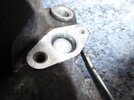
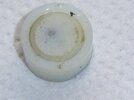
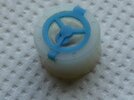
Yes, it matters which way the cartridge with the gauze filter faces. When you remove the two bolts holding the black diamond shaped cap and o ring, you should see the gauze and not the 3 segment plastic. That is there for base of a spring which keeps the one-way valve in position.

I’ll see if I can find my pics.

1776984453295.jpeg 1776984509693.jpeg 1776984553800.jpeg 1776984724867.jpeg

Click the image for a larger picture.
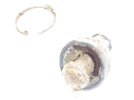
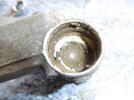
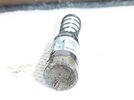
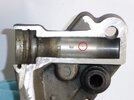
First shows the filter cartridge in position, second is the ‘top’ gauze, third is the underside.
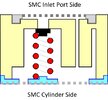
My diagram to show the insides, having taken one apart to investigate (and put it back together undamaged)
 
Last edited:
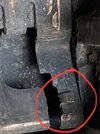
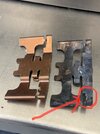
Normally when the SMC fails, it will take out the rear caliper mounting bracket.
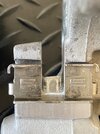
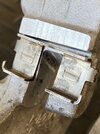
Take a close up picture of the rear caliper bracket from the right side of the bike, through the wheel. I want to see the contact point where the foot of the pads sit I. The silver clip.
My guess is your gonna find the aluminum worn down allowing the clip to twist and move downward binding up things.
Just because pressure is released from a bleeder, allowing the wheel to be freed up, does not mean it was a pressure/fluid problem.
Releasing pressure also may allow parts to realign themselves.
 
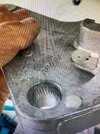
Here are some pictures of things that are damaged in the rear caliper area.
 

Attachments

  • IMG_1135.jpeg
    IMG_1135.jpeg
    389 KB · Views: 15
  • IMG_1134.jpeg
    IMG_1134.jpeg
    409.4 KB · Views: 13
  • IMG_3828.jpeg
    IMG_3828.jpeg
    297 KB · Views: 12
  • IMG_3829.jpeg
    IMG_3829.jpeg
    291.5 KB · Views: 12
  • 68549084814__F502AC73-7076-46CA-BD07-6DD29A343C74.jpeg
    68549084814__F502AC73-7076-46CA-BD07-6DD29A343C74.jpeg
    201.6 KB · Views: 12
  • IMG_3868.jpeg
    IMG_3868.jpeg
    280.8 KB · Views: 13
Thank you all so much for the advice and support, came to the conclusion last night after yet another session of bleeding and fettling that I do indeed need to bite the bullet and replace the SMC with a new unit. Ordered one first thing for delivery tomorrow. Whilst I’m waiting a few other jobs can be carried out. I will let you know how it goes 👍
 
It would be a good thing if some machinist were to take a dozen SMCs that folks had tried to rebuild (and failed) and take progressive slices with a milling cutter to open up cross sections to see exactly what port had been plugged. That way we could say definitively what was wrong and that it could not be fixed, rather than simply saying 'few if any guys have successfully rebuilt an SMC'. I suggested a dozen because we want a statistically somewhat significant sample....
 
It would be a good thing if some machinist were to take a dozen SMCs that folks had tried to rebuild (and failed) and take progressive slices with a milling cutter to open up cross sections to see exactly what port had been plugged. That way we could say definitively what was wrong and that it could not be fixed, rather than simply saying 'few if any guys have successfully rebuilt an SMC'. I suggested a dozen because we want a statistically somewhat significant sample....
Someone already sliced one open and did something similar. See @jfheath 's post above.

Unsure how you'd clear such a tiny port (and the rest of the tiny passage) on the side down in the plunger's bore....

1777037762987.png
 
Back
Top Bottom