Replacing steering stem bearing ST1100

increasing

Site Supporter
Joined
Feb 28, 2025
Messages
304
Location
Oslo, Norway
Bike
ST1100AX
I have checked the steering stem bearing on my -99 ST1100 ABSII previously without any comments, but now checked again with help. There is little indication of wear when the handlebars are centered.

Is it only necessary to order original bearings with dust seals or is another type of bearing recommended? Is there a need to replace more when this is dismantled?

IMG_6069.jpeg
 
I have checked the steering stem bearing on my -99 ST1100 ABSII previously without any comments, but now checked again with help. There is little indication of wear when the handlebars are centered.

Is it only necessary to order original bearings with dust seals or is another type of bearing recommended? Is there a need to replace more when this is dismantled?
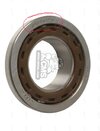
Tapered bearings, comes in a kit, all balls on ebay. May be other listings
 
Just a heads up when using tapered bearings, they require a lower torque on the bolt. It’s more of a feel. If they are too right you will experience a low speed wallow.
Maybe it's just as well to buy originals on a 27 year old bike that has done over 100k on the originals … ?
 
I suggest you take it apart first and inspect the races to see if there is noticeable wear or an indent at centre. I put 175,000 km on my '95 1100 and, while I did properly torque them after the first 1,000 or so kms as recommenced in the manual, I never needed to replace them, just cleaned and lubed them up with Moly a couple of times.
 
Maybe it's just as well to buy originals on a 27 year old bike that has done over 100k on the originals … ?
I’ve had 3 ST1100s and replaced the OEM bearings with tapers on each one of them, the oldest being the 1990 model. They work really well and are a nice alternative to the OEM ball bearings. Your choice.
 
I’ve had 3 ST1100s and replaced the OEM bearings with tapers on each one of them, the oldest being the 1990 model. They work really well and are a nice alternative to the OEM ball bearings. Your choice.
My bearings could use changing. Been saying this for some time, have the tapered bearings in hand, even had the loaner toolkit to do the job. But I keep chickening out for some reason despite doing all other ST jobs myself, with all the help here.
 
In the early days of the forum ('90s) it was suggested that replacing the original roller bearings with tapered was the solution to headshake. I, as many others at the time, did exactly that, and my headshake issues disappeared forever. However, years later it was suggested that perhaps simply tightening the OEM roller bearings after they had seated in would also cure headshake. I can't recall if I ever tried that or not. I suspect I did, because I have the proper tool for adjusting the steering stem nut, but can't recall for sure. (c'mon, I'm old like everyone else here, you think I can remember what I did almost 30 years ago?)

If you have no indication of wear, why are you considering replacing the bearings in the first place? Don't fix it if it ain't broke.
 
Maybe it's just as well to buy originals on a 27 year old bike that has done over 100k on the originals … ?
Always rode well with the OEM ball-type head bearings as intended by the designer...
There is a proper torque value given in the w/shop manual; races properly installed (fully seated), all greased up, apply 28Nm, swivel, retest 28Nm, put all back together and... GO RIDE! Simple as that...

With tapered bearings I often faced fitment issues...
wrong shim/washer packed, no seals included, not enough thread left on the steering stem, pin of the steering lock wouldn't engage anymore, etc... and there no torque rates given...

So I just had a peek into the "Honda Common Motorcycle Service Manual" (always interesting read 😎 ):

- loose ball bearing type (the ones where you have to glue each loose ball into the race with a dab of grease ;)):
tighten bearing adjustment nut to 15Nm/10ft-lb, then back off 1/8th turn, check free movement

- retainer type bearings (the style used OEM in the ST1100 and most modern bikes):
tighten bearing adjustment nut to 25Nm*/18ft-lb*, swivel, recheck for 25Nm*/18ft-lb*

- tapered bearing type:
tighten bearing adjustment nut to 11Nm/8ft-lb, swivel, recheck for 11Nm/18ft-lb

This should give a good baseline while installing; note that the actual figures might change with model, always refer to the specific manual!! (*ST1100, retainer type: 28Nm/20ft-lb)

So obviously tapered bearings have a way higher breakaway torque, hence suggested preload on stem nut is not even half of the OEM value... :unsure:

The spring scale load reading/check varies with the radius (distance between steering stem center and fork tube), so above preload divided by distance = desired measurement.
i.e. 15Nm/10ft-lb : 7.5cm/3inch -> should read 2kg/4.5lb on the spring scale.

 
Back
Top Bottom