You are using an out of date browser. It may not display this or other websites correctly.
You should upgrade or use an alternative browser.
You should upgrade or use an alternative browser.
🤣 Funny!
- Thread starter docw1
- Start date
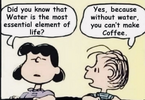



Why proofreading is important...

OP
OP


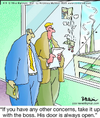


Fortunately my wife does not read this forum....
So, today my wife, I love her so.... came through from the back room with her Samsung tablet, on which she had been watching a movie on Prime.....
"You didn't get my message?" she asked....
I was watching qualifying for the Belgian Grand Prix, so no...
She handed me her tablet showing messenger with her message to me which read....
"I have no wifi help".........
After retiring early in 2020 as an IT contractor, that is the funniest message I have never received.....
So, today my wife, I love her so.... came through from the back room with her Samsung tablet, on which she had been watching a movie on Prime.....
"You didn't get my message?" she asked....
I was watching qualifying for the Belgian Grand Prix, so no...
She handed me her tablet showing messenger with her message to me which read....
"I have no wifi help".........
After retiring early in 2020 as an IT contractor, that is the funniest message I have never received.....


the Ferret
Daily rider since May 1965


Music scene or commercial if its on TV
OP
OP




ST1100Y
Site Supporter
... actually not funny, but I support that notion being applied for all those fast-food joints...



Uncle Phil
Site Supporter


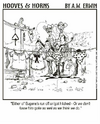
An applicable sign I saw one day out riding -... actually not funny, but I support that notion being applied for all those fast-food joints...


Once the low ballers have the job, weirdly, they seem to "discover" issues that will increase the cost of the contract. It's really puzzling, like they low ball the price with the expectation that they will make it up in "extras" during the life of the contract. Thankfully, I am not that cynical.....My professional experience dealing with government jobs -
We bid to redo a roof and they gave it to the lowest bidder.
When we pointed out that what they were proposing was going to leak and why and where (not in a rude way) this was their reply -
"I don't care, I'm not in the maintenance department!"
He was rewarded for getting it cheap not getting it right.
Needless to say, we never again bid on government work.
IIRC, in Scotland the company that paves the roads have to maintain the roads for a certain period of time.
That changes things a bit!
Over here a company low-balls a bid, does a crappy job, then bids on the repair work and gets it.


Once the low ballers have the job, weirdly, they seem to "discover" issues that will increase the cost of the contract. It's really puzzling, like they low ball the price with the expectation that they will make it up in "extras" during the life of the contract. Thankfully, I am not that cynical.....
It's not always the contractor that is at fault. I spent my entire career as a government contractor, and helped write many proposals. As part of that process, my company provided training on how to write proposals that had the best chance of winning. One of the lessons had to do with assumptions. The case study ran as follows:
Three would-be prime contractors were bidding on a huge (half billion dollar plus) contract. All three bidders identified a number of technological precursor steps that would need to be completed before the real work of the contract could begin, but that were not called out in the scope of the request for proposals.
Two of the three contractors diligently and conscientiously included those precursor steps in their proposals and priced their bids accordingly.
The WINNING contractor called out the same items but wrote them into their Assumptions section, more-or-less as "We have identified the following things that create dependencies which will have to be done before the contract work can begin. <then they listed the items> We assume that these items will be addressed before we begin, and our price and statement of work are therefore limited to the specific items called for in the request for proposals."
Two of the three cost proposals were within a few million dollars of one another; the winner was about 1/2 to 2/3 of that amount. However, the government did NOT get the dependencies seen to in advance and ultimately made numerous piecemeal contract modifications (with corresponding cost escalations) to the low bidder's statement of work. In all, the cost ended up about twice the cost of the higher bids (which, you will recall, were priced to include the missing work.