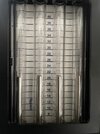
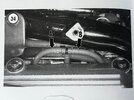
Carb Sync Preferences??

How often do you perform a tune up like that? That’s very thorough.
about every 2~3 years on my personally used ST's...
and when attempting to bring a used bike with unknown history back into service...
not much use in trying to fix unsteady/hunting idle / engine vibrations by attempting to sync carbs when there is a leak present...

i.e.
Img_1789 6x45.jpg
 
What are carb insulators?
The rubbers the carburetors are attached/sealed to the inlet manifolds with, also called carb boots
Due to engine heat they can harden, crack (hence leaks) and/or 'vulcanize' themself to the aluminum stubs, making it very hard to get the carbs off the engine...
Hence I replace them about every two years...

insulatorcarb_big16211MT3000-01_bf02.jpg
 
Last edited:
You were able to get to the vacuum ports without taking those off?
From what I’ve googled it seems to be necessary to remove those…
When I rebuilt the carbs on my 1100, I didn't have to remove the side panels but access to the forward two wasn't simple. I did add some longer hoses to the vacuum fittings, tied them to the nearest frame members and sealed the ends. That made future synchs much easier.
 
The rubbers the carburetors are attached/sealed to the inlet manifolds with, also called carb boots
Due to engine heat they can harden, crack (hence leaks) and/or 'vulcanize' themself to the aluminum stubs, making it very hard to get the carbs off the engine...
Hence I replace them about every two years...

insulatorcarb_big16211MT3000-01_bf02.jpg
You are a brave and patient man to do this every 2-3 years. I've done this job once and it is brutal, but you are right, done more often you don't have to deal with the welded on rubber to the intake tubes.
 
I took oldbikefxr advise some time ago when removing and cleaning up my carbs, painting the carb synch screws head with white paint, tossing out the original short vac tubing and replacing them with longer tubes, routing them for easy access.

Now I don’t have to remove the 2side panel covers and is able to do the carb synch with Morgan carb tune and long #2 JIS. I try to do the synch every 6/12mths, it doesn’t take that long now & usually they don’t go off too much unless you have a leaky carb isolators.
 

Attachments

  • IMG_2970.jpeg
    IMG_2970.jpeg
    279.5 KB · Views: 8
  • IMG_9379.jpeg
    IMG_9379.jpeg
    272.9 KB · Views: 7
My Canadian model has a Tee fitting on the left side vacuum lines. My manual states to disconnect those lines (A & B) and connect to the sync tool. What happens to the third vacuum line on that Tee fitting? The manual doesn’t say. Does it get plugged for the test?
 

Attachments

  • IMG_4259.jpeg
    IMG_4259.jpeg
    300.6 KB · Views: 4
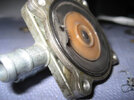
not necessarily, as the lower line leads to the PAIR pumps... (unless those have a leak, which should be checked, like the diaphragm of the auto fuel valve on the other side...)
Thanks. I did disassemble the fuel petcock valve and it’s in good condition but I might remove it to avoid a roadside modification. I don’t have a Tee fitting to reconnect the vacuum line during the sync operation either.
 
My Canadian model has a Tee fitting on the left side vacuum lines. My manual states to disconnect those lines (A & B) and connect to the sync tool. What happens to the third vacuum line on that Tee fitting? The manual doesn’t say. Does it get plugged for the test?

No, that line operates the Air Suction Valves (aka: PAIRs). The valves are open during normal operation, and are closed during high rpm/throttle roll off (cutting off air to the exhaust manifolds ports). That line is a closed system (leads to the sealed valve air chambers). If the valves’ diaphragms are good, leaving the hose unplugged will have no effect on a carb sync.

Edit: I see Martin’s post above now. BTW, checking the suction valves is dead simple: quick-n-dirty, just suck on the hose and see if the vacuum holds; check the manual for the detailed version. I have the air flow meter and merc sticks, prefer the sticks. FWIW YMMV

John
 
Last edited:
Back
Top Bottom