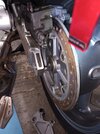
Rear brake binding

Well I am stumped. In the garage the rear pedal applies pressure to all 3 pistons. The centre piston directly. and the two outer pistons as a result of pressure from the brake pedal through the SMC seals from behind. (Like all Master cylinders, the primary seal is actually a one-way valve allowing fluid to pass from behind, but not from in front.)

The SMC applies pressure only to the two rear outer pistons.

So if the rear pads release after being applied by the SMC, that would suggest a problem with the rear centre piston not being able to move back.
Did you say that you had taken them out already ? Perhaps the seal has gunge behind it, or has melted and is now hard and brittle. That is not as unlikely as it sounds. If brakes have been locked on that rear disc gets very hot and that quickly passes to the pistons. Hence that heat shield.

You may be able to verify this. put three slips of paper or a thin feeler gauge between pad and piston and apply the rear brakes hard. Release and then see which is still held firm.
I've never actually done this so it is a theoretical suggestion. I assume that it is possible but there may be calipers and brackets and swinging arm in the way, preventing access. Doing one at a time may be easier but you'd have to ease the pistons in each time to make room for the paper/ feeler gauge.

I need to go back and read through what you have done, what has been replaced. If it isn't the centre piston there's nothing else left, so I am missing something. I'd be tempted to start looking at the mounting and the hardware. Or something you have said that I have mis-read or mis-understood. Or I have read someone else's post and thought it was yours.
 
Last edited:
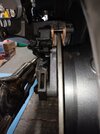
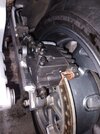
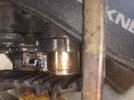
I have taken off the rear caliper and bracket.
1000006808.jpg
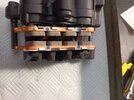
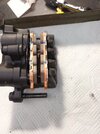
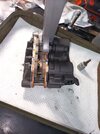
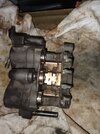
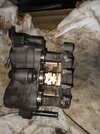
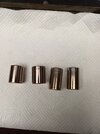
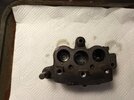
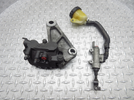
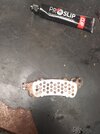
Dismantled caliper and rebuilt. Using new seals abd a new center piston.1000006881.jpg1000006882.jpg1000006883.jpg
1000006866.jpg1000006869 (2).jpg1000006869.jpg1000006877.jpg1000006878.jpg1000006879.jpg1000006880.jpg
Refitted to bike.
1000006885.jpg1000006886.jpg
One and a half spins with operating brake pedal. Four good pumps on the pedal to build up pressure and then a quarter of a turn. Will bleed caliper tomorrow.
 
Last edited:
Yes the pedal returns. I removed it when I was undertaking other works, cleaned and lubricated. Did not adjust it.
John is certainly the sage here, I offer little addition. Having just put a new set on as well, maybe 20 miles ago. When I parked it I bled the rear caliper just a smidge. Bike has been sitting for 5 days on the center stand, I may have pushed the caliper around to make sure everything is "tight". I just went and spun the wheel with out much effort, 1 full turn. I pumped the pedal a few times, spun the wheel, and only got a 1/4 turn. I waited 10 mins or so and spun the wheel, 1/2 turn. I pushed against the caliper a few times until it rattled, spun the wheel, full revolution. I just repeated that process with the same results and don't feel there is anything wrong with my brakes. They are new pads and full fluid, and as one might expect, tight.

It' a pretty straight forward system I think, for the rear pedal and caliper. Try checking the pedal again, I would take it down the street local and see if its getting hot.


1757139684302.png
 
1757153683285.pngOK
Check that the front brakes are not dragging If they are maybe check the front wheel installation / disc caliper clearance. (image 0.7mm min both sides of disk)
Check that the wheels moves OK. ie you can rotate them.
Make sure that the back brake pedal stops the rotation.
Make sure that the front wheel spins ok and that the front brake stops the rotation.
Make sure that the back wheel rotates OK and when the SMC applied (its only 1-2mm movement remember) it locks it solid and immediately you release the SMC the rear wheel can be turned again.

If the SMC moves more than 1-2 mm before it locks the rear wheel, then there is air in the system. You MUST get rid of that air before you take the bike onto the road. And when the SMC is applied using hand pressure it must lock the rear wheel - ie prevent it from being turned by hand.

If you don't verify that the SMC locks the rear wheel and then releases it, give you a false sense of security;
But surely if the rear wheel is turning after the SMC has beenreleased then all is OK, isn' it. No. (And don't call me Shirley).

The SMC isn't locking the rear wheel by normal brake lever hand pressure, then there is air in the system. So the SMC is spending most of its time squeezing a bubble of air, and very little effort goes into applying the brakes. The SMC returns, the pressure comes off, but a tiny bit of fluid can not return through the compensation port in the SMC. So the bubble remains slightly squashed. The cycle repeats itself, but each time the bubble gets slightly smaller. Eventually, the bubble cannot be squashed any more and the pressure is applies the brakes rather than to the bubble of air. And the pads cannot release.

That is a technical way of saying that the SMC appears to be OK, the rear brakes appear to free up each time and then suddenly they remain locked.

However - IIRC you said that you ordered a new SMC so that build up of pressure should not be happening.

A Possible test ride - assuming that you have checked that the SMC action locks and releases the rear wheel.

This comes with a disclaimer. My opinion is that your bike is not fit to ride.It is also possible that the brakes will get very hot and then suddenly lock up. And that could be fatal.

But you have extablished that the rear wheel bearing is a problem in that the wheel isn't turning much without the brakes in. You have also fitted new pads, and they always drag a little bit when new. Your discs are not shiny. So it is possible that there is a settling in factor.

But you must do this on a quiet road. A road where can pull in and stop safely at any moment. If you don't have this then don't go out.


When brakes are binding and you are coasting along at 60mph - you cannot tell. The engine is extemely powerful. You might need a lower gear. You might take longer to accelerate. You might be aware of a little drag. But once your hand on the throttle is in a position where you are going the speed that you want, there is no feedback, the engine will overcome the brake drag. Except, when you pull the clutch lever in. Normally, with the clutch pulled in you should not feel anything on a level road apart from a very gradual slow down. I fthere is any brake drag, pulling in the clutch lever will feel like you have applied the rbrakes. So while you are testing a bike in this condition - keep pulling in the clutch lever every few seconds to get some feedback. If it slows downrapidly when you pull in the clutch lever, you MUST stop, becasue it isn't going to get any better.

(You might want to take something with you so that you can release the brakes when they have cooled down in order to get the bike home again, but still have them available to stop should you need to),

Take the panniers off. It makes it easier to check.

Put both brakes on hard while stationary and release.
Check that the bike moves freely.
Go ride a very short distance. (200 metres) Bike on centre stand. See how the rear wheel rotates.
Lift front wheel - see how that rotates.

Go for a slow ride for about half a mile without touching the brakes. Stop without touching brakes.
Check the temperature of the discs. Front brakes should be cool/cold. Rear ones should be cool. (They will be warmer because of engine / exhaust heat).

Another short ride. This time, while riding take the precaution of pulling in the clutch lever every 10 seconds or so. Just briefly. The bike should not slow down. If it does, you have some serious drag going on and you need to stop - because they could be about to lock up. Assuming that the bike free-wheels ok for that brief moment with the clutch disengaged, do some hard emergency stop braking. Front brake lever only. Say from 40mph down to 10mph. Then set off again. Do 3 or 4 of these and then come to a stop. The idea is to get the brakes hot.
Check the temperature of the discs. Dont touch. It will take the skin off your fingers. Both should be very hot.

Ok - go and ride slowly for a couple of miles - keep doing the clutch check. If at any time the bike slows significantly on level road with the clutch pulled in, you have to stop.

Do not touch the brakes - unless you have to - in which case start again. The idea is to ride for a couple of miles without touching the brakes after you know that they were hot. So you need to plan this - you need somewhere where you can pull in safely and come to a halt without touching brakes. The last few mph - you can apply the brakes sharply -as that will just grab the disc without any friction - so no heat.
Stop without braking and check the disc temperatures. The fronts should be cold. The rear should be cold, but will probably be sightly warm. Cool enough to grab hold of.

Now what you are looking for.

1. The front brake discs. These will cool down from very hot within a minute or so. They are moving rapidly (spinning and moving forward) through fresh, cool air. If they are retaining their heat, are hot when you come to a stop without touching the brakes.

2. The rear brakes - should have cooled down significantly from your last stop.

If after riding without touching brakes, the front brake disc is hot or even warm. Then you have a problem with the front brakes. If the front left is warm, that will create issues with the rear brake. No point in looking any further until that is sorted out.

3. Check the rear wheel spin. (Centre stand, neutral).

3. If you are confident that the brakes are cooling down properly and that the the wheel is turning, then do some more riding with a series of emergency slow downs. (make sure no traffic is behind you), then ride for a while and keep checking the clutch/freewheel).

When you have had enough fun, bring it back, let it cool down and then see how it behaves in the garage. Having had a bit of a workout, it may have settled into some different behaviour.

 
1757153683285.pngOK
Check that the front brakes are not dragging If they are maybe check the front wheel installation / disc caliper clearance. (image 0.7mm min both sides of disk)
Check that the wheels moves OK. ie you can rotate them.
Make sure that the back brake pedal stops the rotation.
Make sure that the front wheel spins ok and that the front brake stops the rotation.
Make sure that the back wheel rotates OK and when the SMC applied (its only 1-2mm movement remember) it locks it solid and immediately you release the SMC the rear wheel can be turned again.

If the SMC moves more than 1-2 mm before it locks the rear wheel, then there is air in the system. You MUST get rid of that air before you take the bike onto the road. And when the SMC is applied using hand pressure it must lock the rear wheel - ie prevent it from being turned by hand.

If you don't verify that the SMC locks the rear wheel and then releases it, give you a false sense of security;
But surely if the rear wheel is turning after the SMC has beenreleased then all is OK, isn' it. No. (And don't call me Shirley).

The SMC isn't locking the rear wheel by normal brake lever hand pressure, then there is air in the system. So the SMC is spending most of its time squeezing a bubble of air, and very little effort goes into applying the brakes. The SMC returns, the pressure comes off, but a tiny bit of fluid can not return through the compensation port in the SMC. So the bubble remains slightly squashed. The cycle repeats itself, but each time the bubble gets slightly smaller. Eventually, the bubble cannot be squashed any more and the pressure is applies the brakes rather than to the bubble of air. And the pads cannot release.

That is a technical way of saying that the SMC appears to be OK, the rear brakes appear to free up each time and then suddenly they remain locked.

However - IIRC you said that you ordered a new SMC so that build up of pressure should not be happening.

A Possible test ride - assuming that you have checked that the SMC action locks and releases the rear wheel.

This comes with a disclaimer. My opinion is that your bike is not fit to ride.It is also possible that the brakes will get very hot and then suddenly lock up. And that could be fatal.

But you have extablished that the rear wheel bearing is a problem in that the wheel isn't turning much without the brakes in. You have also fitted new pads, and they always drag a little bit when new. Your discs are not shiny. So it is possible that there is a settling in factor.

But you must do this on a quiet road. A road where can pull in and stop safely at any moment. If you don't have this then don't go out.


When brakes are binding and you are coasting along at 60mph - you cannot tell. The engine is extemely powerful. You might need a lower gear. You might take longer to accelerate. You might be aware of a little drag. But once your hand on the throttle is in a position where you are going the speed that you want, there is no feedback, the engine will overcome the brake drag. Except, when you pull the clutch lever in. Normally, with the clutch pulled in you should not feel anything on a level road apart from a very gradual slow down. I fthere is any brake drag, pulling in the clutch lever will feel like you have applied the rbrakes. So while you are testing a bike in this condition - keep pulling in the clutch lever every few seconds to get some feedback. If it slows downrapidly when you pull in the clutch lever, you MUST stop, becasue it isn't going to get any better.

(You might want to take something with you so that you can release the brakes when they have cooled down in order to get the bike home again, but still have them available to stop should you need to),

Take the panniers off. It makes it easier to check.

Put both brakes on hard while stationary and release.
Check that the bike moves freely.
Go ride a very short distance. (200 metres) Bike on centre stand. See how the rear wheel rotates.
Lift front wheel - see how that rotates.

Go for a slow ride for about half a mile without touching the brakes. Stop without touching brakes.
Check the temperature of the discs. Front brakes should be cool/cold. Rear ones should be cool. (They will be warmer because of engine / exhaust heat).

Another short ride. This time, while riding take the precaution of pulling in the clutch lever every 10 seconds or so. Just briefly. The bike should not slow down. If it does, you have some serious drag going on and you need to stop - because they could be about to lock up. Assuming that the bike free-wheels ok for that brief moment with the clutch disengaged, do some hard emergency stop braking. Front brake lever only. Say from 40mph down to 10mph. Then set off again. Do 3 or 4 of these and then come to a stop. The idea is to get the brakes hot.
Check the temperature of the discs. Dont touch. It will take the skin off your fingers. Both should be very hot.

Ok - go and ride slowly for a couple of miles - keep doing the clutch check. If at any time the bike slows significantly on level road with the clutch pulled in, you have to stop.

Do not touch the brakes - unless you have to - in which case start again. The idea is to ride for a couple of miles without touching the brakes after you know that they were hot. So you need to plan this - you need somewhere where you can pull in safely and come to a halt without touching brakes. The last few mph - you can apply the brakes sharply -as that will just grab the disc without any friction - so no heat.
Stop without braking and check the disc temperatures. The fronts should be cold. The rear should be cold, but will probably be sightly warm. Cool enough to grab hold of.

Now what you are looking for.

1. The front brake discs. These will cool down from very hot within a minute or so. They are moving rapidly (spinning and moving forward) through fresh, cool air. If they are retaining their heat, are hot when you come to a stop without touching the brakes.

2. The rear brakes - should have cooled down significantly from your last stop.

If after riding without touching brakes, the front brake disc is hot or even warm. Then you have a problem with the front brakes. If the front left is warm, that will create issues with the rear brake. No point in looking any further until that is sorted out.

3. Check the rear wheel spin. (Centre stand, neutral).

3. If you are confident that the brakes are cooling down properly and that the the wheel is turning, then do some more riding with a series of emergency slow downs. (make sure no traffic is behind you), then ride for a while and keep checking the clutch/freewheel).

When you have had enough fun, bring it back, let it cool down and then see how it behaves in the garage. Having had a bit of a workout, it may have settled into some different behaviour.
I removed the right caliper from the fork legs. Pumped out the pistons and cleaned them, lubricated using silicone spray.
20250906_150010.jpg20250906_152024.jpg
The front wheel with both calipers removed span x 3 times without much effort.
The right front center piston was binding before I removed the caliper.
This is now rectified.
I cleaned the pistons on the left hand side and reassembled and torqed.
I have run some tests by activated rear brake only. One and a half turns after a light spin.
Pushing the calipers back manually, which is easy to do now. Then activating the front I get only half a spin.
20250906_175432.jpg20250906_172244.jpg
 

Attachments

  • 20250906_152024.jpg
    20250906_152024.jpg
    113.2 KB · Views: 12
You have replaced the SMC ?

But "after activating the front" the rear spins only half a turn.. Do you mean after activating the SMC, or after operating the front brake lever ? You are doing this in the garage, not on the road ?

Sorry to be pedantic - but this matters.

But you get one and a half spins after applying the rear brake pedal.

Ok. That doesn't make sense, so something odd is happening.

Push the rear pistons in. Apply the brake pedal lightly. Have all three pistons moved ? Which one is last to move out ?
Press brake pedal hard until the pedal is firm. Are all 3 pistons fully extended. ? How many spins now ?

===========


I need answers to the above first, but I'm thinking two things at the moment.

1. The needle roller bearings in the left front fork leg for the left front caliper bracket mounting bolts are seized.
Take the caliper off. Push out the chromed bush in the hole for the bottom bush. It should slide out easily. Check the bearings inside.


Don't do #2 - It will let air into the system and will require a full bleed. I'm just saying what I am thinking in case there is evidence to deny or support the possibiliy.

2. There is possibly a blockage in the line from the SMC to the rear outer pistons. I'm not convinced about my logic for thinking this, but I had one once and getting rid of it solved problems that i couldn't explain. One symptom was that fluid wasn't flowing very well when I had the bleed tube attached. I unscrewed the PCV bleed valve - this is going to be messy - and pumped fluid out using the brake pedal.. A plug of gunge shot out like a cork from a bottle. Be careful reinstalling the valve - turn it in anticlockwise until you feel the start of the thread, then turn it clockwise using fingers only.

3. The rear bracket / caliper is not aligned properly - but that isn't supported by the evidence you have just give. ie the rear wheel turns after the brake pedal is applied, but not after the front brake (Smc?? ) is applied.
 
You have replaced the SMC ?
Yes the SMC was replaced October last year.
I have a UK registered 2008 ST 1300 A6 28000 miles
So far I have replaced the SMC, and lubricated the lower pivot point.
Rear caliper.
Replaced x 3 pistons and seals
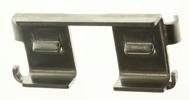
Metal retainer clip to caliper bracket.
Caliper pad spring.
Genuine Honda brake pads.
Pad pin. I did the above nearly a year ago. Last Friday 06/09/2025 I removed the rear caliper and bracket, replacing the center piston and renewing all seals, pads, rubber boots after a good clean. I believe I had not got all of the air out of the system last year. However after a brake bleeding session about 2 weeks ago the SMC for was activating after 1-2mm of movement and locking the rear wheel. Being more conversant with the braking system.


But "after activating the front" the rear spins only half a turn.. Do you mean after activating the SMC, or after operating the front brake lever ? You are doing this in the garage, not on the road ?
I was referring to the front brake lever and spinning the front wheel. Yes I am doing this in the garage.
Sorry to be pedantic - but this matters.

But you get one and a half spins after applying the rear brake pedal. Yes of the front wheel
Yesterday after raising the front wheel off the ground. I gave it a spin and only got a quarter turn. I detached the SMC and and caliper placing a spacer between the pads. I gave another spin with only the right front caliper connected barley any difference from earlier test. So I detached the right front caliper and pumped out the center piston, cleaned and silicon sprayed it and worked it in and out a few times. I then repeated the procedure with the two outer pistons. I reattached the front right caliper and applied the brake pedal, result no drag. I then applied the front brake very slight drag, however I was able to push back the caliper body quite easily. I the then repeated the procedure to the left hand caliper. After reattaching the SMC caliper and applying the rear brake pedal, I get a half a turn, I push the caliper back and apply the front brake. I get a quarter of a turn.

Ok. That doesn't make sense, so something odd is happening.
I am about to bleed the system now as my friend is here to help me do this.
I carried out a full brake bleed.
1. No bubbles
2. No bubbles
3. Lots of air initially.
4. Huge amount of air.
5. Some air.
6. Very small air bubbles.
7. Very small air bubbles.

Push the rear pistons in. Apply the brake pedal lightly. Have all three pistons moved ? Which one is last to move out ?
Press brake pedal hard until the pedal is firm. Are all 3 pistons fully extended. ? How many spins now ?
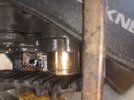
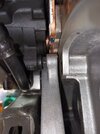
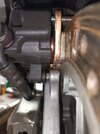
Rear pistons pushed in. 1000006902.jpgApplied rear brake pedal lightly. 1000006910.jpgOnly center piston has moved out. 1000006914.jpgBrake pedal pressed hard all three pistons are out.
===========There are one and a half spins after this. (Rear wheel).


I need answers to the above first, but I'm thinking two things at the moment.

1. The needle roller bearings in the left front fork leg for the left front caliper bracket mounting bolts are seized.
Take the caliper off. Push out the chromed bush in the hole for the bottom bush. It should slide out easily. Check the bearings inside.
The bearings are not seized bush slides out easily.
I lay down alongside the bike and rotated the rear wheel whilst operating the SMC very little movement of SMC and the rear wheel locked.

Don't do #2 - It will let air into the system and will require a full bleed. I'm just saying what I am thinking in case there is evidence to deny or support the possibiliy.

2. There is possibly a blockage in the line from the SMC to the rear outer pistons. I'm not convinced about my logic for thinking this, but I had one once and getting rid of it solved problems that i couldn't explain. One symptom was that fluid wasn't flowing very well when I had the bleed tube attached. I unscrewed the PCV bleed valve - this is going to be messy - and pumped fluid out using the brake pedal.. A plug of gunge shot out like a cork from a bottle. Be careful reinstalling the valve - turn it in anticlockwise until you feel the start of the thread, then turn it clockwise using fingers only.

3. The rear bracket / caliper is not aligned properly - but that isn't supported by the evidence you have just give. ie the rear wheel turns after the brake pedal is applied, but not after the front brake (Smc?? ) is applied. The rear wheel does turn after the brake pedal is applied. The front brake appears to have no effect on the rear wheel. SMC stops rear wheel immediately 1-2mm movement of plunger.
 
Last edited:
OK - thanks for that.

Applying the front brake in the garage should have absolutely no effect on how much the rear wheel turns.

So putting the front left caliper back onto the bike, the brakes drag when they didn't before.

We are getting somewhere. Lets get into the nitty gritty of what could go wrong at the front end.

1. Wheel installation.

In the following, LEFT is left as you sit on the bike. ie the brake lever side. RIGHT is the clutch lever side.​
The correct method is critical. otherwise the left hand fork (holding the left brake caliper) can be out of alignment with the disk, causing one of the pads to drag.​
Slacken the right hand axle bolt. Slacken the four pinch bolts. Tighten the axle bolt at the right hand (brake lever) side. Correct torque. If you don't have a hex driver to hold the left hand end of the axle make sure that the left hand end of the axle is flush with the fork leg axle hole and tighten one pinch bolt. This stops the axle bolt from turning. Then tighten the axle and then slacken the pinch bolt so that the axle is free to move again.​
Tighten the pinch bolt at the right hand (brake lever) side. Alternate 1-2-1-2 because as you tighten one, the other will need tightening again. 22Nm​
Put something in front of the front wheel. A garage wall will do, or a brick. Bounce the front end - using the wall or brick to stop the wheel moving forward. The idea is to let the forks bounce up and down to settle in a natural postion. If you don't do this, the forks could be locked into a slightly twisted position - which does interesting things to the handling.​
The left hand of the axle should now be flush with the end of the axle. If it isn't then that is something to investigate. If it is almost there, then move the left hand fork leg across until it is flush. If it is not - say the axle is protruding slightly - then the fork leg is too close to the wheel. That means that the caliper bracket is too close to the disc. The outer pad will be constantly pressed against the brake disc and drag. Remember - the minimimum clearance is 0.7mm - so when we say flush, we mean flush. Give or take 1mm is not good enough. Put a steel rule across and it should be in contact with the milled face of the fork leg near the axle hole and with the end of the axle.​
That should put the caliper bracket in such a position that the disc can pass through the slot with plenty of room either side. 0.7mm is the minimum on both sides.​
Tighten the two left hand pinch bolts (clutch lever) side.​
Animation of this process here:

2. Pad fittings.
The front pads MUST NOT be fitted with the white heat shield that is fitted to the rear brake pads. There isn't enough room for them and the front pads don't need a heat shield anyway.​

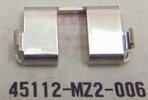
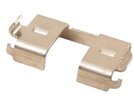
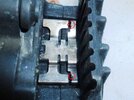
Make sure that the chrome retainer clip looks like the one on the left. The one in the middle is for the rear, and those indents on each side form a ridge on the other side. Circled in the right hand photo. Make absolutely certain that you have not accidentally put the ridged rear retainer clip in the front caliper brackets. That simple mistake will cause the front brakes to drage and eventually, the rear wheel to lock up solid.​

Front Retainer clip.jpg Rear Retainer clip.jpg P1020427.jpg

3. Pad springs.
These should be fitted into the roof of the caliper. There are 2 tags that keep it in place - gripping onto the raised block in the caliper roof.

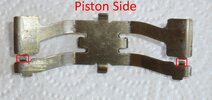
The wiP1020411.jpgder part of the pad spring should be fitted to the piston side of the caliper. It is easy to get the pad spring the wrong way round on the A6 model and earlier. But you should check the same thing on the rear which on the A6 have the same design pad spring. The two tags (red circle) should be sticking up. The pad will slide between these and the inner wall of the caliper - along the narrow strip of the spring. Make sure that those tags have not been squashed flat.

4 Disk Clearance
Check where the brake disc passes through the caliper bracket on ether side. It is extremely difficult to see - so I put the feeler gauge against the surface of the disk and turn the wheel backwards. Do this only after the caliper brackets bolts have been tightened.​

5 Fitting the Pads.
Before fitting the pads make sure that the calipers are free to move in and out - all the way to the disk on both sides. The left hand one is particularly awkward because it has twice as many brake hoses attached.

I find it easiest to hold the outer pad pad against the surface of disc an push the caliper across so that the pad is lightly trapped between disc and pistons. Then rotate the wheel with the pad so that it slots into position. If you have slightly moved the pistons out so that the roof spring is above the pistons, you can lift up the pad and partly insert the pint to hold it in position.
Then do the same with the inner pad, and pull the caliper across to trap it between the disc and the fixed half of the caliper. Youc an feel for it fitting into the chrome retainer clip. Lift up the pad pin end and fit the pad pin looely. Then check that the tab end of the pad is properly nestled in the chrome retainer clip. You can see this from the other side of the wheel through the spokes.

Once checked, you can secure the pad pin with your socket driver. 18Nm - is what the manual says. I tend to use less on the rear as that hex socket is very soft metal and it doesn't stand much toque and can be awkward to get out.

Before pumping the brakes, check the wheel spin.


Read through this if you haven't already done so. https://www.st-owners.com/forums/threads/st1300-brake-maintenance-avoiding-the-pitfalls.135125/

Download the pdf.
 

Attachments

  • Spring Clip labelled.jpg
    Spring Clip labelled.jpg
    77.5 KB · Views: 9
OK - thanks for that.

Applying the front brake in the garage should have absolutely no effect on how much the rear wheel turns.

So putting the front left caliper back onto the bike, the brakes drag when they didn't before.

We are getting somewhere. Lets get into the nitty gritty of what could go wrong at the front end.

1. Wheel installation.

In the following, LEFT is left as you sit on the bike. ie the brake lever side. RIGHT is the clutch lever side.​
The correct method is critical. otherwise the left hand fork (holding the left brake caliper) can be out of alignment with the disk, causing one of the pads to drag.​
Slacken the right hand axle bolt. Slacken the four pinch bolts. Tighten the axle bolt at the right hand (brake lever) side. Correct torque. If you don't have a hex driver to hold the left hand end of the axle make sure that the left hand end of the axle is flush with the fork leg axle hole and tighten one pinch bolt. This stops the axle bolt from turning. Then tighten the axle and then slacken the pinch bolt so that the axle is free to move again.​
Tighten the pinch bolt at the right hand (brake lever) side. Alternate 1-2-1-2 because as you tighten one, the other will need tightening again. 22Nm​
Put something in front of the front wheel. A garage wall will do, or a brick. Bounce the front end - using the wall or brick to stop the wheel moving forward. The idea is to let the forks bounce up and down to settle in a natural postion. If you don't do this, the forks could be locked into a slightly twisted position - which does interesting things to the handling.​
The left hand of the axle should now be flush with the end of the axle. If it isn't then that is something to investigate. If it is almost there, then move the left hand fork leg across until it is flush. If it is not - say the axle is protruding slightly - then the fork leg is too close to the wheel. That means that the caliper bracket is too close to the disc. The outer pad will be constantly pressed against the brake disc and drag. Remember - the minimimum clearance is 0.7mm - so when we say flush, we mean flush. Give or take 1mm is not good enough. Put a steel rule across and it should be in contact with the milled face of the fork leg near the axle hole and with the end of the axle.​
That should put the caliper bracket in such a position that the disc can pass through the slot with plenty of room either side. 0.7mm is the minimum on both sides.​
Tighten the two left hand pinch bolts (clutch lever) side.​
Animation of this process here:​

2. Pad fittings.
The front pads MUST NOT be fitted with the white heat shield that is fitted to the rear brake pads. There isn't enough room for them and the front pads don't need a heat shield anyway.​

Make sure that the chrome retainer clip looks like the one on the left. The one in the middle is for the rear, and those indents on each side form a ridge on the other side. Circled in the right hand photo. Make absolutely certain that you have not accidentally put the ridged rear retainer clip in the front caliper brackets. That simple mistake will cause the front brakes to drage and eventually, the rear wheel to lock up solid.​

Front Retainer clip.jpg Rear Retainer clip.jpg P1020427.jpg

3. Pad springs.
These should be fitted into the roof of the caliper. There are 2 tags that keep it in place - gripping onto the raised block in the caliper roof.

The wiP1020411.jpgder part of the pad spring should be fitted to the piston side of the caliper. It is easy to get the pad spring the wrong way round on the A6 model and earlier. But you should check the same thing on the rear which on the A6 have the same design pad spring. The two tags (red circle) should be sticking up. The pad will slide between these and the inner wall of the caliper - along the narrow strip of the spring. Make sure that those tags have not been squashed flat.

4 Disk Clearance
Check where the brake disc passes through the caliper bracket on ether side. It is extremely difficult to see - so I put the feeler gauge against the surface of the disk and turn the wheel backwards. Do this only after the caliper brackets bolts have been tightened.​

5 Fitting the Pads.
Before fitting the pads make sure that the calipers are free to move in and out - all the way to the disk on both sides. The left hand one is particularly awkward because it has twice as many brake hoses attached.

I find it easiest to hold the outer pad pad against the surface of disc an push the caliper across so that the pad is lightly trapped between disc and pistons. Then rotate the wheel with the pad so that it slots into position. If you have slightly moved the pistons out so that the roof spring is above the pistons, you can lift up the pad and partly insert the pint to hold it in position.
Then do the same with the inner pad, and pull the caliper across to trap it between the disc and the fixed half of the caliper. Youc an feel for it fitting into the chrome retainer clip. Lift up the pad pin end and fit the pad pin looely. Then check that the tab end of the pad is properly nestled in the chrome retainer clip. You can see this from the other side of the wheel through the spokes.

Once checked, you can secure the pad pin with your socket driver. 18Nm - is what the manual says. I tend to use less on the rear as that hex socket is very soft metal and it doesn't stand much toque and can be awkward to get out.

Before pumping the brakes, check the wheel spin.


Read through this if you haven't already done so. https://www.st-owners.com/forums/threads/st1300-brake-maintenance-avoiding-the-pitfalls.135125/

Download the pdf.
Hi John have added to and edited my earlier reply. I have a set of Bluepoint feeler gauges i cannot fond 0.7mm nearest is .007, .178mm.
 
Last edited:
.7mm is 0.0276", so any combination of feeler gauges that gets you to 0.027" or 0.028" will give you a good idea.
 
  • Like
Reactions: ST1
You probably have a set of gauges marked in inches. Both metric (mm) and imperial (inches) sets are available in the UK. I use metric because that is what the manual uses - but 0.007 mm is very thin. The smallest in a metric set is usually around 0.05 mm.
 
You probably have a set of gauges marked in inches. Both metric (mm) and imperial (inches) sets are available in the UK. I use metric because that is what the manual uses - but 0.007 mm is very thin. The smallest in a metric set is usually around 0.05 mm.
Yes they are marked in imperial and metric, quite hard to read.
 
Yes they are marked in imperial and metric, quite hard to read.
Are the seals for the front calipers the same for left and right. As on the Fowlers website the left front piston seals are listed as the same.
1757435692599.png
 
The pistons in the photo from Sunday looked rather messy. Some of it was muck which would probably clean off. Some of it looked like corrosion near to the seals.
The boot on the slider pin is torn. So the slider pin would not be very clean. But you've repalced the bracket now, so hopefully that should be good.

I don't know exactly what you have done, but presented with that situation I'd want to carry out a few tests.

1. Are the front brakes binding - particularly the front left ?

2a. Rear reservoir. Take the lid off (I have to dismount my reservoir to remove the lid). Is it brim full ? It should have an air space above the top line marked on the side. If it is brim full, you need to take some fluid out before doing the next bit.

2b. Front Left caliper. Remove the pads. Remove the caliper from the fork legs. Press the rear brake pedal slightly - careful - you don't want to eject the centre piston entirely. Just move it out a little bit. Then using thumb pressure on the front left centre piston, (having made sure that the piston itself is clean and shiny), push it in to its bore. It should move in easily.
Purpose - to find out whether the rear master cylinder near to the rear reservoir is allowing fluid to return to the reservoir. If it isn't then we have one probably reason. That relief port - the compensation port in the rear master cylinder needs to be clear otherwise the rear brakes will lock up.
2c. Replace the front left caliper and pads - loosely for now - to avoid accidentally ejecting fluid and pistons all over the garage floor.

3. Add a bleed tube to the front left caliper, lower bleed valve. A vertical tube is good enough.

Go to the rear caliper. Remove pads, Remove bracket. Open up the front left lower bleed valve and pump a little fluid into the tube so that you can see the level of fluid in the tube.
Using thumb pressure, push in the rearmost piston in the rear caliper. The front piston should move out easily. Now push in the front piston - the rear piston should move easily. Now push in both together. They will move not as easily - and you should see the fluid in the bleed tube on the front left lower bleed valve go up.
If it does, close the bleed valve. Refit bracket loosely.
Purpose. The rear caliper fluid must be able to escape through the compensation port in the SMC. Normally it flows out to the lines to the rear master cyclinder - but it does that by going past the front left centre piston. You have been checking whether or not fluid is getting through the SMC and the compensation port. The results of this may determine whether a new SMC is required.
4. With the rear caliper bracket in place, and no pads installed. Bracket held firmly enough by the axle - grab hold of the caliper by its top and move it across so the the pistons touch the brake disk surface. (You may want to protect your disks from oil/grease with a paper towel). It should move all the way very easily. Let go of the caliper. It should stay put.
Then pull it all the way towards you until the other side of the caliper meets the disk. Again - very little resistance, easy movement and when you let go, it should not move back by itself.

Purpose. You are checking that the caliper is able to move easily on its slider pins. If it doesn't move the full range, then suspect that the slider pins are not parallel. If it moves by itself when you let go, then suspect that the slider pin is fighting against too much grease or air pressure.
1756394256535.png5. Return to the front left caliper. All brackets have a chrome retainer clip. Like the one on the right. This one is for the rear caliper bracket - it has section punched upwards across the middle of the face on each side of the slot for the brake disc. The front retainer clip does not have this 'ridge'. If you accidentally put the clip for the rear caliper into the front caliper, then the front pads will not be able to move away from the disc surface and the brakes will continue to be applied- enough to operate the SMC and apply the rear brakes. You are not likely to see this behaviour in the garage, but ti will certainly exist on the road.
** If you use EBC pads, then this would not be a problem. All pads have the notch in the pad backing plate. But EBC pads have their won problems.
I suspect your rear pads may be EBCs - you said that they were new. New Honda pads would not allow you to see that much of the pistons. The rear pads are much thicker.

6. Finally (for now). I had a fellow UK member come to see me about a locking front brake. We started at the brakes pad end and worked our way back. Toward the end of the day it emerged that he had fitted a new service kit for the front brake lever. Stupid of me - I should have asked where from. No it wasn't Honda OEM. It turned out that the push rod was a fraction too long, which prevented the master cyclinder piston from returning properly - which prevented the excess fluid in the brake line from escaping through the compensation port. Resulting in locked brakes afer the first application.

So it might help to think about what you have replaced and when it started happening.
This is VERY Helpful! Thank you!
 
Are the seals for the front calipers the same for left and right. As on the Fowlers website the left front piston seals are listed as the same.

No they are not shown as the same.

It is more complicated than it looks, so pay attention - I may just make a mistake - so work it out for yourself as well.

You have an ST1300 A6, registered in 2008 ?

L Front Caliper Pistons and Seals.jpgThis is important because the A6 is a 2006 model. The 2008 model (A8) has different front calipers.

You need to look at what the pistons are in order to find the diameter.

Look at the fiches for L Front Caliper

The pistons show as - you need this because you need to know the diameter.
2 x piston #17 (22 x 35)
1 x piston #7 (22 x 27)

So 22 is the diameter, 27 is the length. 22 is the diameter of the piston. The seal fits inside a groove so its diameter is smaller, but I will continue to refer to it as a 22mm seal. Ie the seal for a 22mm piston.

So left front caliper all pistons are the same diameter - 22mm. So the seals for the left caliper are all the same -- #1. 06451-MZ2-405. That bit is straight forward.

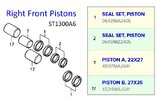
R Front Caliper Pistons and Seals.jpgR Front Caliper

Note that Part number 1, 7 and 17 will not point to the same item as the table for the left hand caliper.
Except by coincidence.


2 x Outer pistons #17 (27 x 35)
1 x Centre Piston #7 (22 x 27)

There are two pistons with the same number (17) and two seals with the same number (1)
So these two match up.

But note that #17 in this diagram is different from #17 in the other fiche !

So outer seal #1 - 2 of them for piston #17 - 27mm - 06431 MA3 405
And Inner seal #2 - 1 of these for piston #7 - 22mm - 06451 MZ2 405

So the right caliper requires 1 x 22mm seal and 2 x 27mm seal.

----------
Images Screen captured from the Fowlers (UK) website.
Click on the image to visit the relevant page.
If in doubt, phone them - they are extremely helpful.

So I reckon that you need. 4 seals for 22mm dia pistons and 2 seals for 27mm dia pistons.

You need to work through this and write it down for yourself because it is so easy to make a mistake. There are far too many repeated numbers where the same number is used to mean different things ( 1, 7, 17, 22, 27)

And if you think this is complicated, take a look at the fiche for the ST1100AV. Even Fowlers couldn't work it out, he had to check in other tables that he had access to. Link only for the curious
 
Last edited:
No they are not shown as the same.
It is more complicated than it looks, so pay attention - I may just make a mistake - so work it out for yourself as well.

You have an ST1300 A6, registered in 2008 ?

L Front Caliper Pistons and Seals.jpgThis is important because the A6 is a 2006 model. The 2008 model (A8) has different front calipers.

You need to look at what the pistons are in order to find the diameter.

Look at the fiches for L Front Caliper

The pistons show as - you need this because you need to know the diameter.
2 x #17 (22 x 35)
1 x #7 (22 x 27)

So 22 is the diameter, 27 is the length. 22 is the diameter of the piston. The seal fits inside a groove so its diameter is smaller, but I will continue to refer to it as a 22mm seal. Ie the seal for a 22mm piston.

All psitons are the same diameter 22mm So the seals for the left caliper are all the same -- #1. 06451-MZ2-405.
That bit is straight forward.

R Front Caliper Pistons and Seals.jpgR Front Caliper

Note that Part number 1, 7 and 17 will not point to the same item as the table for the left hand caliper.
Except by coincidence.


Outer pistons 2 x #17 (27 x 35)
Centre Piston 1 x #7 (22 x 27)

There are two pistons with the same number (17) and two seals with the same number (1)
So these two match up.

Bu tnote that #17 in this diagram is different from #17 in the other fiche !

So outer seal #1 - 2 of them - 27mm - 06431 MA3 405
And Inner seal #2 - 1 of these - 22mm - 06451 MZ2 405

So the right caliper requires 1 x 22mm seal and 2 x 27 mm seal.

----------
Images Screen captured from the Fowlers (UK) website.
Click on the image to visit the relevant page.
If in doubt, phone them - they are extremely helpful.

So I reckon that you need. 4 seals for 22mm dia pistons and 2 seals for 27mm dia pistons.

You need to work through this and write it down for yourself because it is so easy to make a mistake. There are far too many repeated numbers where the same number is used to mean different things ( 1, 7, 17, 22, 27)

And if you think this is complicated, take a look at the fiche for the ST1100AV. Even Fowlers couldn't work it out, he had to check in other tables that he had access to. Link only for the curious
As a way forward I have removed the rear wheel and dropped at a bike shop to have the wheel bearings replaced.
20250910_075929.jpg
I will remove both front calipers and replace both sets of pads, seals. Giving a good clean whilst off the bike.
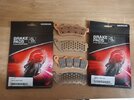
The front pads arrived from fowlers earlier, one pack was already opened with backing plates removed annoyingly.
20250910_202619.jpg
I am waiting for the seals to turn up from david silver they sell them in sets for left and. Thanks for the clarification concerning the seals, pistons.
And a new feeler has been purchased, which I can read easily.
20250910_202750.jpg
 
As a way forward I have removed the rear wheel and dropped at a bike shop to have the wheel bearings replaced.
I have no idea how good bike shops across the pond are, but we have had at least a few guys here discover that their bike shop (usually a Honda dealership) installed the wheel bearings improperly. I'd suggest you read the linked thread below (specifically John's .pdf description of installing wheel bearings) and ask them a few pertinent questions when you pick it up...such as, "from which side did you install the bearings?"

 
As a way forward I have removed the rear wheel and dropped at a bike shop to have the wheel bearings replaced.
I wished that you had said that was in your plan, I could have armed you with the information.

Just for your info (in case they say that it doesn't matter), The left bearing needs to be driven in first - that is the single race bearing on the brake disc side.

The right bearing (double race) is driven in until it meets the spacer - no more - because that will push out the other bearing - putting an unnecessary load on the centre races.
The flange plate (with the male spline) has to be removed to get to the right hand bearing - so while they are at it- they might as well replace the two flange bearings.

THe issue is that the hub has a shoulder on each side - and it looks as though the bearing is supposed to seat on that shoulder. The first bearing to be driven in will seat on that shoulder.
The distance collar - the long tube through which the axle slides - goes in next and sits on the inner race of the first bearing. This tube is slightly longer than the distance between those two shoulders. So if the person fitting the bearing is hammering it in until he hears the charactersitic ring - he will be driving out the first bearing by its center race - which will ruin the bearing.

So for the rear wheel the left bearing goes in first (brake disc side, single race). Then the distance collar / tube, then the right bearing - double race goes in last and it is driven until it meets the distance collar. Before I knew this, I had taken my 1100 wheel in for a tyre. He couldn't balance it 'cos the bearings were binding - so I asked him to fit new bearings and I watched him do it. He just hammered them in - and I didn't know at the time that this was wrong. But those bearing needed changing again at the next tyre change - 5000 miles. So I looked it all up.

The Honda common service manual (applicable to all Honda bikes) says: "Right and left bearings have a specific installation order. Refer to the model sepcific manual for which bearing to install first.". For the ST1300, the order for the front wheel and rear wheel is different. Rear wheel is left first. Front wheel is right first.

I've pm'd an extract of the manual. (It has an error, which I have corrected. The original says to drive in left first, then drive in the left !


====

Call Fowlers and tell them. Yes you can use the old ones, but that isn't the point. Someone has opened the pack at some point, removed the backing plates and landed you with the incomplete set.
 
Last edited:
Back
Top Bottom