Article [13] ST1300 - Brake Maintenance - Avoiding the Pitfalls

How critical is it to bleed the PCV? What if I just Bleed the front/rear calipers? I'll assume there would be some old fluid left in the system. Just asking. Wouldn't it eventually be evacuated if done a couple of times?

you will have spongy brakes if air is trapped, by bleeding both rear lines you may change the fluid - but will probably need to activate smc multiple times to push fluid through. I think air gets trapped around the pcv as it’s the highpoint of the system, the pcv bleed valve’s a tad lower than it - I had air in mine from SMC replacement so had to do a full bleed - not too bad with a vacuum bleeder.
 
Great info from some smart ST owners. Thanks for the advice. Looks like I have a right side fairing to remove. Had the brake fluid 'flushed out' last spring in a shop. I doubt they took the fairing off. Not sure if they used a pump either. When you want something done right...do it yourself!
 
Great info from some smart ST owners. Thanks for the advice. Looks like I have a right side fairing to remove. Had the brake fluid 'flushed out' last spring in a shop. I doubt they took the fairing off. Not sure if they used a pump either. When you want something done right...do it yourself!

Correct! :)

There is a way to bleed the PCV valve without taking off the RH fairing. Some on here have done it by lifting the fuel tank and pulling back the right fairing a little. I still choose to remove the right side fairing completely.
Good luck....
 
Correct! :)

There is a way to bleed the PCV valve without taking off the RH fairing. Some on here have done it by lifting the fuel tank and pulling back the right fairing a little. I still choose to remove the right side fairing completely.
Good luck....
Anyone use the 'pumps' for brake bleeding? Yea, nay?
 
In just MY personal opinion, vacuum’s pull fluid through with too much speed and force causing more air, than removing it.
Then you have to clean it, and store it etc.
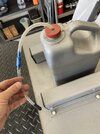
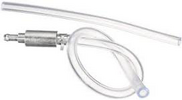
I’ve had much better luck with a simple check valve like the motion pro hydraulic brake bleeder for about $15 bucks on Amazon .
 

Attachments

  • EA3DA7BB-2734-4FAB-90FE-B7F735736197.jpeg
    EA3DA7BB-2734-4FAB-90FE-B7F735736197.jpeg
    101.4 KB · Views: 34
  • 0DE551CA-40E8-47D6-94F9-F2CD28AD26F0.jpeg
    0DE551CA-40E8-47D6-94F9-F2CD28AD26F0.jpeg
    64.1 KB · Views: 36
  • 06231CFB-6014-42FE-9681-F0A8DC4F983B.jpeg
    06231CFB-6014-42FE-9681-F0A8DC4F983B.jpeg
    111.6 KB · Views: 36
In just MY personal opinion, vacuum’s pull fluid through with too much speed and force causing more air, than removing it.
Then you have to clean it, and store it etc.
I’ve had much better luck with a simple check valve like the motion pro hydraulic brake bleeder for about $15 bucks on Amazon .
Hmm... I've had good success using a Mityvac on several vehicles. Seems to purge/bleed systems well.
 
Anyone use the 'pumps' for brake bleeding? Yea, nay?
As @Igofar said, the MotionPro brake bleeder is simpler, less messy, less fiddly, and more than up to the task.
Thought I would try to use my MityVac kit that I've had for years, but Larry talked me out of it. I haven't looked back.
Took me a couple of calls before I realized it's pointless arguing with him, but I did at first, just because I'm stupid stubborn.
In fairness, that was while I was still new around here, and now I know better.
Seriously -- just do as he says; he's the real deal. No point in reinventing the wheel.
MityVac works in many applications, but with this bike there are so many bleed points, and there is a specific sequence. This is not the same as any average brake bleeding task. Yes you "can" use another method, but... see above.
 
  • Like
Reactions: ATA
In just MY personal opinion, vacuum’s pull fluid through with too much speed and force causing more air, than removing it.
That will happen if the reservoir is allowed to run empty, not because a vacuum pump is being used. Allowing the reservoir to run empty will have the same effect no matter what method of bleeding is being employed.
 
I can see both points, but wouldn't there be an increased chance of introducing air, if for no other reason than the turbulence created by using more force than necessary?
Really not trying to start an argument... just thinking / typing out loud...
 
  • Like
Reactions: ATA
If the reservoir never runs dry, air is not introduced in to the system no matter how quickly the fluid flows. To make it manageable, vacuum pumps have adjustable throttles on them to control the vacuum so the system can be bled as slowly or quickly as one can manage the fluid flow.

If air is drawn in to the system, it is not the tools fault regardless of which tool is being used.
 
  • Like
Reactions: ATA
I’ve been wrenching for 47 years and never had the desire to buy a vacuum bleeder, wife and I have been a tag team for bleeding until Igofar gave me the idea of the motion pro one way check valve bleeder.
One person job now, but the wife always hints that she can stomp on the brake pedal if needed, she knows the drill after 40 years.
 

Attachments

  • IMG_0119.jpeg
    IMG_0119.jpeg
    16.3 KB · Views: 7
  • IMG_0118.png
    IMG_0118.png
    25 KB · Views: 7
I don't dispute that at all Larry, it actually doesn't surprise me. In my experience most shops do not do that good of a job bleeding brake systems because they don't take the time to run enough fluid through the system to make sure that they have chased all of the air out. I would hope that you would agree that if there is air remaining in the system after it was bled with a vacuum bleeder, it is because it was not properly bled, not because a vacuum bleeder was used.

As a footnote:
The best flushing and bleeding of a brake system that I have ever been able to accomplish is when I had access to a pressure bleeder. It is quite striking to see how much more contaminant a pressure bleeder forces out of a brake system in addition to even more air that hides in the far away recesses. I have never experienced such rock hard and responsive brakes as when I have used a pressure bleeder.
 
I’ve used pressure bleeders, reverse bleeders, trigger oil cans used to reverse bleed, gravity, vacuums, etc.
Like you said, the correct methods and techniques are the key, and knowing where air hides etc.
If you know theses tricks, you can get just as firm of a lever with a $15 dollar check valve, and not having to clean it afterwards.
Pushing fluid is always better than sucking or pulling fluid.
 
As a footnote:
The best flushing and bleeding of a brake system that I have ever been able to accomplish is when I had access to a pressure bleeder. It is quite striking to see how much more contaminant a pressure bleeder forces out of a brake system in addition to even more air that hides in the far away recesses. I have never experienced such rock hard and responsive brakes as when I have used a pressure bleeder.

I agree !!

I built my own pressure bleeder using a one gallon lawn and garden sprayer. Took me maybe two hours at the most to modify it ... and saved a boatload of $$$ over a dedicated unit.

I use it on the two MBs and Jeep, and have used it on the ST ... it's quick, easy, and just one person required.

Here's a great video how to build one

 
As @Igofar said, the MotionPro brake bleeder is simpler, less messy, less fiddly, and more than up to the task.
Thought I would try to use my MityVac kit that I've had for years, but Larry talked me out of it. I haven't looked back.
Took me a couple of calls before I realized it's pointless arguing with him, but I did at first, just because I'm stupid stubborn.
In fairness, that was while I was still new around here, and now I know better.
Seriously -- just do as he says; he's the real deal. No point in reinventing the wheel.
MityVac works in many applications, but with this bike there are so many bleed points, and there is a specific sequence. This is not the same as any average brake bleeding task. Yes you "can" use another method, but... see above.
I know; I have done it twice using a Mityvac. Only thing I found to watch for is making certain you keep the reservoir from emptying.
 
I agree !!

I built my own pressure bleeder using a one gallon lawn and garden sprayer. Took me maybe two hours at the most to modify it ... and saved a boatload of $$$ over a dedicated unit.

I use it on the two MBs and Jeep, and have used it on the ST ... it's quick, easy, and just one person required.

Here's a great video how to build one

That's pretty slick. Here's a video of him using the bleeder he made.
 
I'm going over my handywork from replacing the rear pads a few years ago, and reviewing this article(and replies) once again. I want to make sure I'm lubin' and gluin' correctly and with the right stuff.
Here's the things I noted to take care of:
Back of pads- copper grease
Metal retainer clip - TB 1521 adhesive, then copper grease on top
Slider pins - rubber grease
Pin Hanger(Pad Pin?) - Copper grease

I couldn't find copper grease before, so I used a hi-temp synthetic caliper grease. That didn't seem to work out so well as I noted here:
https://www.st-owners.com/forums/threads/proper-grease-on-the-rear-caliper-slider-pins.184384/
Folks seem to like Sil-Glyde, so I'm thinking of using that to replace both the copper and rubber grease mentioned.

Cleaning pistons: Using brake fluid and cloth, but one of the replies mentions using grease on them. I think Igofar said not to do this but don't remember for sure.

I pulled out the metal retainer clip and cleaned it, but can't easily find this ThreeBond 1521 adhesive locally. Is this the common practice? I want to do things right, but not looking forward to waiting another week or more before I can finish this job up.

Thanks for the help and advice.
 
Back
Top Bottom