
What your talking about is a "limited travel lifter" which are not actually a hydraulic lifter.I did write that, and they will if cheap poorly designed hydraulic lifters and valve train parts are installed, which I didn't do, so they didn't. That was on older engine designs so I guess that I just got lucky several times over. Hydraulic lifters on a modern design overhead cam engine is capable of even higher RPM's.

You are using an out of date browser. It may not display this or other websites correctly.
You should upgrade or use an alternative browser.
You should upgrade or use an alternative browser.
Make easy bleeder location for fitting behind fairing?
- Thread starter Yaesu
- Start date

Andrew Shadow
Site Supporter
I am well aware of what I put in since I had to pay for them, and since I have no plans to ever attempt to figure out a way to retrofit my ST1300 it of no consequence to me either.What your talking about is a "limited travel lifter" which are not actually a hydraulic lifter.
Andrew Shadow
Site Supporter
While that is good fortune it does not indicate that mechanical valves never need checking and adjusting and therefore they can be ignored. It means that you were fortunate. This is a maintenance item that needs to be done. People on this forum regularly post about how many valves that they had to re-shim to get them back in to spec as testament to that. The salient point of my post was that hydraulic valves are always in spec. without the need for inspections or interventions.I have owned several (7) 1100. I checked the valves a few times and blew off doing it again. They were all in spec. On one of the bikes, at 104K miles, all 8 valves were within factory specs.
Last edited:

Whoa... that's pretty cool, any idea what it is called/where to get one?Something like this would work:
But thinking about it a bit more, I think it would need to connected to vacuum to keep air out of the system since the bleed hose isn't directly connected.


short answer.....NOSo it's not possible to access the bleed valve through the fairing with a hole?

I'm not certain, but the hose circled in the photo appears to be connected to the clutch control bleed point.
If so, perhaps the principle could be applied to the upper bleed point (near the fuel tank ) of the brake system ?
If so, perhaps the principle could be applied to the upper bleed point (near the fuel tank ) of the brake system ?
Attachments
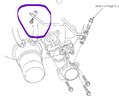

I'm not certain, but the hose circled in the photo appears to be connected to the clutch control bleed point.
If so, perhaps the principle could be applied to the upper bleed point (near the fuel tank ) of the brake system ?
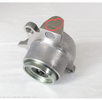
Was looking at this diagram earlier for a possible tapping/machining by a shop of the old CSC (just to trial) for bleed line banjo relocation (& likely custom bleed line) so complete flush of fluid inside CS could be done. Filter housing however is in the way where CSC could be tapped (circled in red) without compromising it. I think this area was designed to house a bleed nipple (similar to ST1100 CSC) - can't figure out the reason for extra metal there otherwise. May be possible with the metal trimmed to match the inlet level which could allow bonjo fitting. Will require CSC removal/installation with bleed line attached though. Anyways, apologies for off topic.
As for brake bleeding, looks easier to remove fairing than cut the fairing wide enough for access and plug it with a custom made CF/ABS panel which probably won't look good.
Attachments
Brake bleed all done. Had to get a rounded and seized hex bit head caliper mounting bolt out with a spindled torx and anti seize spray. Once out I was able to level the caliper to bleed at valve behind the right fairing and bolt the caliper back on for rest of the bleed.
Front and rear brake levers are nice and firm.
One thing I notice is that when I spin the rear wheel by hand and pull the front brakes lever firmly, it doesn't slow down or stop the spin. My understanding was that it should slow/stop due to it being combined braking. I did pull the rear pads out to inspect, cleaned around the pistons and pushed them back in to refit pads - this was a good few days before the bleed sequence. Do I need to pull the front brake lever repeatedly to get the piston activated by front lever? I would have thought that a few pulls of front lever be all that's needed, if the piston was not out fully and in contact with the pad.
Rear brake lever instantly stop the spin. I've not pumped that lever firmly since the bleed.
I suppose the SMC only activates when the bike is moving and front brakes applied, so no pressure will reach the piston on rear caliper on standstill.
Front and rear brake levers are nice and firm.
One thing I notice is that when I spin the rear wheel by hand and pull the front brakes lever firmly, it doesn't slow down or stop the spin. My understanding was that it should slow/stop due to it being combined braking. I did pull the rear pads out to inspect, cleaned around the pistons and pushed them back in to refit pads - this was a good few days before the bleed sequence. Do I need to pull the front brake lever repeatedly to get the piston activated by front lever? I would have thought that a few pulls of front lever be all that's needed, if the piston was not out fully and in contact with the pad.
Rear brake lever instantly stop the spin. I've not pumped that lever firmly since the bleed.
I suppose the SMC only activates when the bike is moving and front brakes applied, so no pressure will reach the piston on rear caliper on standstill.
Last edited:


- Joined
- Oct 26, 2020
- Messages
- 620
- Location
- Makefield Highlands PA
- Bike
- 16 ST1300P 20 K1600
- 2026 Miles
- 010090
If I get this wrong someone will chime in. The rear caliper is activated by the pedal and/or the SMC (front left caliper), but only when the front wheel is rotating and you squeeze the front lever. If the bike is stationary and you pull the front lever the SMC cannot pivot forward to activate the rear pistons.Do I need to pull the front brake lever repeatedly to get the piston activated by front lever?
Simply, the only time the rear caliper pistons are not going to work is when the bike is stationary and you squeeze the front lever.
- Joined
- Oct 26, 2020
- Messages
- 620
- Location
- Makefield Highlands PA
- Bike
- 16 ST1300P 20 K1600
- 2026 Miles
- 010090
Check out the drawings in this article
https://www.st-owners.com/forums/attachments/st1300-removing-air-from-brakes-pdf.377249/
https://www.st-owners.com/forums/attachments/st1300-removing-air-from-brakes-pdf.377249/

I suppose the SMC only activates when the bike is moving and front brakes applied, so no pressure will reach the piston on rear caliper on standstill.
YES. So test the SMC by laying on the left side of the bike, rotating the rear tire with your foot and squeezing the SMC toward the fork...it should stop the rear wheel when squeezed and release for rotation again when you let go. You're simulating the 'underway' action of when the front brake lever is squeezed and the SMC is activated to power the rear piston. At least that's how I understand it.
You’re not quite understanding how things work.YES. So test the SMC by laying on the left side of the bike, rotating the rear tire with your foot and squeezing the SMC toward the fork...it should stop the rear wheel when squeezed and release for rotation again when you let go. You're simulating the 'underway' action of when the front brake lever is squeezed and the SMC is activated to power the rear piston. At least that's how I understand it.
You can verify that the SMC is locking and releasing the rear wheel by turning it with your foot and moving it manually forward,
But that is not simulating underway movement (rear wheel movement) the SMC is activated when either brake is applied, and the left front caliper grabs the rotor and is the moved.
This is what sends fluid to the rear wheel.
If I am understanding your post, correctly, you remounted the SMC after bleeding #3 bleeder (PCV) then finished the rest of the bleed sequence?Brake bleed all done. Had to get a rounded and seized hex bit head caliper mounting bolt out with a spindled torx and anti seize spray. Once out I was able to level the caliper to bleed at valve behind the right fairing and bolt the caliper back on for rest of the bleed.
Front and rear brake levers are nice and firm.
One thing I notice is that when I spin the rear wheel by hand and pull the front brakes lever firmly, it doesn't slow down or stop the spin. My understanding was that it should slow/stop due to it being combined braking. I did pull the rear pads out to inspect, cleaned around the pistons and pushed them back in to refit pads - this was a good few days before the bleed sequence. Do I need to pull the front brake lever repeatedly to get the piston activated by front lever? I would have thought that a few pulls of front lever be all that's needed, if the piston was not out fully and in contact with the pad.
Rear brake lever instantly stop the spin. I've not pumped that lever firmly since the bleed.
I suppose the SMC only activates when the bike is moving and front brakes applied, so no pressure will reach the piston on rear caliper on standstill.
If so, your gonna have to do it over again, because the SMC needs to be tilted for the entire sequence etc.
If I am understanding your post, correctly, you remounted the SMC after bleeding #3 bleeder (PCV) then finished the rest of the bleed sequence?
If so, your gonna have to do it over again, because the SMC needs to be tilted for the entire sequence etc.
Oh .. I don't recall that in the write up. Must have missed that. Left caliper centre nipple bleed #6 is with the caliper remounted in the picture on the write up iirc. Going to review the doc again and re bleed.
Bugger .. just re-read so going to do it all again, but that's fine as the fairings are still off and old bolts on left caliper are loose.
Last edited:
Keep in mind, a lot of the articles, write ups, and videos, are just folks doing it the first time, following advice from forums, and just taking pictures as they go.
There is a lot of misinformation out there, tha folks keep following blindly.
There is a lot of misinformation out there, tha folks keep following blindly.
Keep in mind, a lot of the articles, write ups, and videos, are just folks doing it the first time, following advice from forums, and just taking pictures as they go.
There is a lot of misinformation out there, tha folks keep following blindly.
Do I need to redo #1 and #2 front calipers top bleed nipples again or skip #1 and #2 and start from #3 PVC?

So to understand clearly, the SMC remains tilted thru the last bleed, then is refastened to specs?If I am understanding your post, correctly, you remounted the SMC after bleeding #3 bleeder (PCV) then finished the rest of the bleed sequence?
If so, your gonna have to do it over again, because the SMC needs to be tilted for the entire sequence etc.

Download the pdf in my article that @Willsmotorcycle linked to post #50. Look at the pictures, read the text. When I wrote this, nearly every source of information that I came across had got something wrong. Most of those are still around - so as already stated you will get conflicting advice.
You cannot think of front brakes in isolation, but you can think of front brake lever and front master cylinder in isolation. So if your front lever is solid and you are happy that there is no air, then you can focus on steps 3 to 7.
Not quite. The SMC operates when the front wheel is rotating and the pads in the front left caliper are grabbing .hold of the rotating disc, making the caliper lunge forward and activating the SMC. The front brake lever operates the two outer pistons on the front calipers, but the brake pedal operates the centre piston on all three calipers - so the brake pedal will operate the SMC when the front wheel is rotating, for the same reason.
I think you were only referring to when the front brake is applied, but just in case you weren’t……
There are three pistons on the rear caliper. The centre one is operated directly by the rear brake pedal. The rear master cylinder has two hydraulic lines , one of which goes straight to the rear centre piston.
Also the rear pedal operates the front centre pistons. The fluid to the front left centre piston also feeds the SMC inlet port.
The main seal that applies the pressure in all master cylinders on the ST1300 is not a perfect seal. It is a valve - it seals and applies pressure in one direction only. It yields to allow fluid past in the other direction - ie when the lever or pedal is released. Rather like the flexible washer in a bicycle pump or a duck’s webbed feet.
This means that fluid from the brake pedal can pass straight through the SMC from behind and go straight to the two outer pistons in the rear caliper when the SMC has not been moved. So at standstill, the rear brake pedal operates 5 pistons - 3 centre pistons and the two rear outer pistons.
You cannot think of front brakes in isolation, but you can think of front brake lever and front master cylinder in isolation. So if your front lever is solid and you are happy that there is no air, then you can focus on steps 3 to 7.
I suppose the SMC only activates when the bike is moving and front brakes applied,
Not quite. The SMC operates when the front wheel is rotating and the pads in the front left caliper are grabbing .hold of the rotating disc, making the caliper lunge forward and activating the SMC. The front brake lever operates the two outer pistons on the front calipers, but the brake pedal operates the centre piston on all three calipers - so the brake pedal will operate the SMC when the front wheel is rotating, for the same reason.
That is true if only the front brake lever is applied and the front wheel is not rotating.so no pressure will reach the piston on rear caliper on standstill.
I think you were only referring to when the front brake is applied, but just in case you weren’t……
There are three pistons on the rear caliper. The centre one is operated directly by the rear brake pedal. The rear master cylinder has two hydraulic lines , one of which goes straight to the rear centre piston.
Also the rear pedal operates the front centre pistons. The fluid to the front left centre piston also feeds the SMC inlet port.
The main seal that applies the pressure in all master cylinders on the ST1300 is not a perfect seal. It is a valve - it seals and applies pressure in one direction only. It yields to allow fluid past in the other direction - ie when the lever or pedal is released. Rather like the flexible washer in a bicycle pump or a duck’s webbed feet.
This means that fluid from the brake pedal can pass straight through the SMC from behind and go straight to the two outer pistons in the rear caliper when the SMC has not been moved. So at standstill, the rear brake pedal operates 5 pistons - 3 centre pistons and the two rear outer pistons.
Last edited:
Download the pdf in my article that @Willsmotorcycle linked to post #50. Look at the pictures, read the text. When I wrote this, nearly every source of information that I came across had got something wrong. Most of those are still around - so as already stated you will get conflicting advice.
You cannot think of front brakes in isolation, but you can think of front brake lever and front master cylinder in isolation. So if your front lever is solid and you are happy that there is no air, then you can focus on steps 3 to 7.
Not quite. The SMC operates when the front wheel is rotating and the pads in the front left caliper grabbing hold hold of the rotating disc, making the caliper lunge forward and activating the SMC. The front brake lever operates the two outer pistons on the front calipers, but the brake pedal operates the centre piston on all three calipers - so that will operate the SMC as well, when the front wheel is rotating for the same reason.
That is true if only the front brake lever is applied and the front wheel is not rotating.
I think you were only referring to when the front brake is applied, but just in case you weren’t……
There are three pistons on the rear caliper. The centre one is operated directly by the rear brake pedal. The rear master cylinder has two hydraulic lines , one of which goes straight to the rear centre piston.
Also the rear pedal operates the front centre pistons. The fluid to the front left centre piston also feeds the SMC inlet port.
The main seal that applies the pressure in all master cylinders on the ST1300 is not a perfect seal. It is a valve - it seals and applies pressure in one direction only. It yields to allow fluid past in the other direction - ie when the lever or pedal is released. Rather like the flexible washer in a bicycle pump or a duck’s webbed feet.
This means that fluid from the brake pedal can pass straight through the SMC from behind and go straight to the two outer pistons in the rear caliper when the SMC has not been moved. So at standstill, the rear brake pedal operates 5 pistons - 3 centre pistons and the two rear outer pistons.
Thank you so much. Very detailed article. Unfortunately for me, I didn't read it fully the first time focusing on sequence primarily and assumed left caliper went back on as seen in a YT video. Will bleed again as per your document.
I should say - these days I only ever use the vacuum bleeder to fill an empty system. If it is just a case of getting rid of some air, then I don’t use it. It’s messy, fiddly and more trouble than it is worth. But it is handy to have a slow steady flow to dislodge air by flexing hoses and tapping joints.Thank you so much. Very detailed article. Unfortunately for me, I didn't read it fully the first time focusing on sequence primarily and assumed left caliper went back on as seen in a YT video. Will bleed again as per your document.