I'm glad that works for you. I believe I got an excellent bleed using my setup with vacuum, check valve, and lever and pedal pumping. My brakes are now rock solid.
Best
/r
B
Best
/r
B



While you believe you got an excellent bleed with your method, try this, put your lever on the first position, place your hand on the grip, and your index finger on the lever and pull.I'm glad that works for you. I believe I got an excellent bleed using my setup with vacuum, check valve, and lever and pedal pumping. My brakes are now rock solid.
Best
/r
B


Reverse bleeding does that, not pressure bleeding.Pressure bleeders - that method pushes fluid back to the reservoir.
When I see 'pressure bleeding' - I have always assumed that people pump fluid up from the bleed valves.Reverse bleeding does that, not pressure bleeding.
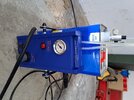
Pumping brake fluid through the caliper bleed nipples up to the master cylinder is commonly referred to as reverse bleeding here as the fluid flow is being reversed from its normal direction. Pressure bleeders pump brake fluid through the system in the normal direction from the master cylinder down to the calipers. They do it at a sustained elevated pressure and with a uniform high volume flow of brake fluid.When I see 'pressure bleeding' - I have always assumed that people pump fluid up from the bleed valves.
I may be wrong - but I have never seen a device that applies pressure from the motorcyle reservoirs. Also the brake system master cylinder provides an effective means of forcing fluid down the lines from the top - although that is not continuous pressure, but it is effective - but no guarantee that it pushes the air bubbles with the flow.
I've seen a device that replaces the screw on cap for a car's hydraulic fluid reservoir, so that pressure can be applied - eg by a compressed air attachement - but have never seen something that does the same for a motorcycle.
So is there stuff here that I need to learn - how do people pressure bleed a motorcycle circuit from the top end ?